Lee Jae Myung pledges to carry Roh Moo-hyun's legacy on 17th death anniversary
Synopsis
Standing at Roh Moo-hyun’s memorial village for the first time as president, Lee Jae Myung declared himself one of the ‘Roh Moo-hyuns’ born after the late leader’s death — and committed to completing his unfinished agenda on reform and inter-Korean peace. It is a high-stakes political inheritance, and Lee’s first major test is whether he can deliver where his idol could not.
Key Takeaways
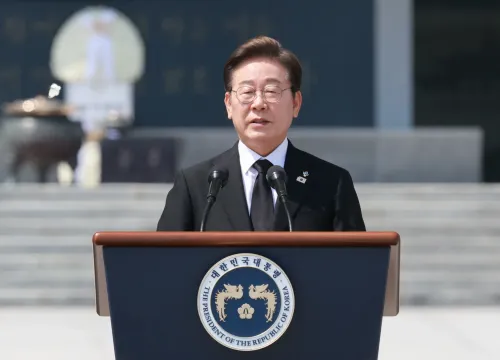
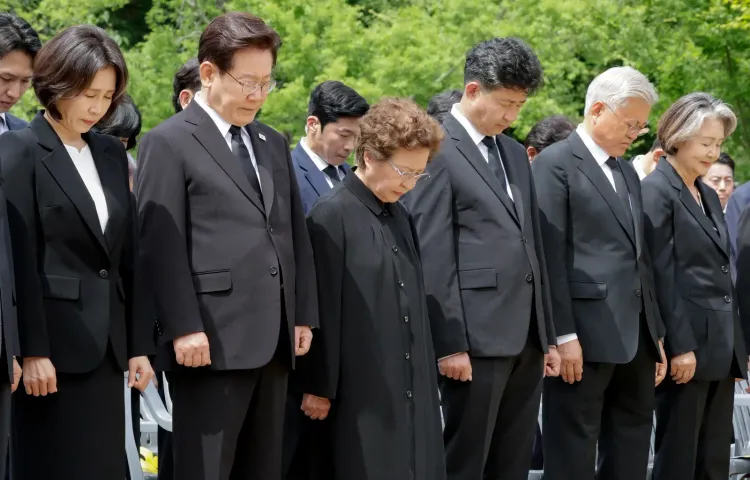
President Lee Jae Myung attended the 17th death anniversary ceremony of former President Roh Moo-hyun at Bongha village on Saturday, 24 May 2025 .
Lee pledged to build a nation based on fairness, inclusion, and human dignity — core tenets of Roh’s political legacy.
He reaffirmed commitment to the October 4 Inter-Korean Declaration , signed by Roh and Kim Jong-il in 2007, aiming for peaceful coexistence with North Korea.
Lee vowed to pursue structural reform ‘undeterred by resistance from the established order.’ Roh Moo-hyun served as South Korea’s ninth president (2003–2008) and died in 2009 amid a corruption investigation involving his family and aides.
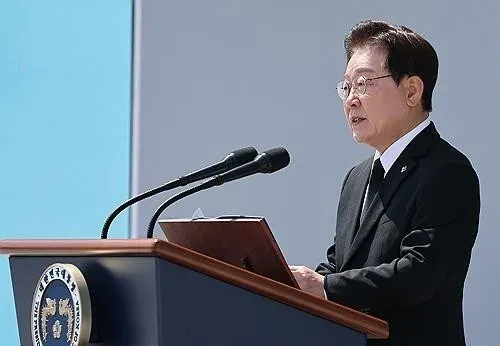
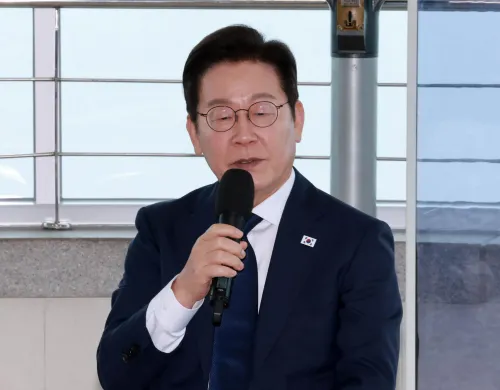
South Korean President Lee Jae Myung on Saturday, 24 May 2025, pledged to honour the legacy of late former President Roh Moo-hyun by building a nation grounded in fairness, inclusion, and respect for human dignity. Lee made the commitment during a memorial ceremony marking the 17th anniversary of Roh's death, held at the southeastern rural village of Bongha — where the former president spent his retirement years.
A Personal Tribute at Bongha
“After you left, so many ‘Roh Moo-hyuns’ were born, and I am one of them,” Lee said in his eulogy, drawing a direct line between his own political identity and Roh’s liberal ideals. The remark underscored how deeply Roh’s legacy has shaped South Korea’s progressive political tradition. Lee, who attended the same memorial last year as the Democratic Party’s presidential candidate, now returns as head of state — a symbolic arc that was not lost on those present.
Vision for a Fairer Society
Lee pledged to realise Roh’s vision of a society where success is attainable without privilege, hard work is fairly rewarded, and regional development extends beyond the capital. “I will press ahead with reform to root out rule-breaking and privilege, undeterred by resistance from the established order,” he said. He added: “This government will bring to fruition the dreams you left unfulfilled.”
The president also acknowledged the weight of office directly. “As President, I feel the immense responsibility and weight that comes with the position. I will carry on your legacy,” he said, according to reports.
Inter-Korean Commitment
On relations with North Korea, Lee reaffirmed his government’s commitment to the spirit of the October 4 Inter-Korean Declaration — the landmark agreement signed in 2007 by Roh and the late North Korean leader Kim Jong-il, father of current leader Kim Jong-un. The declaration was aimed at improving inter-Korean relations and easing military tensions on the peninsula. “We will firmly walk on the path toward peaceful coexistence and mutual growth,” Lee said.
The pledge signals a potential diplomatic recalibration, as inter-Korean ties have remained largely frozen in recent years amid missile tests and heightened security concerns.
Who Was Roh Moo-hyun
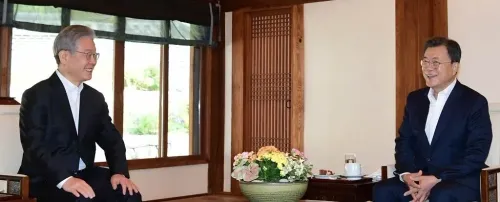
Roh Moo-hyun served as the ninth President of South Korea from 2003 to 2008, representing the liberal wing of Korean politics. He was known for championing balanced regional development and pursuing engagement with North Korea. In 2009, amid a corruption investigation involving his family and aides, Roh died after leaping from a cliff behind his retirement home in Bongha. His death remains a deeply charged moment in South Korean political memory, and his legacy continues to animate the country’s progressive movement.
What Comes Next
Lee’s remarks at Bongha are being read as an early signal of his administration’s domestic and foreign policy priorities. With structural reform and inter-Korean engagement both on the agenda, the coming months will test whether the new president can translate Roh’s ideals into durable policy — a challenge that has eluded several of his predecessors.
Point of View
’ he is deliberately tethering his presidency to a martyred liberal icon — a move that consolidates his base but also raises the bar for delivery. Roh’s October 4 Declaration never fully translated into lasting peace; reviving its spirit amid today’s frozen inter-Korean landscape is a far steeper climb. The real question is whether Lee’s reform rhetoric will survive contact with the institutional resistance he himself acknowledged — or whether Bongha becomes an annual ritual of unfulfilled promises.
NationPress
20 Sept 2026
Frequently Asked Questions
Why did President Lee Jae Myung visit Bongha village?
Lee attended the memorial ceremony marking the 17th death anniversary of former President Roh Moo-hyun, held at Bongha — the southeastern village where Roh lived in retirement. It was his first visit to the event as president, having attended last year as a presidential candidate.
What is the October 4 Inter-Korean Declaration?
The October 4 Inter-Korean Declaration was a landmark agreement signed in 2007 by then-South Korean President Roh Moo-hyun and North Korean leader Kim Jong-il. It aimed at improving inter-Korean relations, reducing military tensions, and promoting economic cooperation between the two countries.
Who was Roh Moo-hyun and how did he die?
Roh Moo-hyun was South Korea’s ninth president, serving from 2003 to 2008 as a prominent liberal politician. He died in 2009 after leaping from a cliff behind his retirement home in Bongha, amid a corruption investigation involving his family and aides.
What reforms did Lee Jae Myung commit to at the ceremony?
Lee pledged to root out privilege and rule-breaking through structural reform, ensure balanced regional development beyond the capital, and create a society where hard work is fairly rewarded regardless of background. He said his government would fulfil the vision Roh left unrealised.
What is Lee Jae Myung’s stance on North Korea?
Lee reaffirmed his commitment to the spirit of the October 4 Inter-Korean Declaration, stating his government would pursue ‘peaceful coexistence and mutual growth’ with North Korea. The pledge signals a potential shift toward engagement after years of largely frozen inter-Korean relations.