Is South Korean President Lee's Approval Rating Rising to 62% Due to His Diplomatic Efforts?
Synopsis
Discover how South Korean President Lee Jae Myung's approval rating has surged to 62% as public sentiment shifts positively towards his diplomatic strategies. With economic challenges ahead, Lee emphasizes the importance of stabilizing prices and nurturing industries amid uncertainty. What does this mean for his administration and the future of South Korea?
Key Takeaways
President Lee Jae Myung's approval rating increased to 62% .
The rise is largely due to favorable views on his diplomatic efforts .
Lee ranks third in approval ratings compared to previous presidents at the six-month mark.
Inflation remains a concern, prompting price stabilization measures.
Exports are projected to reach a record high of USD 700 billion this year.
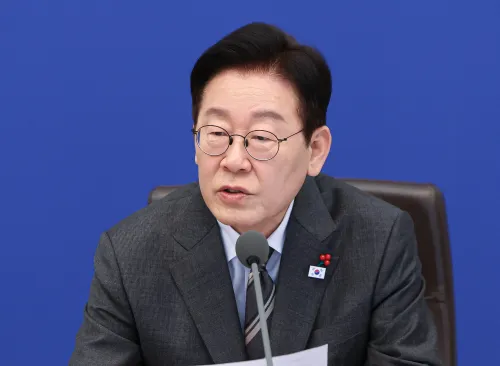
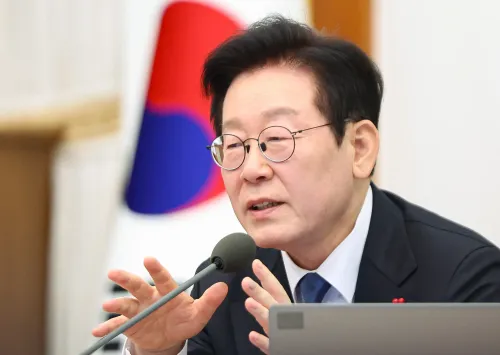
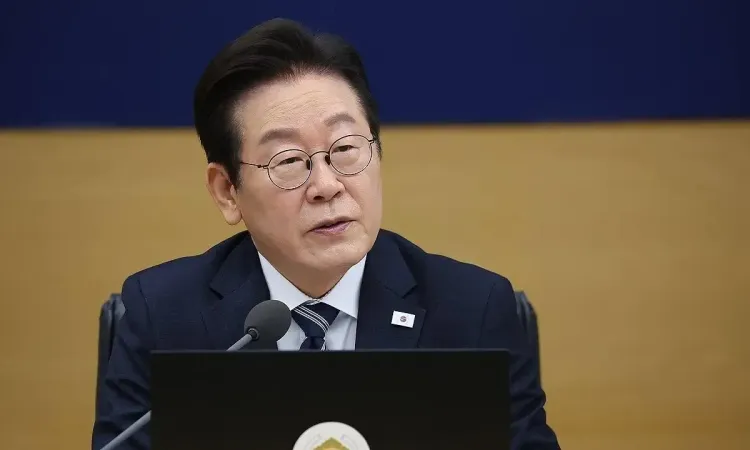
Seoul, Dec 5 (NationPress) The approval rating of South Korean President Lee Jae Myung has seen a slight increase, reaching 62 percent this week, as he marks six months in office. This rise is attributed to favorable public sentiment regarding his diplomatic initiatives, according to a recent poll.
The Gallup Korea survey, administered from Tuesday to Thursday with 1,000 participants aged 18 and older, revealed that 62 percent of individuals rated Lee’s overall performance positively, an increase of 2 percentage points compared to the last two weeks, as reported by Yonhap News Agency.
Twenty-nine percent expressed a negative opinion, which is a decrease from the previous week, while 8 percent chose not to provide an assessment.
Among the reasons for positive feedback, diplomacy was the leading factor, mentioned by 32 percent of respondents, followed by 14 percent who acknowledged his leadership in addressing economic and livelihood challenges.
Negative evaluations, accounting for 18 percent, largely stemmed from criticisms relating to his economic management and personal legal issues.
Thursday marked 100 days since he assumed office following a snap election in June, which was prompted by the removal of former President Yoon Suk Yeol due to his controversial attempt to impose martial law on December 3.
In comparison to former presidents at the six-month milestone, Lee ranks third, trailing behind former President Kim Young-sam's 84 percent and Moon Jae-in's 74 percent.
The ruling Democratic Party's approval rating stands at 43 percent, while the main opposition, the People Power Party, is at 24 percent.
This survey has a margin of error of plus or minus 3.1 percentage points at a confidence level of 95 percent.
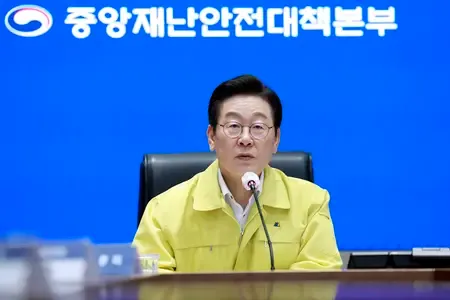
On Thursday, President Lee instructed his aides to devise strategies aimed at stabilizing prices and reducing financial pressures on citizens.
He made these comments during a meeting with senior staff, noting that last month’s consumer prices rose by 2.4 percent compared to the previous year, surpassing the Bank of Korea's 2 percent target for the third consecutive month.
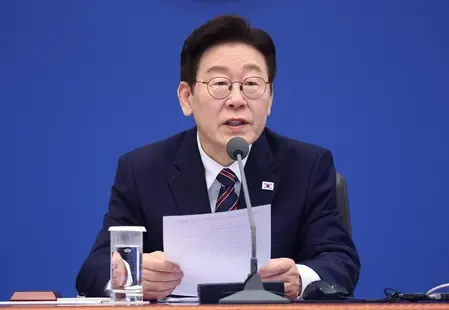
“With perceived inflation on the rise, it is significantly impacting residents' livelihoods,” he stated during the assembly at the presidential office.
“I urge relevant ministries to thoroughly assess the supply-demand dynamics of essential consumer goods and proactively implement measures to stabilize prices.”
Lee further urged his aides to investigate instances of unjust price increases or unfair profits resulting from monopolistic practices.
Despite challenging domestic and international conditions, Lee expressed optimism about the nation’s export performance, projecting a record high total of USD 700 billion for the year.
“This success is attributed to our entrepreneurs and workers who have united their efforts to innovate and penetrate new markets without succumbing to protectionist pressures, alongside the dedication of public officials who have supported these initiatives,” he remarked.
Lee emphasized the necessity of fostering advanced industries amid ongoing trade uncertainties, advocating for practical trade policies that prioritize national interests.
Additionally, he called for initiatives to diversify export routes and expand the nation’s “economic territory” through collaboration with emerging and developing nations within the “Global South.”
Point of View
It is imperative to recognize the significance of President Lee's rising approval rating in the context of both domestic and international sentiments. While his diplomatic initiatives have garnered public support, the ongoing economic challenges must be addressed to maintain this momentum. The nation's stability and progress depend on effective leadership that prioritizes both diplomacy and economic resilience.
NationPress
20 Sept 2026
Frequently Asked Questions
What factors contributed to Lee's increased approval rating?
Lee's approval rating rose primarily due to positive public sentiment regarding his diplomatic efforts, with significant acknowledgment of his leadership in economic management.
How does Lee's approval rating compare with previous presidents?
At six months in office, Lee's approval rating of 62% ranks third among former presidents, trailing Kim Young-sam and Moon Jae-in.
What measures is Lee implementing to address inflation?
Lee has instructed his aides to develop strategies aimed at stabilizing prices and easing financial burdens on citizens due to rising inflation.