Has South Korean President Lee's Approval Rating Increased for the Third Week in a Row?
Synopsis
South Korean President Lee Jae Myung's approval rating has climbed to 56.5%, marking the third consecutive week of growth. This surge is attributed to the government's initiatives to stabilize the property market. Discover how Lee's policies are impacting the economy and the lives of young citizens in South Korea.
Key Takeaways
President Lee's approval rating increased to 56.5%.
Government efforts to stabilize the housing market are key factors.
Lee is critical of multiple-home ownership.
Survey conducted with a sample of 1,009 adults.
Focus on food prices and addressing unfair trade practices.
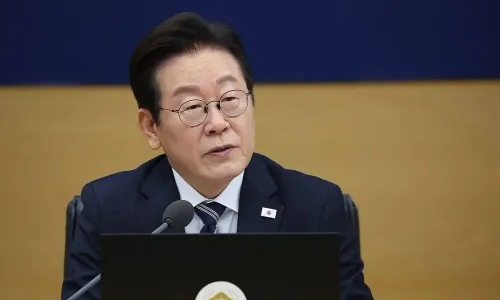
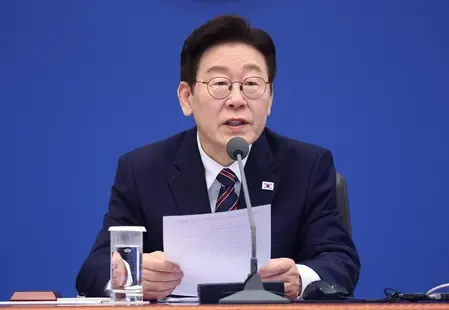
Seoul, Feb 16 (NationPress) The approval rating of South Korean President Lee Jae Myung climbed to 56.5 percent last week, according to a survey released on Monday, largely due to the government's initiatives aimed at stabilizing the property market.
This figure represents an increase of 0.7 percentage points from the week before, while the percentage of negative assessments dipped by 0.2 percentage points to 38.9 percent, as reported by Realmeter, which conducted the survey for a local business news outlet.
Realmeter noted that the rise can be attributed to Lee's ongoing measures to control home prices, including the removal of an exemption from the heavy capital gains tax for owners of multiple properties, coupled with a rebound in the stock market, as reported by Yonhap News Agency.
The survey was carried out with 1,009 adults from Monday to Friday last week and carries a margin of error of plus or minus 2 percentage points, with a confidence level of 95 percent.
Earlier in the day, Lee reiterated his stance against multiple-home ownership for investment purposes on his social media platform X.
"It is evident that the negative impacts outweigh the positives," he stated regarding the ownership of multiple properties.
"Hence, the government must eliminate unfair tax, financial, and regulatory advantages." He emphasized the need for individuals to accept social responsibility and contribute their fair share of the burden, aligning with common sense.
These comments were part of a recent series of posts by Lee expressing his views on the contentious housing market. He has consistently promised to stabilize the housing market, contending that soaring home prices are placing significant pressures on young people and discouraging marriage and childbirth.
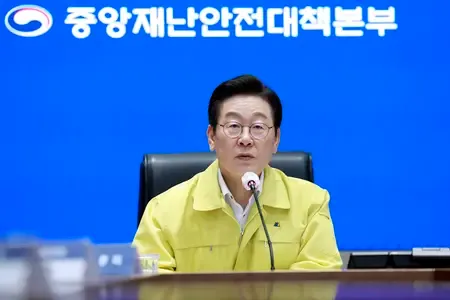
On February 12, Lee called for initiatives to stabilize prices for food and daily necessities by monitoring unfair trade practices and addressing structural inefficiencies in the distribution system.
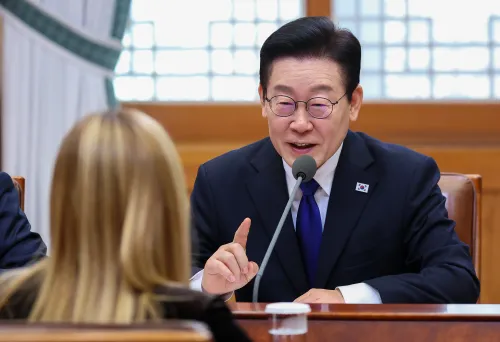
Lee made these statements during a meeting with senior aides post a visit to a traditional market in Chungju, a city located centrally. "Many individuals remain worried about prices and sluggish sales," he remarked during the meeting at Cheong Wa Dae.
He tasked a newly established interagency task force with developing short-term strategies to stabilize prices while closely monitoring unfair practices such as price manipulation and monopolistic behaviors regarding certain products.
"Proactive measures are crucial to tackle structural issues at every stage of the distribution channel," he emphasized.
Additionally, he pointed out instances where some companies allegedly resold imported goods benefiting from reduced tariffs at prices exceeding the market rate, stressing that decisive actions must be taken if such practices are uncovered.
Moreover, he directed a review of school uniform prices following reports indicating that the average cost has approached 600,000 won (equivalent to USD 417), highlighting that this level appears significantly higher than when he served as mayor of Seongnam from 2014 to 2018.
"With the back-to-school season on the horizon, we must evaluate the current school uniform prices to determine their appropriateness," he concluded.
Point of View
The rise in President Lee's approval rating reflects a significant moment in South Korean politics. His focus on addressing critical housing market issues resonates with many citizens, especially the youth facing economic challenges. While his policies may spark debate, it is clear that Lee is positioning himself as a leader attentive to the needs of the people.
NationPress
19 Sept 2026
Frequently Asked Questions
What is the current approval rating of President Lee?
As of last week, President Lee Jae Myung's approval rating stands at 56.5%.
What factors contributed to the rise in approval ratings?
The increase is largely credited to the government's efforts to stabilize the property market and curb rising home prices.
How was the survey conducted?
The survey was conducted among 1,009 adults from Monday to Friday last week, with a margin of error of plus or minus 2 percentage points.
What are President Lee's views on multiple-home ownership?
President Lee criticizes multiple-home ownership for investment purposes, arguing it has more negative effects than positive.
What other issues is President Lee addressing?
Lee is also focusing on stabilizing prices for food and daily necessities and has instructed an interagency task force to monitor unfair trade practices.