China's Yarlung Tsangpo dam project faces scrutiny amid Himalayan warming risks
Synopsis
China's 1.2-trillion-yuan Yarlung Tsangpo dam — set to generate three times the Three Gorges Dam's output — is under mounting scrutiny as climate science warns that two-thirds of Himalayan hydro projects sit on outburst-flood pathways. The August 26 Nepal-China border floods, which killed nearly 1,400 people, have sharpened the question of who bears the risk of pinning continental energy to one of Earth's most seismically volatile gorges.
Key Takeaways
China broke ground in July 2025 on the lower Yarlung Tsangpo hydropower cascade near Medog, Tibet , at an estimated cost of 1.2 trillion yuan .
The project is projected to generate roughly three times the power of the Three Gorges Dam .
A 2022 Nature Geoscience study found two-thirds of Himalayan hydropower projects sit on potential glacial outburst-flood pathways.
Floods along the Nepal-China border on 26 August 2025 killed nearly 1,400 people , with over 5,000 still missing including more than 600 children .
The river flows downstream into Arunachal Pradesh and Assam , placing Northeast India directly within the risk corridor.
Nearly two billion people depend on the hydrological systems the Himalayas regulate, according to the One World Outlook report.
China's Yarlung Tsangpo mega hydropower project in Tibet has drawn renewed scrutiny over the sustainability of large-scale infrastructure in one of the world's most ecologically fragile and seismically volatile regions, according to a report by One World Outlook. The findings come as the Himalayas face accelerating climate stress and as the human toll from recent cross-border flooding continues to mount.
The Project and Its Scale
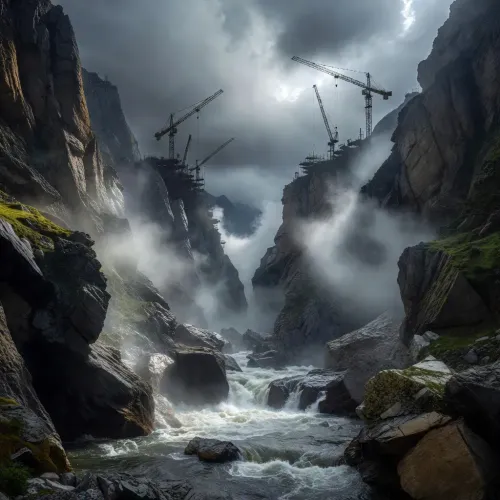
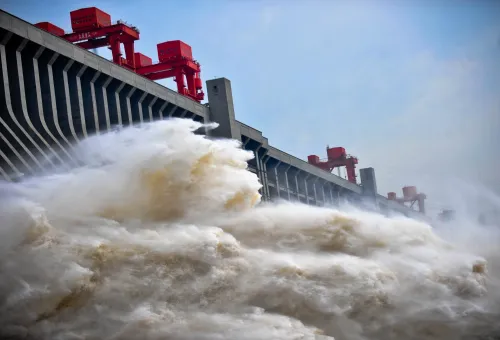
Beijing broke ground in July 2025 on the lower Yarlung Tsangpo hydropower cascade near Medog in Tibet, a scheme that analysts have labelled the 'project of the century.' The initiative carries an estimated price tag of around 1.2 trillion yuan and is projected to generate roughly three times the power output of the Three Gorges Dam — itself the world's largest power station by installed capacity.
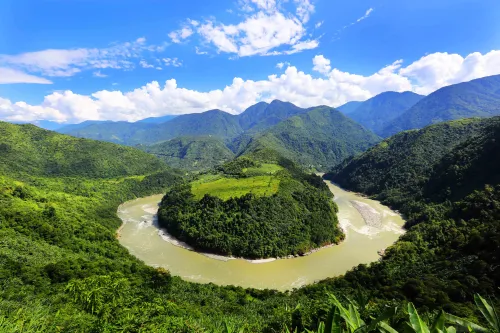
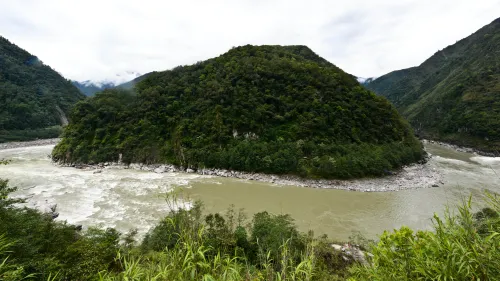
The river descends nearly 2,000 metres through a short, seismically active gorge before crossing into India, where it flows as the Siang in Arunachal Pradesh and eventually as the Brahmaputra in Assam. The transboundary character of the waterway places downstream communities across Northeast India directly in the path of any upstream disruption.
What Scientists Are Warning
The One World Outlook report draws on a 2022 study published in Nature Geoscience, which warned that warming is destabilising rock and ice across High Mountain Asia, causing sediment loads to rise and reservoirs to silt at accelerating rates. According to the study's authors, two-thirds of Himalayan hydropower projects sit on potential glacial lake outburst flood pathways — a finding that predates several subsequently wrecked hydro plants in the region.
The report argues that dams engineered for 20th-century rainfall events can be overwhelmed by 21st-century cascades of ice, rock, and debris. 'Whatever one's view of the geopolitics, the sustainability question is narrower and harder: What does it mean to pin the energy future of a continent to tunnels and powerhouses in one of the least stable mountain syntaxis on Earth, upstream of tens of millions of people, at the same moment that permafrost, glaciers and monsoon extremes are all moving in the wrong direction?' the report stated.
The August 26 Flood and Its Human Cost
The analysis gains urgency in the wake of devastating floods along the Nepal-China border on 26 August 2025. Nepal's disaster authority has recorded nearly 1,400 deaths, with more than 5,000 people still missing. Those unaccounted for include hundreds of foreign pilgrims, trekkers, and over 600 children across two Himalayan districts.
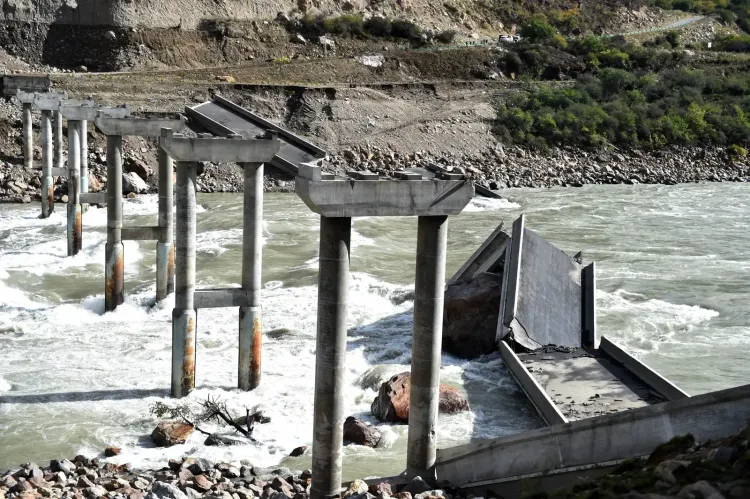
Chinese authorities separately confirmed multiple deaths and reported hundreds missing in Gyirong County, where rescue teams were still searching through underground powerhouses at the time of the report. The cross-border scale of the disaster underlines the transnational risk that Himalayan infrastructure poses when climate-driven events strike without warning.
The Broader Ecological Stakes
The One World Outlook report underscores that the Himalayas perform a hydrological function no engineered structure can replicate — storing winter precipitation as ice and releasing it gradually in spring, sustaining the monsoon cycle, and preventing vast quantities of topsoil from being flushed into the Bay of Bengal in a single season. Nearly two billion people depend on the water systems the range regulates.
'This is not a natural disaster in the old sense. It is a compound event: a warming cryosphere, a young mountain chain, and a development model that treats the world's highest range as a construction site on the plains,' the report noted. Critics argue that framing catastrophic floods as purely natural events obscures the compounding role of accelerated infrastructure development in the region.
As the Yarlung Tsangpo project advances, the question of how risk is apportioned — between China's energy ambitions and the downstream communities of Assam, Arunachal Pradesh, and Bangladesh — is expected to intensify diplomatic and scientific debate in the months ahead.
Point of View
Any upstream failure, whether from seismic shock, permafrost collapse, or glacial outburst, lands first on Indian territory. The August 26 floods are a preview, not an anomaly. What is conspicuously absent from the debate is a binding transboundary risk-assessment mechanism; New Delhi has repeatedly sought data-sharing agreements on the Brahmaputra, and Beijing has repeatedly withheld them. The real policy gap is not scientific — the Nature Geoscience findings are unambiguous — it is diplomatic.
NationPress
14 Sept 2026
Frequently Asked Questions
What is China's Yarlung Tsangpo hydropower project?
It is a massive hydropower cascade under construction near Medog in Tibet, with an estimated cost of 1.2 trillion yuan and a projected power output roughly three times that of the Three Gorges Dam. Construction began in July 2025 on the lower section of the Yarlung Tsangpo River, which flows downstream into India as the Siang and then the Brahmaputra.
Why is the Yarlung Tsangpo project considered risky?
The project sits in one of the world's most seismically active gorges, where the river drops nearly 2,000 metres in a short stretch. A 2022 study in Nature Geoscience found that warming is destabilising rock and ice across High Mountain Asia, and that two-thirds of Himalayan hydropower projects sit on potential glacial lake outburst-flood pathways — a risk compounded by rising sediment loads and permafrost thaw.
How does the project affect India?
The Yarlung Tsangpo flows directly into Arunachal Pradesh as the Siang and then through Assam as the Brahmaputra, placing tens of millions of people downstream of any upstream disruption. Any dam failure, sediment surge, or flood event upstream could have severe consequences for Northeast India and, further downstream, Bangladesh.
What happened in the Nepal-China border floods of August 2025?
Devastating floods struck the Nepal-China border region on 26 August 2025, killing nearly 1,400 people according to Nepal's disaster authority, with over 5,000 still missing. Those unaccounted for include hundreds of foreign pilgrims, trekkers, and more than 600 children across two Himalayan districts. Chinese authorities also confirmed deaths and hundreds missing in Gyirong County.
What ecological role do the Himalayas play that large dams could disrupt?
The Himalayas store winter precipitation as ice and release it gradually in spring, sustaining the monsoon cycle and regulating water flow for nearly two billion people. According to the One World Outlook report, treating the range as a construction corridor risks compressing seasonal water release into sudden, catastrophic events rather than the gradual flow on which agriculture and ecosystems across South Asia depend.