PM Modi at Indonesian Parliament: India walks path of development, not expansionism
Synopsis
Standing before the Indonesian Parliament, Modi drew a clear line: India is a development power, not an expansionist one. Paired with the 'copyright of friendship' exchange with President Prabowo and the Bintang Adipurna honour, the Jakarta visit signals a deliberate deepening of India's Southeast Asia pivot at a moment of rising Indo-Pacific tensions.
Key Takeaways
PM Modi addressed the Indonesian Parliament in Jakarta on 7 July , declaring India follows development, not expansionism.
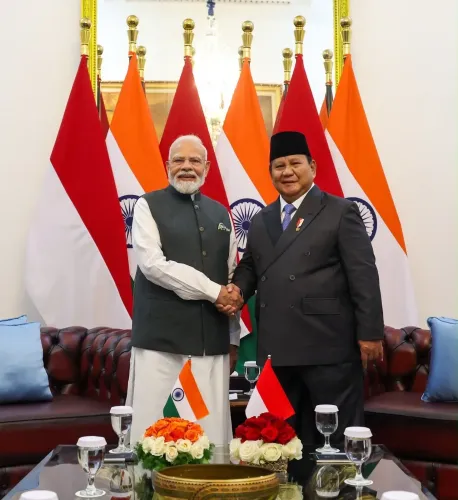
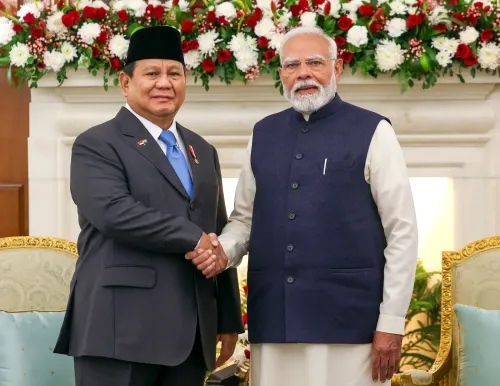
He was conferred the Bintang Adipurna of the Republic of Indonesia — the country's highest honour — by President Prabowo Subianto .
Modi quoted his signature principle 'Sabka Saath, Sabka Vikas' as India's guiding foreign policy sentiment.
He noted India and Indonesia are separated by only 150 kilometres of sea, calling it a bridge, not a barrier.
Modi described the coming 25 years as crucial for both nations and pledged joint service to humanity.
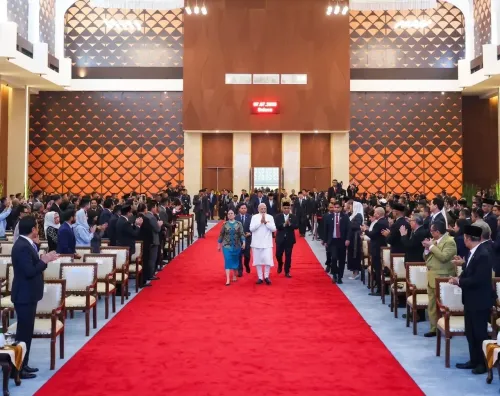
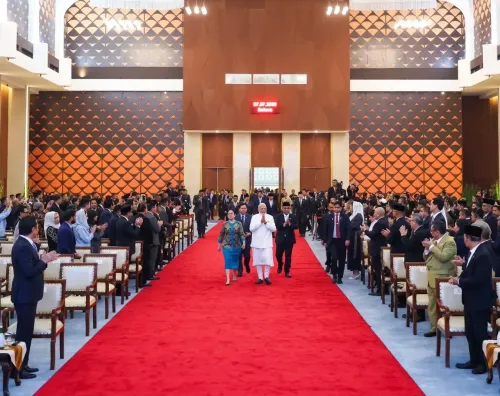
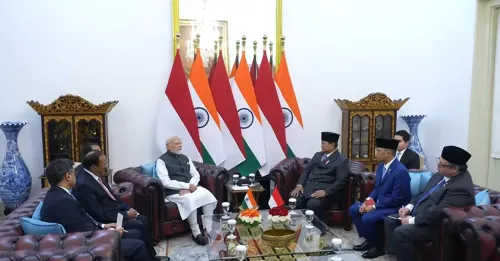
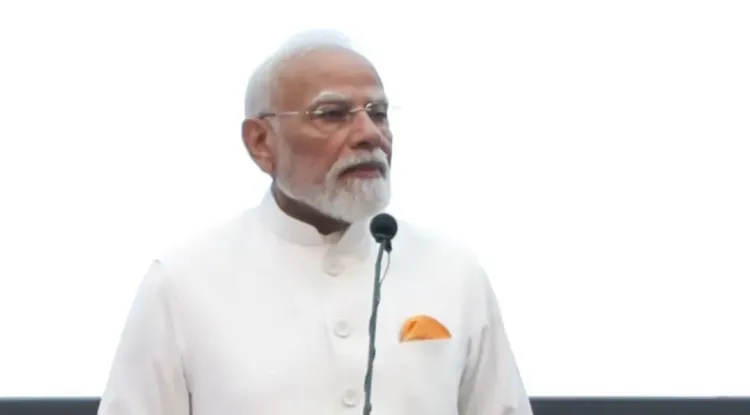
Prime Minister Narendra Modi on Tuesday, 7 July addressed the Indonesian Parliament in Jakarta, declaring that India is a nation that pursues development over expansionism. Speaking before lawmakers in one of Southeast Asia's largest democracies, Modi underscored the depth of the India-Indonesia relationship and outlined a shared vision for the next 25 years.
The Core Message: Development Over Expansionism
In his address, Modi drew a sharp philosophical distinction between India's foreign policy posture and that of expansionist powers. 'India is a nation that follows the path not of expansionism but of development. That is why in India we say Sabka Saath, Sabka Vikas — Together with all, development for all,' he said. He presented this principle as the guiding sentiment he carried to Jakarta as a representative of 140 crore Indians.
Notably, the remarks come at a time of heightened global attention on territorial assertiveness in the Indo-Pacific — a region where both India and Indonesia are key stakeholders. While Modi did not name any country, the framing was widely seen as a reaffirmation of India's non-coercive foreign policy doctrine.
The 'Copyright of Friendship' Exchange
One of the most-quoted moments of the visit was an exchange rooted in a remark made earlier in the day by Indonesian President Prabowo Subianto, who said he copies Modi's career and is 'happy there is no copyright in following this progress.' Modi responded warmly from the Parliament floor: 'No one can hold a copyright over this love, this affection, this friendship, or this sense of mutual respect. My friendship with President Prabowo transcends all boundaries of copyright.'
The exchange set an unusually personal tone for a bilateral address and drew an enthusiastic response from Indonesian lawmakers.
India and Indonesia: Separated by Sea, United by History
Modi highlighted the geographic and cultural proximity of the two nations, pointing out that while the two capitals are thousands of kilometres apart, the sea separates them by only 150 kilometres at the closest point. 'While the sea has often served as a barrier or a source of distance between other nations, for India and Indonesia, it has never symbolised separation — instead, the sea acts as a bridge between us,' he said.
This framing aligns with India's broader SAGAR (Security and Growth for All in the Region) doctrine, which positions the Indian Ocean as a zone of cooperation rather than contestation. Indonesia, as the world's largest archipelagic nation, is a natural anchor for that vision.
Bintang Adipurna Honour and the Bilateral Moment
Earlier on Tuesday, President Subianto conferred upon Modi the Bintang Adipurna of the Republic of Indonesia — the country's highest civilian honour. Modi expressed gratitude for the recognition, stating that it 'reflects the democratic values, shared heritage and the strong ties between the two nations.'
Modi called the day 'one of the most memorable days of his life,' citing the warmth shown by Indonesian citizens, youth, and women during his morning reception. 'The way the people of Indonesia showed me their love this morning, the way they welcomed me, I can never forget that,' he said.
A Pivotal 25 Years Ahead
Modi framed the current moment as historically significant for both nations. 'The first quarter of this century has passed, and the coming 25 years are crucial for both our nations,' he told Parliament, adding that India and Indonesia together would 'serve all of humanity with new energy.'
With bilateral trade, defence cooperation, and digital connectivity all on the agenda during this state visit, the Jakarta address is expected to set the tone for a deeper strategic partnership between Asia's two largest democracies.
Point of View
Where China's territorial posture remains the elephant in the room. Indonesia, as the region's largest nation and a non-aligned power, is a critical partner for India's Act East policy, and this visit elevates that relationship from transactional to strategic. The Bintang Adipurna honour and the personal warmth with Prabowo provide diplomatic cover for deeper defence and maritime cooperation that both sides need but rarely announce loudly. What mainstream coverage misses is the 25-year framing — Modi is not just managing the present bilateral; he is staking a claim to being Indonesia's preferred partner for the next generation of growth.
NationPress
6 Oct 2026
Frequently Asked Questions
What did PM Modi say at the Indonesian Parliament on 7 July?
PM Modi told the Indonesian Parliament that India follows the path of development, not expansionism, and invoked his 'Sabka Saath, Sabka Vikas' principle as India's guiding philosophy. He also described the next 25 years as pivotal for both India and Indonesia.
What is the Bintang Adipurna honour awarded to PM Modi?
The Bintang Adipurna is Indonesia's highest civilian honour, conferred upon Modi by President Prabowo Subianto on 7 July during his state visit to Jakarta. Modi said the award reflects the democratic values and strong ties shared by the two nations.
What was the 'copyright' exchange between Modi and Prabowo?
President Prabowo Subianto said earlier in the day that he copies Modi's career and is 'happy there is no copyright in following this progress.' Modi responded from the Parliament floor that no one can hold a copyright over love, friendship, or mutual respect.
Why did Modi say the sea is a bridge between India and Indonesia?
Modi noted that while the two capitals are thousands of kilometres apart, the sea separates the two nations by only 150 kilometres at the closest point. He argued that unlike other bilateral relationships where the sea creates distance, for India and Indonesia it has historically served as a connector.
What is the significance of Modi's Jakarta visit for India's foreign policy?
The visit deepens India's Act East engagement with Southeast Asia's largest nation at a time of rising Indo-Pacific tensions. The address, the bilateral honour, and the personal rapport with President Prabowo are expected to accelerate cooperation in trade, defence, and digital connectivity.