PM Modi at Auckland: Manaakitanga mirrors Atithi Devo Bhava, India-NZ share cultural soul
Synopsis
At Auckland's Spark Arena, Modi didn't just address the Indian diaspora — he delivered a philosophical bridge between two ancient traditions. By mapping Manaakitanga onto Atithi Devo Bhava, Whanau onto India's joint family, and Kaitiakitanga onto 'Mata bhumiḥ', he made a case that India and New Zealand share not just diplomatic ties but a civilisational kinship.
Key Takeaways
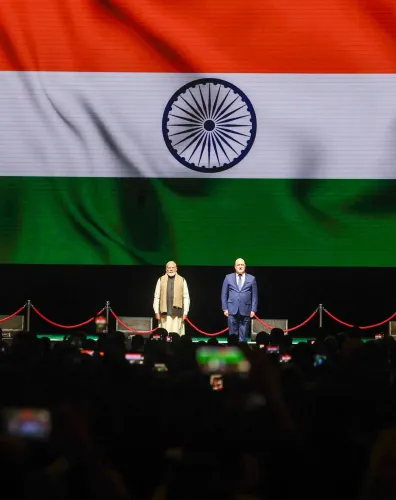
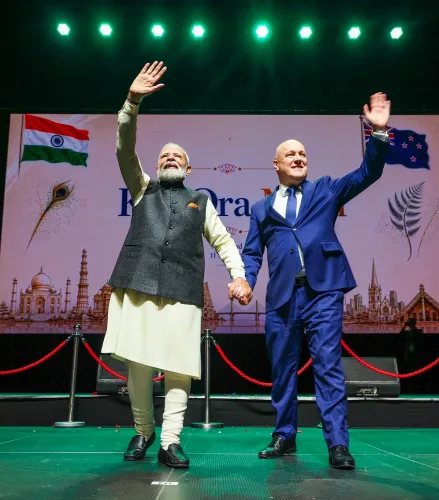
PM Modi addressed the 'Kia Ora Modi' event at Spark Arena, Auckland on 11 July , drawing cultural parallels between India and New Zealand's Maori heritage.
He connected the Maori concept of Manaakitanga (respect, love, wholehearted care) to India's Atithi Devo Bhava , calling the feeling 'exactly the same'.
Modi described the Haka as 'the soul of a society' — embodying courage, self-respect, and collective strength.
He linked the Maori family concept Whanau to India's tradition of treating family as an institution, not merely a social arrangement.
The Maori environmental principle Kaitiakitanga was paralleled with the Sanskrit verse 'Mata bhumiḥ putroahaṃ pṛthivyaḥ' and India's 'Ek Ped Maa Ke Naam' programme.
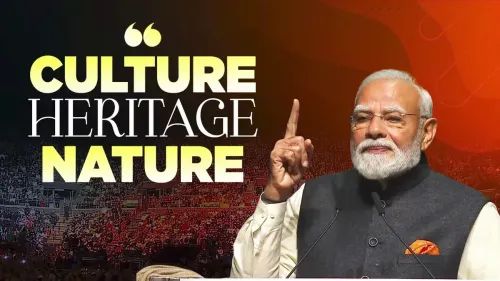
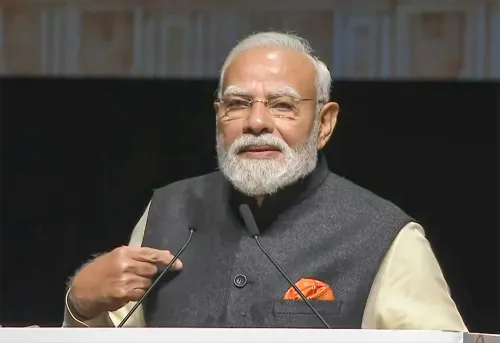
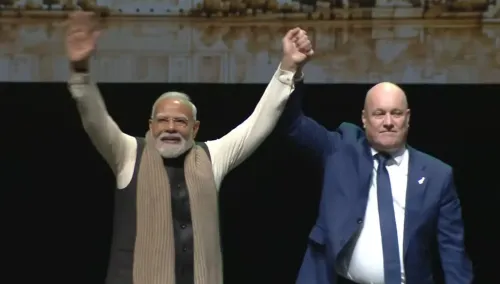
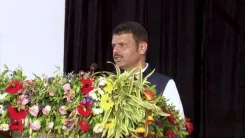
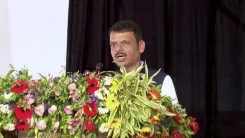
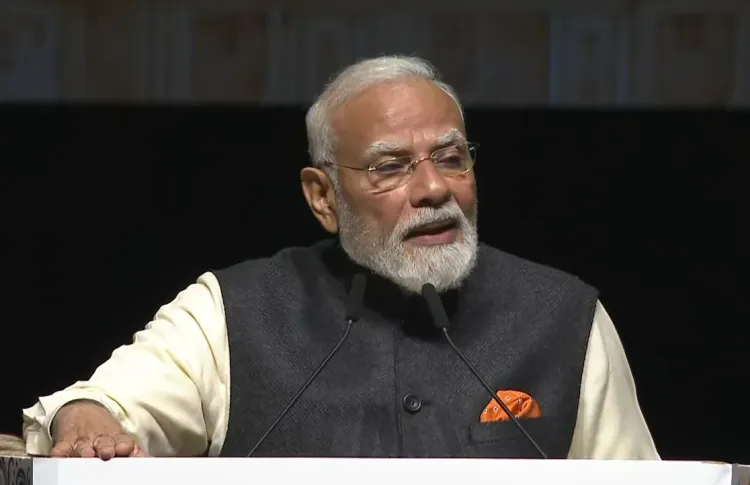
Prime Minister Narendra Modi on Saturday, 11 July drew striking parallels between India's ancient cultural traditions and the indigenous Maori heritage of New Zealand, telling a large gathering of the Indian diaspora that both civilisations are anchored in the same values of respect, compassion, and wholehearted care for others. Speaking at the 'Kia Ora Modi' event at Spark Arena in Auckland, Modi said the convergence runs far deeper than geography or language.
A Shared Commitment to Indigenous Culture
Modi opened by underlining what he called a defining bond between the two nations — their shared instinct to celebrate and protect indigenous heritage. 'There is another very major similarity between India and New Zealand. This similarity is that of our indigenous culture. It is about celebrating and protecting indigenous culture. And today, I especially want to remember the Maori society,' he said.
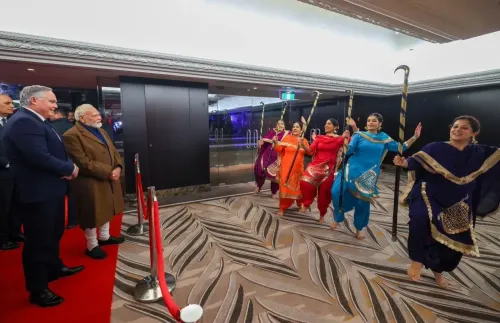
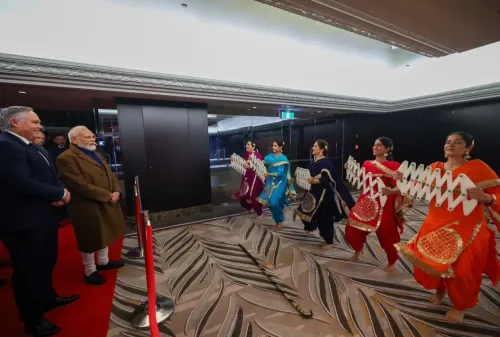
The Prime Minister had earlier received a traditional Maori welcome featuring the iconic Haka upon his arrival in Auckland — a ceremonial dance combining rhythmic chanting, synchronised foot-stomping, body slapping, and expressive facial gestures. Historically performed before battle, the Haka today marks achievements, welcomes distinguished guests, and reinforces community solidarity.
Manaakitanga and Atithi Devo Bhava: Same Feeling, Different Words
The most resonant moment of Modi's address came when he connected the Maori concept of Manaakitanga — showing respect, giving love, and caring for something with all one's heart — to India's own principle of Atithi Devo Bhava, the Sanskrit phrase meaning 'the guest is God'.
'There is a very beautiful word in Maori culture — Manaakitanga. This means showing respect, giving love, and taking care of something with all your heart. In India, we also say 'Atithi Devo Bhava'. The words are different, the environment is different, the attire is different, and the languages are different, but the feeling is exactly the same,' Modi said.
On the Haka itself, he was equally emphatic: 'I have not seen Haka only as a performance; I have seen the soul of a society in Haka. It has courage, self-respect, and faith in our ancestors. And it is a feeling of the collective strength of the entire community.'
Whanau and the Indian Idea of Family as Institution
Modi also drew a parallel between the Maori concept of Whanau — a word for family that encompasses multiple generations, relationships, and the broader community — and India's own understanding of the family unit. 'In India, we do not consider family just a social arrangement; for us, family is an institution,' he said, noting the close resemblance between the two traditions.
Kaitiakitanga and India's Environmental Ethos
Extending the cultural comparison to ecology, Modi cited the Maori principle of Kaitiakitanga — the responsibility of guardianship over nature — and linked it to the Sanskrit verse 'Mata bhumiḥ putroahaṃ pṛthivyaḥ', meaning 'the Earth is my Mother, and I am her son'.
'The concept of Kaitiakitanga teaches us that we are not the owner of the environment but protectors,' he said, adding that India has channelled this philosophy into programmes such as 'Ek Ped Maa Ke Naam' and the 'Prakrutik Kheti Mission' for earth conservation.
Significance of the Auckland Address
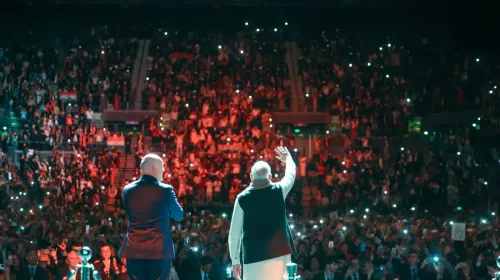
The 'Kia Ora Modi' event drew a large gathering of the Indian community in New Zealand, and Modi's address was notable for its depth of cultural engagement — going well beyond the usual diplomatic pleasantries to articulate a philosophical kinship between two civilisations separated by thousands of kilometres. This is the first visit by an Indian Prime Minister to New Zealand in nearly a decade, lending the cultural outreach added diplomatic weight. How these shared values translate into concrete bilateral outcomes in trade, education, and people-to-people ties will be closely watched in the weeks ahead.
Point of View
He deployed soft power with unusual precision. Yet the real test of this cultural kinship is whether it translates into tangible bilateral outcomes: a long-pending trade agreement, enhanced mobility for Indian workers, or deeper education ties. Cultural resonance is a strong opener, but New Zealand's Indian diaspora — one of its fastest-growing communities — will be watching for policy follow-through, not just poetic parallels.
NationPress
9 Oct 2026
Frequently Asked Questions
What is Manaakitanga and why did PM Modi mention it?
Manaakitanga is a Maori concept meaning showing respect, giving love, and caring for something wholeheartedly. PM Modi cited it at the 'Kia Ora Modi' event in Auckland on 11 July to draw a parallel with India's own principle of Atithi Devo Bhava, arguing that both cultures share the same foundational feeling despite differences in language and setting.
What is the 'Kia Ora Modi' event in Auckland?
It is a community gathering organised for the Indian diaspora in New Zealand, held at Spark Arena in Auckland on 11 July. PM Modi addressed a large gathering at the event during his visit to New Zealand, making it a centrepiece of his people-to-people outreach on the trip.
What is the Haka and how did Modi respond to it?
The Haka is a traditional Maori ceremonial dance involving rhythmic chanting, foot-stomping, body slapping, and expressive facial gestures. Modi was accorded a Haka welcome upon arriving in Auckland and described it as 'the soul of a society' — embodying courage, self-respect, and collective community strength.
How did Modi connect Maori environmental values to Indian traditions?
Modi linked the Maori principle of Kaitiakitanga — the duty to protect nature as a guardian, not an owner — to the Sanskrit verse 'Mata bhumiḥ putroahaṃ pṛthivyaḥ', meaning 'the Earth is my Mother, and I am her son'. He also cited India's 'Ek Ped Maa Ke Naam' and 'Prakrutik Kheti Mission' as practical expressions of this shared ethos.
What does Whanau mean and why did Modi reference it?
Whanau is the Maori word for family, encompassing multiple generations, relationships, and the wider community. Modi referenced it to highlight its resemblance to India's own tradition of viewing family not as a social arrangement but as an institution — a parallel he said reflects a deeper civilisational similarity between the two nations.