PM Modi Highlights Sikh Heritage Preservation Alongside Economy and Ecology

Synopsis
Prime Minister Narendra Modi on 11 July 2026 stated that India has preserved Sikh heritage in tandem with its economic and ecological priorities, sharing specific examples in an accompanying video — reinforcing the government's inclusive cultural conservation agenda.
Key Takeaways
PM Modi on 11 July 2026 said India balances economy and ecology with active heritage preservation.
He cited specific examples relating to Sikh brothers and sisters , shared via an accompanying video.
The Kartarpur Sahib Corridor , operationalised in 2019 , remains the flagship Sikh heritage initiative under his government.
The HRIDAY scheme (launched 2015 ) and Namami Gange (launched 2014 ) form the broader policy framework linking development with cultural conservation.
The statement signals continued government outreach to Sikh communities in India and the global diaspora.
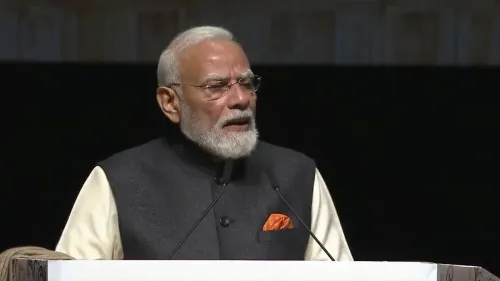
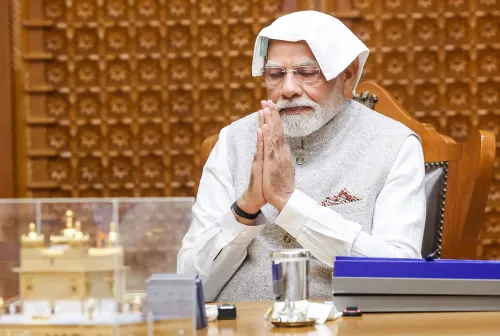
Prime Minister Narendra Modi on Saturday, 11 July 2026 shared that India has pursued growth and environmental goals while simultaneously protecting its cultural and religious heritage, citing specific examples related to the country's Sikh community.
Context
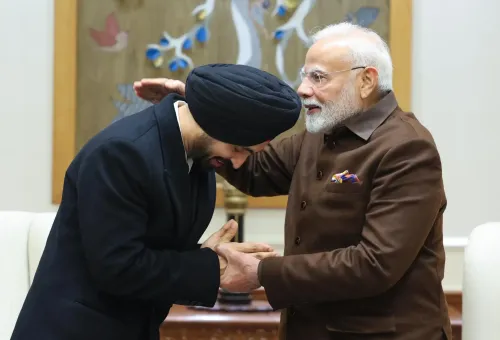
In his post, PM Modi wrote: 'India has focused on economy and ecology but at the same time, we have preserved and protected our heritage too. As examples, talked about few instances relating to our Sikh brothers and sisters.' The post was accompanied by a video elaborating on those instances. The statement frames heritage preservation not as a separate agenda but as a third pillar running alongside economic development and environmental stewardship.
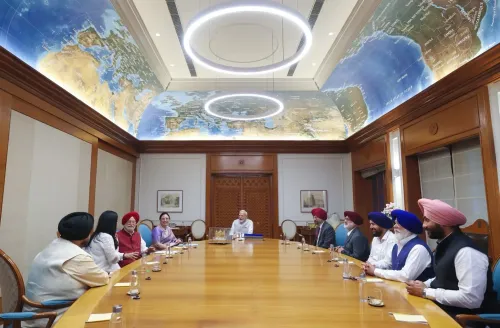
The remarks appear to follow a public address or event in which Modi enumerated concrete initiatives benefiting Sikh pilgrims and religious sites — a recurring feature of the government's outreach to minority and diaspora communities.
Policy Backdrop
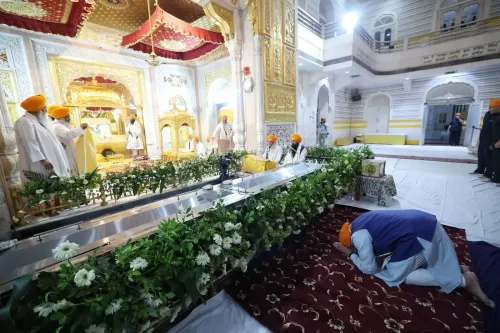
The government's record on Sikh heritage includes the operationalisation of the Kartarpur Sahib Corridor in 2019, a bilateral project with Pakistan that allows Indian Sikh pilgrims visa-free access to Gurdwara Darbar Sahib — one of the holiest sites in Sikhism. The corridor was inaugurated around the 550th birth anniversary of Guru Nanak Dev Ji, the founder of Sikhism, which the government marked with heritage restorations and large-scale commemorative events.
Broader heritage policy has been channelled through schemes such as HRIDAY (Heritage City Development and Augmentation Yojana), launched in 2015, which funds conservation and infrastructure upgrades in cities of historical significance. The Namami Gange programme, launched in 2014, similarly blended ecological restoration with cultural reverence for riverine heritage sites along the Ganga.
Together, these initiatives reflect an approach that positions cultural preservation as integral to — rather than in tension with — development and environmental goals.
Stakeholders and Impact
Sikh pilgrims across India and the global diaspora are the most direct beneficiaries of corridor access and gurdwara restoration projects. Heritage bodies and state governments in Punjab, where many significant Sikh sites are located, also play a key role in implementing central schemes.
The framing of 'Sikh brothers and sisters' is consistent with the government's long-standing effort to signal inclusive outreach to communities across religious lines, particularly ahead of significant anniversaries or bilateral engagements. Sikh diaspora groups in Canada, the United Kingdom, and the United States have historically followed such announcements closely.
What's Next
Observers will watch for further details from the video linked in the post, which is expected to specify the heritage instances Modi referenced. Budget allocations for heritage schemes in the next Union Budget cycle and any new bilateral or domestic announcements concerning Sikh religious sites will be the clearest indicators of how this policy strand develops. Renewed diplomatic engagement on cross-border pilgrimage access — particularly regarding sites in Pakistan — remains a perennial area of interest for the community.
Point of View
The statement taps into a constituency with strong diaspora networks and historical sensitivities around bilateral access to holy sites. This fits a consistent pattern across both Modi tenures: pairing large infrastructure or environmental announcements with parallel narratives of minority community inclusion. The linked video will be the real test of substance — whether it introduces new commitments or consolidates existing ones.
NationPress
11 Jul 2026
Frequently Asked Questions
What did PM Modi say about Sikh heritage on 11 July 2026?
PM Modi said India has preserved and protected Sikh heritage alongside its focus on economy and ecology, and shared specific examples in a video accompanying his post on X.
What is the Kartarpur Sahib Corridor?
The Kartarpur Sahib Corridor is a bilateral project between India and Pakistan, operationalised in 2019, that allows Indian Sikh pilgrims visa-free access to Gurdwara Darbar Sahib in Pakistan — one of Sikhism's holiest shrines.
What government schemes support heritage preservation in India?
The HRIDAY scheme, launched in 2015, funds heritage city development and conservation. The Namami Gange programme, launched in 2014, combines ecological restoration with cultural reverence for riverine heritage sites.
Why does PM Modi frequently reference the Sikh community in policy statements?
The Sikh community holds significant political, cultural, and diaspora weight in India. The government's outreach to Sikh pilgrims and religious sites is part of a broader inclusive development narrative that spans multiple religious communities.
What Sikh heritage sites has the Indian government worked on?
Key initiatives include the Kartarpur Sahib Corridor for access to Gurdwara Darbar Sahib, and commemorative restorations around the 550th birth anniversary of Guru Nanak Dev Ji in 2019. Specific additional instances were referenced by PM Modi in a video posted on 11 July 2026.