Modi-Meloni meet: India, Italy condemn Pahalgam attack, sign defence roadmap
Synopsis
Modi and Meloni didn't just exchange pleasantries in Rome — they named the Pahalgam attack, launched a counter-terror financing task force, and signed a Defence Industrial Roadmap spanning helicopters to electronic warfare. The meeting signals India is actively internationalising its post-Pahalgam diplomatic offensive while locking in a strategic partner within the G7.
Key Takeaways
PM Narendra Modi and Italian PM Giorgia Meloni met in Rome on 20 May 2025 and issued a joint condemnation of terrorism.
The Joint Declaration explicitly condemned the April 2025 Pahalgam terror attack and called for action against groups listed under UN Security Council 1267 Sanctions .
A Defence Industrial Roadmap was signed, covering co-production of helicopters , naval platforms , marine armament , and electronic warfare systems.
Both sides agreed to explore an annual high-level military structured dialogue and joint exercises.
An MoU between Italy's Guardia di Finanza and India's Directorate of Enforcement was concluded; talks on an Extradition Treaty and MLAT are ongoing.
A new maritime security dialogue was launched to strengthen coordination and information-sharing.
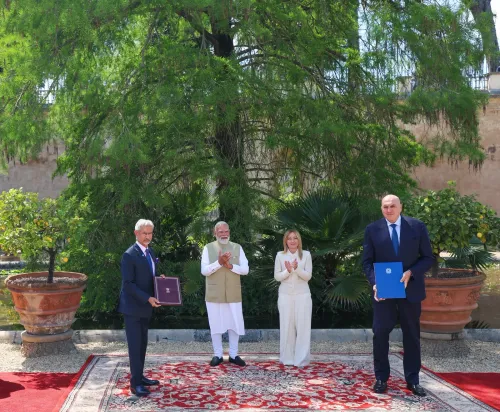
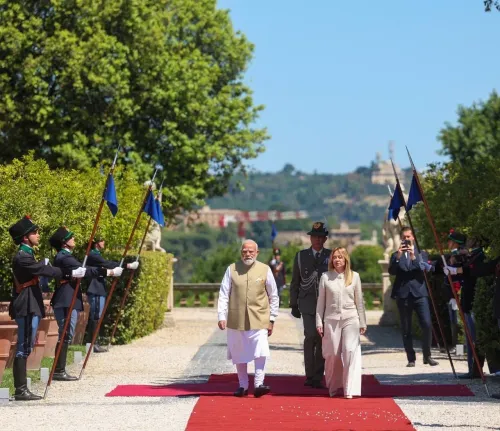
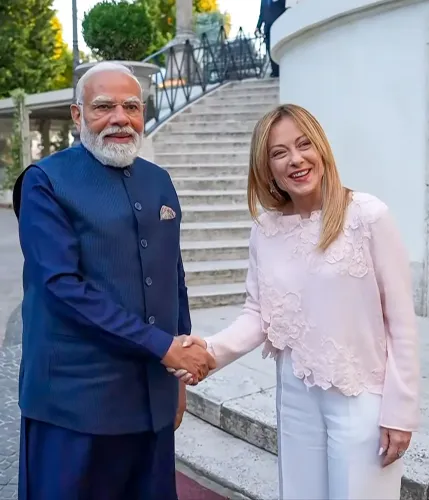
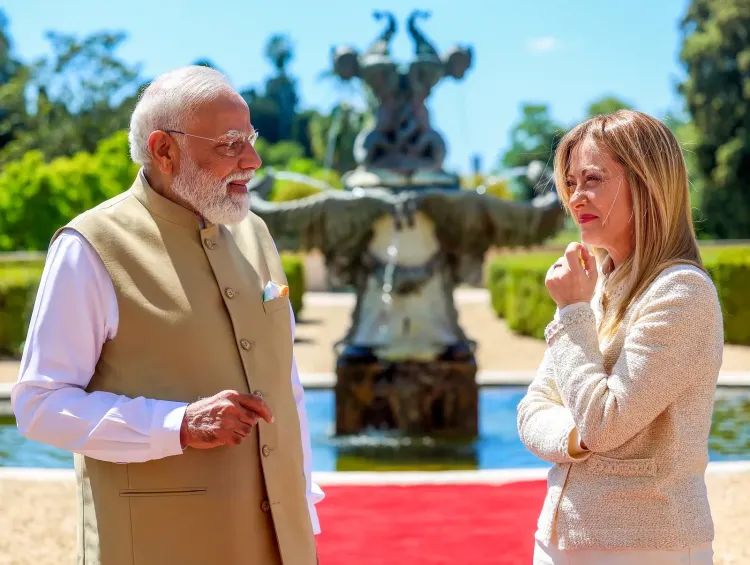
Prime Minister Narendra Modi and his Italian counterpart Giorgia Meloni on Wednesday, 20 May jointly condemned terrorism and violent extremism in all its forms during a bilateral meeting in Rome, singling out cross-border terrorism and explicitly calling out the April 2025 Pahalgam terror attack. The two leaders also signed a Defence Industrial Roadmap and a Joint Declaration of Intent, marking a significant deepening of India-Italy strategic ties.
Joint Condemnation of Terrorism
The India-Italy Joint Declaration released after the meeting stated that both leaders 'strongly condemned terrorism and violent extremism in all its forms and manifestations, including cross border terrorism.' The declaration specifically named the April 2025 Pahalgam attack and reaffirmed both governments' commitment to cooperate against terrorist groups and their affiliates, including those listed under the UN Security Council 1267 Sanctions regime.
Both sides called on all nations to work towards eliminating terrorist safe havens and infrastructure, disrupting terrorist networks, and cutting off terror financing — consistent with the Financial Action Task Force (FATF) guidelines. The two Prime Ministers also pledged to coordinate at the United Nations, FATF, and other multilateral platforms. Notably, the meeting also welcomed the first session of the Permanent Task Force between India and Italy on countering terrorism financing, along with an upcoming meeting of the Joint Working Group (JWG) on Counter Terrorism.
Defence Industrial Roadmap and Military Cooperation
Modi and Meloni expressed satisfaction at the expanding defence partnership, which now includes ministerial exchanges, service-to-service ties, and port visits. The newly adopted Defence Industrial Roadmap is designed to facilitate technological cooperation, co-production, and co-development across several domains — including helicopters, naval platforms, marine armament, and electronic warfare systems.
Both countries agreed to examine the feasibility of launching an annual high-level military structured dialogue, which would complement the existing Joint Defence Committee and the Military Cooperation Group. Joint exercises and inter-force training courses are also on the agenda, according to the Joint Statement.
Maritime Security and Law Enforcement Ties
The two leaders agreed to launch a dedicated dialogue on maritime security, aimed at strengthening coordination and sharing best practices in the maritime domain. This comes amid growing global focus on securing sea lanes and critical supply chains.
On law enforcement, both sides welcomed the conclusion of a Memorandum of Understanding (MoU) between Italy's Guardia di Finanza and India's Directorate of Enforcement. They also looked forward to the early conclusion of an Agreement on Exchange and Mutual Protection of Classified Information and a Police Cooperation Agreement. Ongoing discussions on an Extradition Treaty and a Mutual Legal Assistance Treaty (MLAT) were also acknowledged in the statement.
Critical Infrastructure and Supply Chain Resilience
The Joint Statement noted that both Prime Ministers recognised the importance of protecting critical infrastructure and related supply chains through stronger industrial resilience. This signals a broadening of the bilateral agenda beyond traditional diplomacy into economic security — a priority that has gained urgency across G7 and partner nations in recent years.
The Rome meeting positions India-Italy ties on a markedly more strategic footing, with the defence roadmap and counter-terrorism framework expected to shape cooperation well into the next decade.
Point of View
Which has been the perennial weakness of India's bilateral defence agreements. The Extradition Treaty discussions, if concluded, would also have direct implications for fugitive economic offenders — a politically sensitive file that Rome and New Delhi have circled for years without closure.
NationPress
7 Oct 2026
Frequently Asked Questions
What did India and Italy agree on at the Rome meeting on 20 May 2025?
India and Italy jointly condemned terrorism — including the April 2025 Pahalgam attack — and signed a Defence Industrial Roadmap covering co-production of helicopters, naval platforms, and electronic warfare systems. They also launched a maritime security dialogue and concluded an MoU between Italy's Guardia di Finanza and India's Directorate of Enforcement.
Why did the joint declaration specifically mention the Pahalgam terror attack?
Both leaders reaffirmed their commitment to cooperate against terrorist groups and their affiliates, and the Pahalgam attack — which occurred in April 2025 — was cited as a recent example of cross-border terrorism that both governments condemn. The mention signals Italy's alignment with India's post-attack diplomatic posture.
What is the India-Italy Defence Industrial Roadmap?
It is a newly adopted framework designed to promote technological cooperation, co-production, and co-development between Indian and Italian defence industries. Key areas include helicopters, naval platforms, marine armament, and electronic warfare systems.
What is the Permanent Task Force on countering terrorism financing?
It is a newly established bilateral mechanism between India and Italy focused specifically on disrupting the financing of terrorism, consistent with FATF guidelines. The Rome meeting welcomed its first session and also noted an upcoming meeting of the Joint Working Group on Counter Terrorism.
Are India and Italy working on an extradition treaty?
Yes, discussions on an Extradition Treaty and a Mutual Legal Assistance Treaty (MLAT) are ongoing, according to the Joint Statement. No conclusion date has been announced, but both sides expressed intent to advance these agreements.