Are PM Modi and Italy’s Deputy PM Tajani Accelerating the Strategic Action Plan 2025-2029?
Synopsis
Prime Minister Modi and Italy’s Deputy PM Tajani are making significant advancements in their countries' relationship, focusing on the ambitious Strategic Action Plan 2025-2029. Their discussions aim to enhance cooperation in various sectors and contribute positively to global stability. This meeting is a vital step in strengthening ties, reflecting a shared commitment to mutual growth and peace.
Key Takeaways
India and Italy are collaborating on the Strategic Action Plan 2025-2029.
Both nations are committed to strengthening ties across various sectors.
Enhancing peace initiatives in Ukraine and the Middle East is a priority.
The partnership aims to benefit both countries and the global community.
Deputy PM Tajani's visit underscores the importance of Indo-Italian relations.
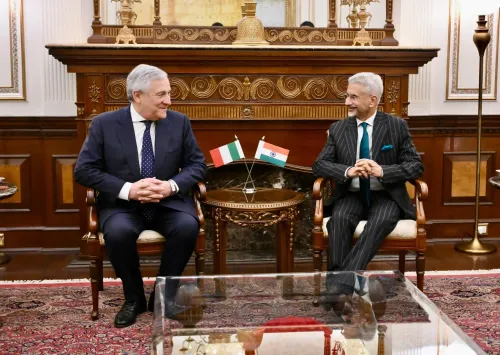
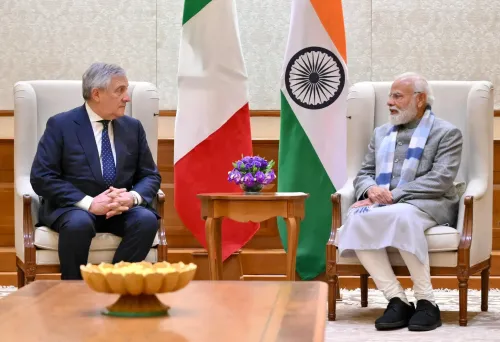
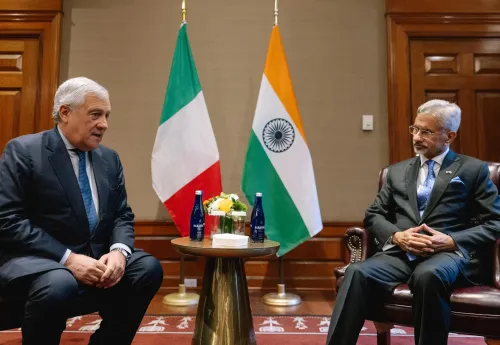
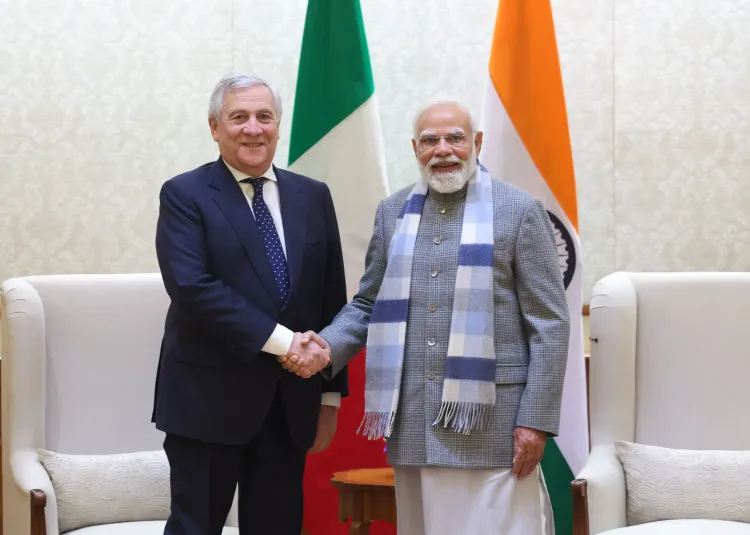
New Delhi, Dec 10 (NationPress) Prime Minister Narendra Modi stated that India and Italy are making consistent strides in various fields of collaboration during his meeting with Italy's Deputy Prime Minister and Minister of Foreign Affairs and International Cooperation, Antonio Tajani, in the capital city.
This meeting occurs as both countries strive to implement the India-Italy Joint Strategic Action Plan 2025-2029, a framework aimed at enhancing their cooperation beyond conventional sectors.
In a post on X, PM Modi expressed gratitude for the “proactive measures” being adopted by both administrations to foster partnerships in areas such as trade, investment, research, innovation, defense, space, connectivity, counter-terrorism, education, and interpersonal relations.
He characterized the India-Italy alliance as one that “keeps getting stronger”, emphasizing that the growing partnership benefits not just the two nations but also has a positive impact on the global community.
“I was pleased to meet Italy’s Deputy Prime Minister & Minister of Foreign Affairs and International Cooperation, Antonio Tajani, today. I conveyed appreciation for the proactive steps being taken by both sides towards implementing the Italy-India Joint Strategic Action Plan 2025-2029 across key sectors such as trade, investment, research, innovation, defense, space, connectivity, counter-terrorism, education, and people-to-people ties. The friendship between India and Italy continues to strengthen, greatly benefiting our people and the global community,” PM Modi shared on X.
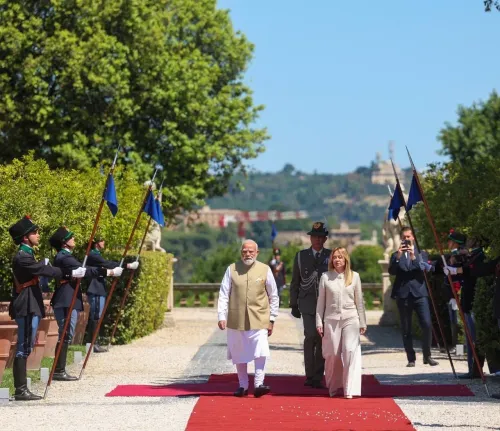
India and Italy upgraded their relationship to a Strategic Partnership during Italian Prime Minister Giorgia Meloni's visit in 2023, setting the foundation for an ambitious long-term agenda now being executed through the 2025–2029 plan.
Earlier on Wednesday, Tajani remarked that the two nations are strategic partners bound by a “growing and solid friendship.”
He declared that India and Italy will enhance their commitment to securing peace in Ukraine and the Middle East.
After their meeting, Tajani wrote on X: “In New Delhi, I had a very amicable meeting with Prime Minister Narendra Modi. Italy and India are countries connected by a growing and solid friendship, mutually strategic partners. Our goal is to increase India’s presence in Italy and Italy’s presence in India, facilitated by the IMEC corridor connecting our nations via Asia, the Middle East, and Africa. Together with our Governments, we will bolster our commitment to achieving peace in Ukraine and the Middle East.”
Tajani arrived in Delhi on Wednesday for an official visit lasting three days, marking his second trip this year aimed at deepening the India-Italy Strategic Partnership.
The Ministry of External Affairs (MEA) spokesperson, Randhir Jaiswal, warmly welcomed the visiting minister.
“A warm welcome to Italy's Deputy Prime Minister & Minister of Foreign Affairs and International Cooperation, Antonio Tajani, upon his arrival in New Delhi. This marks his second visit to India this year. His engagements in Delhi and Mumbai will further strengthen the India-Italy Strategic Partnership,” Jaiswal posted on X.
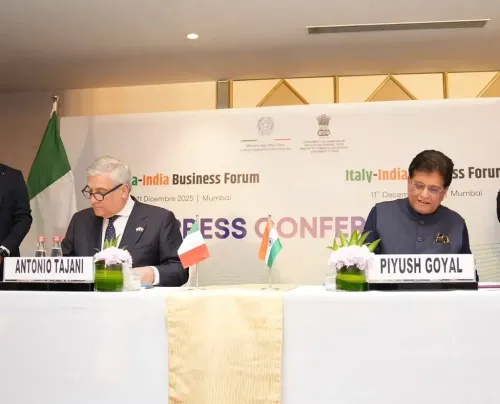
During his stay in India, Tajani is set to meet with Union Minister of Commerce and Industry Piyush Goyal in Mumbai. Tajani is expected to depart from Mumbai on Friday, concluding his engagements in India.
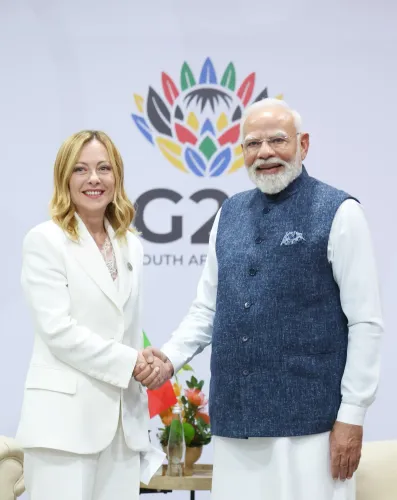
On November 23, Prime Minister Narendra Modi and Italian Prime Minister Giorgia Meloni engaged in discussions on the sidelines of the G20 Summit in Johannesburg, South Africa, where they explored ways to deepen bilateral ties across various sectors, including trade, investment, defense, innovation, AI, space, and education.
Point of View
The meeting between PM Modi and Deputy PM Tajani signifies a robust commitment to enhancing bilateral ties that benefit both nations. As the world faces various challenges, the strategic alignment between India and Italy reflects a proactive approach to international cooperation and peace-building, emphasizing the importance of strong partnerships in a globalized era.
NationPress
19 Sept 2026
Frequently Asked Questions
What is the significance of the India-Italy Joint Strategic Action Plan?
The India-Italy Joint Strategic Action Plan outlines a roadmap for expanding cooperation between the two nations across various sectors, including trade, defense, and education, emphasizing mutual growth and collaboration.
How does the meeting between PM Modi and Deputy PM Tajani impact global relations?
The meeting highlights the strengthening ties between India and Italy, which can enhance stability in global politics and foster collaboration on pressing issues like peace in Ukraine and the Middle East.
What sectors are being prioritized in the India-Italy partnership?
Key sectors prioritized in the partnership include trade, investment, research, innovation, defense, space, connectivity, counter-terrorism, education, and enhancing people-to-people ties.
What was discussed regarding peace initiatives?
Both leaders committed to strengthening their joint efforts toward achieving peace in regions like Ukraine and the Middle East, showcasing their dedication to international stability.
How many times has Deputy PM Tajani visited India this year?
Deputy PM Tajani is on his second official visit to India this year, indicating the growing importance of India-Italy relations.