Lowy Index ranks Modi second in regional leadership
Synopsis
Prime Minister Narendra Modi moved up three places to rank second in the Lowy Institute's regional leadership assessment, behind Xi Jinping. India retained third place overall in the 2026 Asia Power Index, despite a slight fall in its economic capability score.
Key Takeaways
Prime Minister Narendra Modi rose three places to rank second in the Lowy Institute's 2026 regional leadership assessment.
Chinese President Xi Jinping ranked first in the leadership assessment.
India remained third overall in the Asia Power Index, with 40.5 points .
India's strongest measure was diplomatic influence, at 70.3 points .
India's economic capability score slipped to 26.4 points , while its future resources score rose to 56.2 points .
The index assessed 27 countries and territories using 131 indicators across eight measures .
The Lowy Institute's 2026 Asia Power Index ranks Prime Minister Narendra Modi the second-most effective regional leader, behind Chinese President Xi Jinping. The assessment also places India third among 27 countries and territories, with its overall power score rising to 40.5 points.
The findings point to stronger regional influence for India, even as its economic capability score declined slightly. The United States and China retained the top two positions in the index, respectively.
Modi's regional leadership assessment
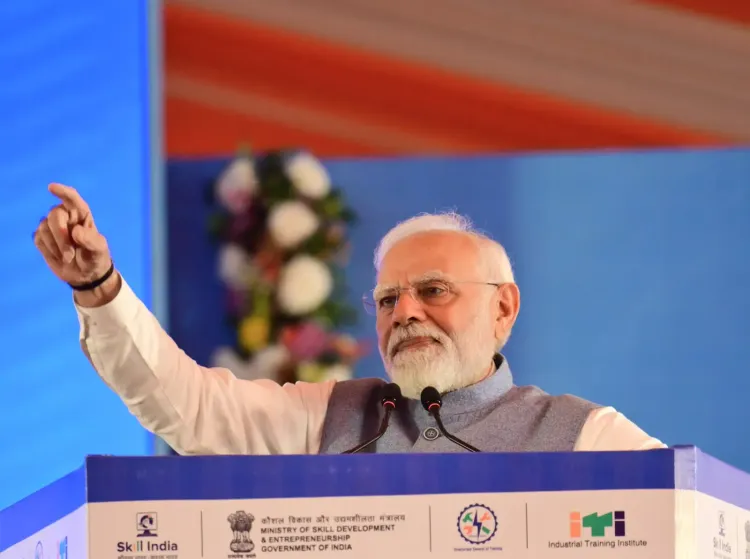
The report said assessments of Modi's regional leadership improved significantly, moving him up three places to second among the leaders assessed. Xi remained ahead of him.
Dr Hunter Marston, Director of the Southeast Asia Program at the Lowy Institute and Project Lead for the Asia Power Index, said in a post on X that the gap between India and China was the narrowest since 2018. He also noted the improvement in Modi's leadership rating despite a dip in India's economic capability.
Diplomacy remains India's strongest measure
Diplomatic influence was India's strongest measure in the assessment, at 70.3 points. The report also identified improvements in defence engagement, cultural reach and future resources as contributors to the country's regional standing.
The distinction between overall power and individual measures matters: a country's position in the index reflects several dimensions rather than diplomatic influence alone. India remained third overall even though its strongest score was in diplomacy.
The index evaluates 27 countries and territories using 131 indicators across eight measures of power. These include economic and military capability, resilience, diplomatic influence and economic relationships.
Economic capability slips as future outlook improves
India's economic capability score fell slightly to 26.4 points, although it retained third place in that category. The Lowy Institute attributed the decline partly to a weakening rupee, changes in the International Monetary Fund's methodology for measuring economies and a nearly $20 billion fall in outbound investment.
By contrast, India's future resources score rose to 56.2 points. The report linked that increase to an improved economic outlook and the country's growth potential.
The contrasting measures show that a stronger overall position can coexist with a weaker score in an individual category. They also separate the assessment of current economic capability from the index's view of future resources.
India's position in the regional index
The 2026 results leave India behind the United States and China in the overall ranking while placing it ahead of the remaining countries and territories assessed. According to Marston, its gap with China has narrowed to its smallest since 2018.
The report described India's economic and diplomatic results as mixed, while concluding that the country had become more influential in Asia. Future editions of the index will show how these measures and rankings change over time.
Point of View
But the decline in its economic capability score is a reminder that influence rests on more than leadership assessments. The index separates current capability from future potential, and a higher future resources score should not be mistaken for a present economic gain. The test for India is whether its diplomatic reach and growth potential translate into sustained economic strength.
NationPress
23 Nov 2026
Frequently Asked Questions
Where does Narendra Modi rank in the 2026 Lowy Index?
Narendra Modi ranks second in the Lowy Institute's assessment of effective regional leaders, behind Chinese President Xi Jinping. He moved up three places.
What is India's rank in the 2026 Asia Power Index?
India ranks third overall in the 2026 Asia Power Index, with a score of 40.5 points. The United States and China hold the first and second positions, respectively.
Why did India's economic capability score fall?
The Lowy Institute partly attributed the decline to a weakening rupee, changes in the International Monetary Fund's measurement methodology and a nearly $20 billion fall in outbound investment. India's score slipped to 26.4 points, though it remained third in the category.
What was India's strongest measure in the Lowy Index?
Diplomatic influence was India's strongest measure, with a score of 70.3 points. The report also recorded improvements in defence engagement, cultural reach and future resources.
What does the Asia Power Index measure?
The Asia Power Index evaluates 27 countries and territories across 131 indicators and eight measures of power. Its measures include economic and military capability, resilience, diplomatic influence and economic relationships.