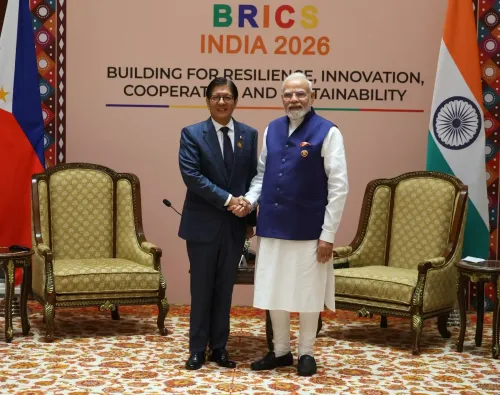
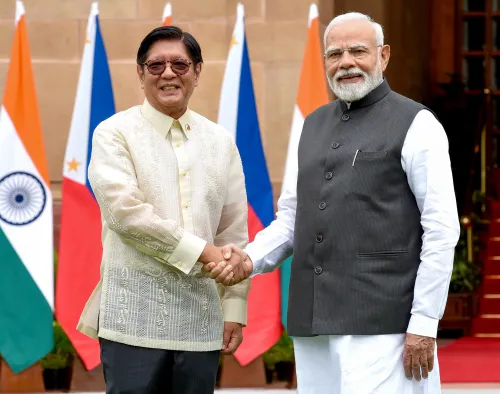
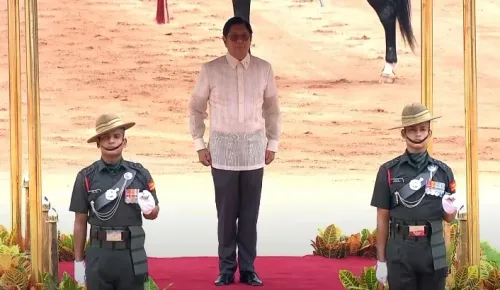
Modi's Philippines visit to double bilateral trade, says FICCI Philippines chief
Synopsis
India-Philippines bilateral trade has already doubled to $4 billion since 2016 — and the FICCI Philippines chief says Modi's latest visit could double it again. With a strategic partnership signed, BrahMos delivered, and direct flights now running, the relationship is shifting from symbolic warmth to structural depth across tourism, IT, BPO, pharma, and defence.
Key Takeaways
PM Narendra Modi 's visit to the Philippines is expected to deepen economic and strategic ties, according to FICCI Philippines President Vishal Vishnu Hathiramani .
Bilateral trade has doubled from approximately $2 billion in 2016 to around $4 billion currently; Hathiramani sees potential for another doubling over 10 years .
The Philippines now offers visa-on-arrival for Indian nationals, and direct flights between the two countries have been launched.
Key growth sectors identified: tourism , IT , BPO , pharmaceuticals , and defence .
The BrahMos missile agreement is cited as a foundation for expanded defence and military-industrial cooperation.
India and the Philippines have formalised a strategic partnership , providing an institutional framework for broader collaboration.
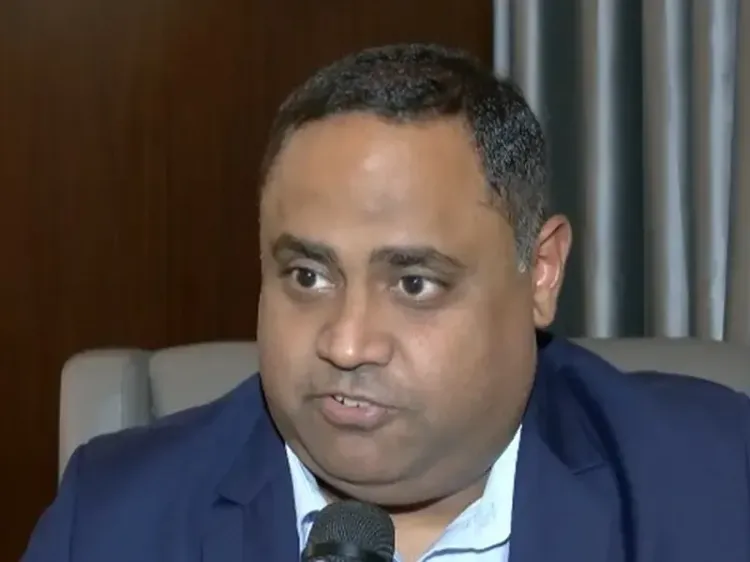
Prime Minister Narendra Modi's visit to the Philippines is set to open a new chapter in economic engagement between the two nations, according to Vishal Vishnu Hathiramani, President of FICCI Philippines. Speaking on 13 November 2026, Hathiramani described the visit as a potential catalyst for deeper commercial ties across trade, investment, and strategic sectors.
Trade Trajectory and What Modi's Visit Could Unlock
Bilateral trade between India and the Philippines has already doubled — from approximately $2 billion in 2016 to around $4 billion at present. Hathiramani believes this upward trajectory could be sustained, with the possibility of trade doubling once again over the next decade if the current momentum holds.
'In 2016, we were a 2-billion trade partner, and as we speak now, we're doing 4 billion. So this is double the economy between the two countries. So with this visit, who knows, it might double once again in the next 10 years,' he said.
Notably, Modi had also visited the Philippines in 2017, and the two countries have since formalised a strategic partnership — a framework that Hathiramani says lends institutional weight to the current momentum.
Tourism, Direct Flights and Visa-on-Arrival as Growth Enablers
Hathiramani identified tourism as among the most immediately promising sectors for bilateral growth. The introduction of visa-on-arrival facilities for Indian citizens travelling to the Philippines, alongside the launch of direct flights between the two countries, has significantly reduced friction for travellers and business visitors alike.
'Currently, the sector that I see where I can see a big boost or jump would be tourism. That's because of the visa on arrival for Indian nationals to the Philippines and direct flights,' he noted.
IT, BPO, Pharma and Defence in Focus
Beyond tourism, Hathiramani pointed to IT, BPO, and pharmaceuticals as sectors where both economies have complementary strengths and existing business relationships ready to scale. He also flagged defence cooperation as an increasingly significant pillar of the bilateral relationship, anchored by the BrahMos missile agreement that the Philippines signed with India in recent years.
'I see all this taking a jump, and recently in the last few years, as you know, Philippines signed the BrahMos deal with India. So I see a lot of bilateral cooperation in defence and military partnership between the two countries,' he said.
Strategic Partnership Adds Institutional Momentum
This comes amid a broader recalibration of India's engagement with Southeast Asia, with the Philippines emerging as a key node in New Delhi's Act East Policy. The formalisation of the strategic partnership between the two nations provides a durable institutional framework for expanding ties across both economic and security domains. Industry observers note that the BrahMos deal, in particular, signals a maturation of the defence relationship beyond traditional aid and training.
With sectoral interest high and structural enablers — direct connectivity, visa facilitation, and a strategic partnership — already in place, the coming months will test whether political momentum translates into measurable commercial outcomes.
Point of View
But Hathiramani's projection of another doubling rests heavily on political goodwill materialising into policy action. The BrahMos deal is the most structurally significant development — it marks the Philippines as a live export market for Indian defence hardware, not merely a diplomatic partner. What is missing from this narrative is a concrete roadmap: which sectors have active investment pipelines, what regulatory barriers remain, and how the strategic partnership will be operationalised. Without that granularity, the optimism risks remaining aspirational rather than actionable.
NationPress
14 Nov 2026
Frequently Asked Questions
What is the significance of PM Modi's visit to the Philippines?
PM Modi's visit to the Philippines is seen as a catalyst for deepening bilateral economic and strategic ties. It follows the formalisation of a strategic partnership between the two countries and comes amid growing trade, defence cooperation anchored by the BrahMos deal, and new direct flight and visa-on-arrival arrangements.
How much has India-Philippines bilateral trade grown?
Bilateral trade between India and the Philippines has doubled from approximately $2 billion in 2016 to around $4 billion currently. FICCI Philippines President Vishal Vishnu Hathiramani believes it could double again over the next decade if current momentum is maintained.
Which sectors are expected to benefit from stronger India-Philippines ties?
Tourism, IT, BPO, and pharmaceuticals are identified as priority growth sectors. Defence cooperation, bolstered by the BrahMos missile agreement, is also flagged as an area of expanding bilateral partnership.
What is the BrahMos deal and why does it matter for India-Philippines relations?
The BrahMos deal refers to the Philippines' agreement to procure BrahMos supersonic cruise missiles from India, marking a significant milestone in defence trade between the two countries. It is seen as the foundation for broader military-industrial collaboration and signals India's growing role as a defence exporter in Southeast Asia.
What travel facilitations now exist between India and the Philippines?
The Philippines has introduced visa-on-arrival for Indian nationals, and direct flights between the two countries have been launched. These measures are expected to significantly boost tourism flows and ease business travel between India and the Philippines.