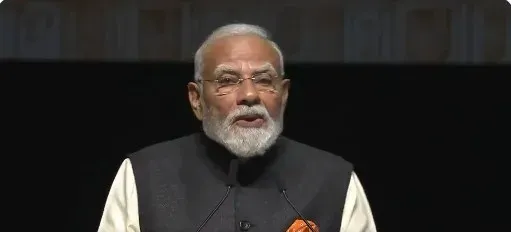
Modi 3-nation tour: Personal rapport powers India's new strategic diplomacy
Synopsis
Three countries, three leaders — and each one went off-script to praise Modi personally. Indonesia's Prabowo said he 'copied' India's programmes; Australia's Albanese called Modi 'the boss'; New Zealand's Luxon described India's rise as 'infectious.' The tour signals India is building a strategic architecture where personality, performance, and policy reinforce one another — a diplomatic style unlike anything New Delhi has deployed before.
Key Takeaways
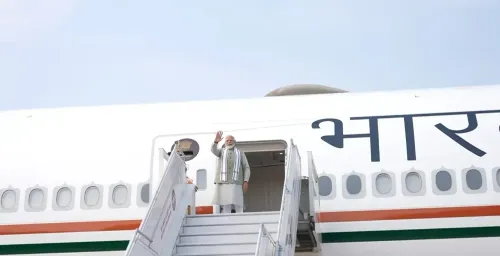
PM Narendra Modi concluded a three-nation tour of Indonesia , Australia , and New Zealand , wrapping up on Saturday, 12 July 2025 .
Indonesian President Prabowo Subianto said he 'copied many of your programmes,' framing India's governance model as a policy reference for Indonesia's own reforms.
Memoranda of understanding were signed covering defence , critical minerals , education , and technology with Indonesia.
Australian PM Anthony Albanese called Modi 'the boss' and described the Indian-Australian diaspora as a 'living bridge' between the two nations.
New Zealand PM Christopher Luxon tied his 'huge admiration' to India's poverty reduction , economic transformation, and rise as a global technology power.
Common focus areas across all three stops: energy , maritime cooperation , defence , critical minerals , and the digital economy .
Prime Minister Narendra Modi has concluded a three-nation tour spanning Indonesia, Australia, and New Zealand, with the visit widely seen as a departure from transactional diplomacy toward a more durable strategic architecture rooted in personal rapport and mutual trust. The tour, which wrapped up on Saturday, 12 July 2025, yielded a range of agreements across defence, critical minerals, energy, and digital cooperation — framed throughout by unusually candid leader-level warmth.
Indonesia: From Admiration to Actionable Agreements
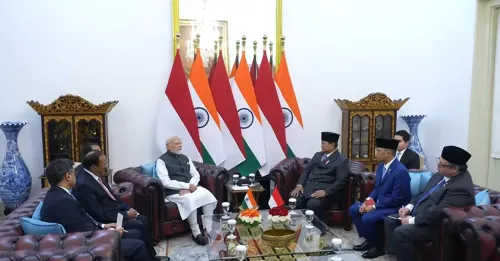
In Jakarta, Indonesian President Prabowo Subianto offered what analysts described as a remarkably direct personal endorsement. 'I am a great admirer of Narendra Modi,' Prabowo said, adding, 'I follow your career and I copied many of your programmes.' The remarks went well beyond standard diplomatic courtesy, framing India's governance model as a direct policy reference for Indonesia's own reform agenda.
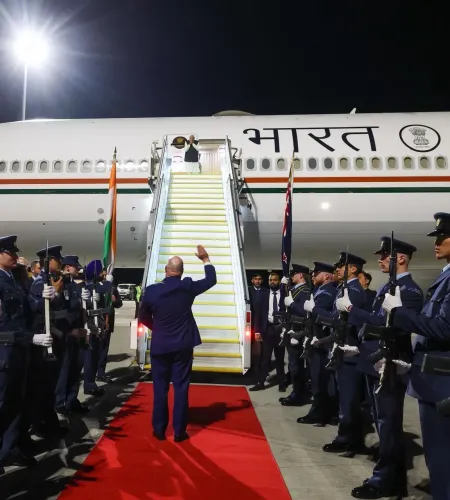
Prabowo personally received Modi on arrival and presided over a state programme that blended formal agreements with cultural pageantry. The visit produced memoranda of understanding on defence, critical minerals, education, and technology — converting personal admiration into tangible bilateral commitments. The Indonesian President also described the visit as a 'historic milestone' reaffirming long-standing cultural and strategic ties between the two countries.
Australia: Leader Chemistry as Strategic Signal
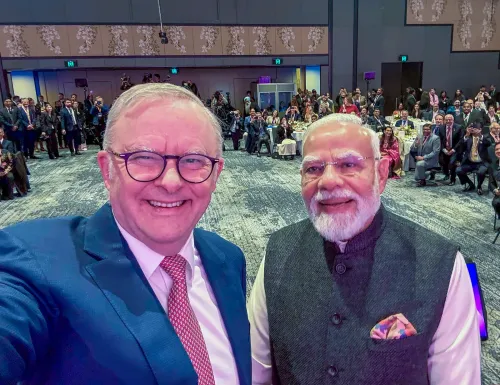
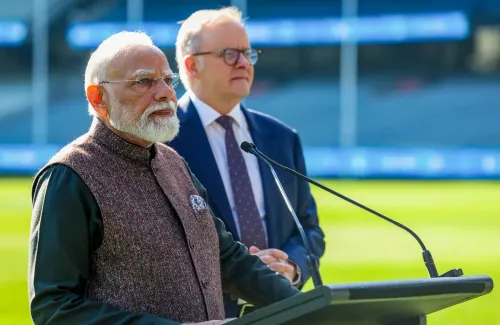
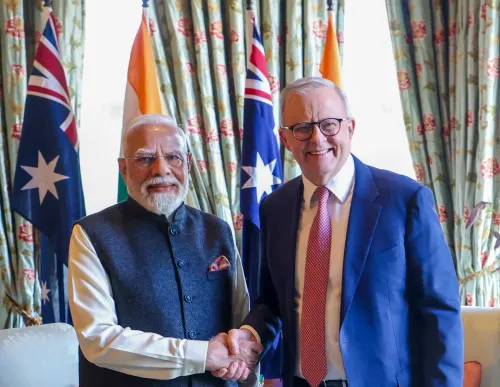
In Sydney, Australian Prime Minister Anthony Albanese struck a notably informal register, reportedly telling a diaspora gathering that 'Prime Minister Modi is the boss' and calling him 'a dear friend.' Albanese also described the Indian-Australian diaspora as the 'living bridge' between the two nations, and greeted Modi with a palms-together 'Namaste' during the Prime Minister's address.
The tone carried strategic weight. India-Australia ties are no longer being narrated solely through trade figures or Indo-Pacific balancing frameworks; instead, the partnership is increasingly being personified through leader-level warmth — a dynamic that can sustain strategic convergence across changes in government. The bilateral agenda covered energy, maritime cooperation, and defence.
New Zealand: Praise Tied to Proof of Delivery
On the final leg, New Zealand Prime Minister Christopher Luxon said he had 'huge admiration for what Prime Minister Modi and the team have done,' calling India's economic transformation under Modi's leadership 'incredible.' In a separate interview, Luxon described India's 'dynamism, innovation, entrepreneurship and candour' as 'infectious' and said every visit to India reinforced his admiration for the Indian Prime Minister.
Notably, Luxon's praise was not purely ceremonial. He explicitly tied his admiration to India's poverty reduction, economic transformation, and rise as a global technology power — suggesting that Modi's diplomatic standing is increasingly anchored in demonstrable domestic outcomes rather than rhetorical positioning alone.
The Broader Strategic Architecture
Across all three stops, the reported focus areas — energy, maritime cooperation, defence, critical minerals, and the digital economy — indicate that personal chemistry was not a substitute for strategy but a force multiplier that helped structure it. According to reports from the tour, India's foreign policy is becoming more architectural: less about isolated deals, more about layering trust, culture, and strategic convergence into a long-term framework.
When foreign leaders publicly credit India's governance model or describe Modi as 'the boss,' the interaction shifts from state-to-state protocol to a form of political validation that strengthens India's strategic bargaining power and projects the Prime Minister as the face of India's global rise. The tour suggests New Delhi is now pursuing a diplomatic style that is simultaneously leader-centric and institutionally grounded — with personal affinity and official agreements reinforcing each other. How durable that architecture proves across future leadership changes in partner countries will be the real test.
Point of View
It reflects India's growing soft power, but it also raises the question of whether such leader-centric diplomacy can outlast the individuals involved. Strategic architectures built on personal chemistry are harder to institutionalise, and New Delhi will need to ensure that the MoUs and frameworks signed this week have implementation mechanisms that survive electoral cycles in partner countries. The tour's real test is not the warmth of the welcomes, but whether the critical minerals deals and defence agreements translate into operational partnerships — something India's previous rounds of bilateral enthusiasm have not always delivered.
NationPress
10 Oct 2026
Frequently Asked Questions
Which countries did PM Modi visit on his three-nation tour?
PM Modi visited Indonesia, Australia, and New Zealand on the tour, which concluded on Saturday, 12 July 2025. Each leg produced bilateral meetings, cultural engagements, and agreements across defence, energy, and digital cooperation.
What agreements were signed during the Indonesia leg of Modi's tour?
India and Indonesia signed memoranda of understanding covering defence, critical minerals, education, and technology during PM Modi's visit to Jakarta. Indonesian President Prabowo Subianto also described the visit as a 'historic milestone' reaffirming cultural and strategic ties.
Why did Australia's PM Albanese call Modi 'the boss'?
Australian Prime Minister Anthony Albanese reportedly made the remark at a Sydney diaspora event, describing Modi as 'the boss' and 'a dear friend.' The comment was widely seen as a signal that India-Australia ties have moved beyond transactional framing to a more personal, leader-driven partnership.
What did New Zealand PM Luxon say about India during Modi's visit?
New Zealand Prime Minister Christopher Luxon said he had 'huge admiration' for what Modi had achieved, calling India's economic transformation 'incredible' and describing its dynamism, innovation, and entrepreneurship as 'infectious.' He linked his praise to India's poverty reduction and rise as a global technology power.
What does the three-nation tour signal about India's foreign policy direction?
According to reports from the tour, India's foreign policy is becoming more architectural — focused on layering trust, culture, and strategic convergence into a long-term structure rather than pursuing isolated deals. The tour's focus on energy, maritime cooperation, defence, critical minerals, and the digital economy suggests personal rapport is being used as a force multiplier for substantive strategic goals.