PM Modi to Visit Indonesia, Australia, New Zealand to Boost Ties
Synopsis
Prime Minister Narendra Modi has announced a multi-nation visit to Indonesia, Australia and New Zealand to deepen economic and strategic cooperation and expand opportunities for Indian youth, continuing India's sustained Indo-Pacific outreach under the Act East Policy.
Key Takeaways
Prime Minister Narendra Modi will visit Indonesia , Australia , and New Zealand over the coming days.
The stated goals are boosting economic and strategic cooperation and expanding opportunities for India's youth .
The tour aligns with India's Act East Policy , the 2014 framework for deeper Indo-Pacific engagement.
Australia is a QUAD partner with growing defence, education, and critical-minerals ties to India.
Indonesia is India's largest ASEAN partner, with a defence cooperation framework dating to 2006 .
Analysts will watch for new MoUs on defence, technology, student mobility, and trade facilitation across all three destinations.
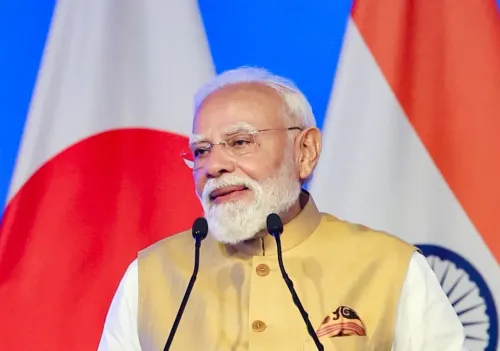
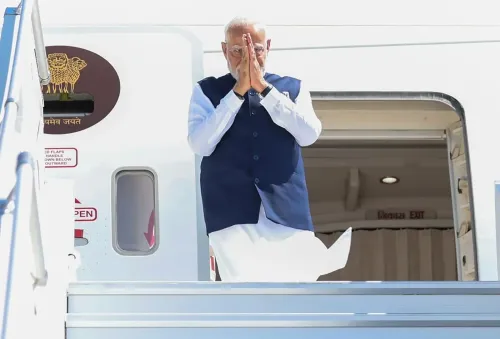
Prime Minister Narendra Modi announced on Monday, July 7, 2026, that he will undertake a multi-nation tour covering Indonesia, Australia, and New Zealand over the coming days, with the stated aim of deepening economic and strategic cooperation and expanding opportunities for India's youth.
Context
In his post on X, Prime Minister Modi wrote that the visits are aimed at boosting 'economic and strategic cooperation with these valued developmental partners' and ensuring the youth of India gain more. The announcement signals a significant Indo-Pacific outreach at a time when India is actively seeking to diversify its trade and security partnerships across the region.
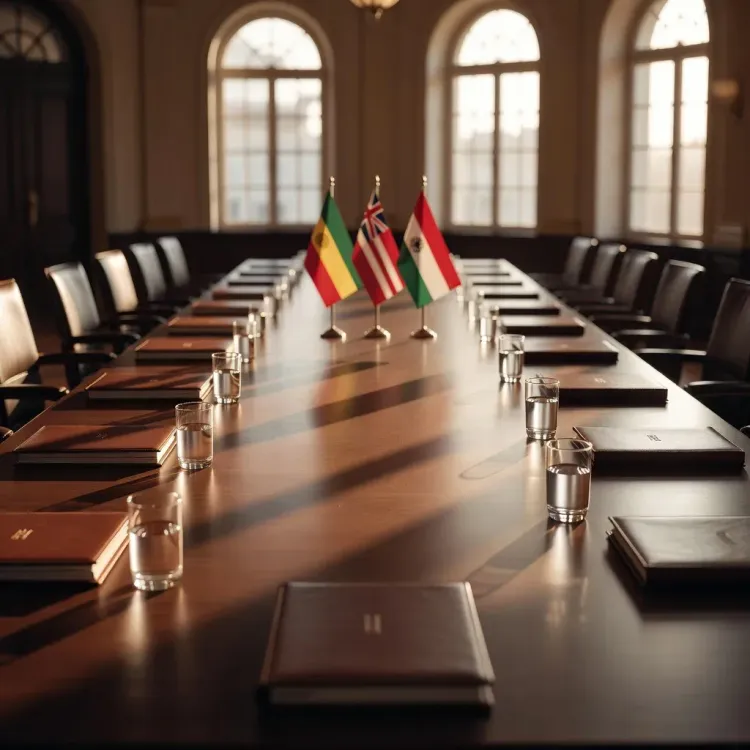
The three nations — Indonesia, Australia, and New Zealand — represent distinct but complementary pillars of India's engagement with the broader Indo-Pacific. Each carries a distinct profile: a major ASEAN maritime neighbour, a QUAD partner, and a Pacific nation with deep diaspora and education links to India.
Policy Backdrop
The tour fits squarely within the Act East Policy, the framework India launched in 2014 to deepen economic and security engagement with Southeast Asia and the wider Indo-Pacific. Successive high-level visits have been a cornerstone of that strategy, pairing bilateral summits with people-to-people and business initiatives.
India and Indonesia have maintained a defence cooperation framework since a landmark agreement in 2006, upgraded through subsequent summits. Australia became a comprehensive strategic partner after Prime Minister Modi's visit in November 2014 — the first by an Indian prime minister in 28 years — and cooperation has since expanded into critical minerals, education, and defence technology. New Zealand ties have grown steadily through agriculture, education exchanges, and ongoing free-trade-agreement negotiations.
The itinerary mirrors earlier multi-nation tours by Prime Minister Modi that bundled bilateral summits with regional forums, reflecting a deliberate strategy of sustained, high-level outreach rather than episodic diplomacy.
Stakeholders and Impact
India's business community will watch closely for announcements on trade facilitation and market access, particularly in sectors such as critical minerals, digital services, and agriculture where all three destination countries hold significant complementary strengths.
For Indian youth, the explicit mention in the prime minister's post of securing 'more' for the nation's young population points to potential announcements on student mobility schemes, skill-partnership frameworks, and employment pathways — areas where Australia and New Zealand in particular have active bilateral programmes with India. The Indian diaspora in all three countries also stands to benefit from any consular or community-engagement commitments made during the visit.
Strategically, the tour reinforces India's role as a net-security provider and rules-based-order partner in the Indo-Pacific, a posture that aligns with its QUAD commitments alongside Australia, the United States, and Japan.
What's Next
Specific programme schedules and bilateral outcomes are expected to be announced as each leg of the tour commences. Observers will track whether new defence or technology memoranda of understanding are signed, and whether any student-mobility or skills-recognition agreements are formalised.
The visits are also likely to feed into broader regional architecture discussions, with Indonesia holding significant weight as the largest economy in ASEAN and a key voice in the Indo-Pacific. Follow-up deliverables on supply-chain diversification and trade facilitation will be a key measure of the tour's strategic yield.
Point of View
Supply-chain security, and youth mobility — without relying on any single bilateral relationship. By explicitly invoking India's youth in the announcement, Prime Minister Modi frames foreign policy as a domestic economic dividend, a rhetorical pattern consistent with his government's positioning of diplomacy as a driver of jobs and opportunity. The bundling of Indonesia, Australia, and New Zealand in a single tour reflects a maturing of the Act East Policy from aspiration to institutionalised outreach. The tour also reinforces India's standing as an indispensable partner for Indo-Pacific democracies seeking to build a rules-based regional order.
NationPress
5 Oct 2026
Frequently Asked Questions
Which countries will PM Modi visit on his upcoming tour?
Prime Minister Narendra Modi will visit Indonesia , Australia , and New Zealand over the next few days, as announced on July 7, 2026 .
What is the purpose of PM Modi's visit to Indonesia, Australia and New Zealand?
The visits aim to boost economic and strategic cooperation with these nations and ensure greater opportunities for India's youth , according to the prime minister's announcement.
What is India's Act East Policy?
The Act East Policy is India's 2014 foreign-policy framework designed to deepen economic, strategic, and people-to-people engagement with Southeast Asia and the broader Indo-Pacific region.
Is Australia a QUAD partner of India?
Yes. Australia is one of four members of the QUAD grouping alongside India , the United States , and Japan , and has expanded defence, education, and critical-minerals cooperation with India since 2014 .
What could Indian youth gain from PM Modi's Indo-Pacific tour?
The prime minister's announcement specifically references benefits for India's youth , pointing to potential agreements on student mobility , skills recognition, and employment pathways with Australia and New Zealand in particular.