Modi's three-nation Indo-Pacific tour marks strategic milestone for India
Synopsis
Modi's back-to-back visits to Indonesia, Australia, and New Zealand were not a routine diplomatic tour — they were a structural statement. By knitting together ASEAN connectivity, Quad depth, and Pacific outreach in a single sweep, India is assembling a flexible, alliance-lite network designed to shape the Indo-Pacific without the constraints of formal blocs.
Key Takeaways
PM Modi visited Indonesia , Australia , and New Zealand in a three-nation Indo-Pacific tour in July 2025 .
India and New Zealand elevated ties to a Strategic Partnership — the first Indian PM visit in 40 years .
Australia agreed to sell uranium to India following the signing of a key administrative arrangement.
India and Indonesia reaffirmed their Comprehensive Strategic Partnership , expanding into maritime security, critical minerals, and the blue economy.
According to analysis by Ashok Sharma of the Australia-India Institute , India's strategy prioritises a 'network of partnerships' over formal alliances.
India-New Zealand FTA negotiations were formally launched, marking a new phase in bilateral economic ties.
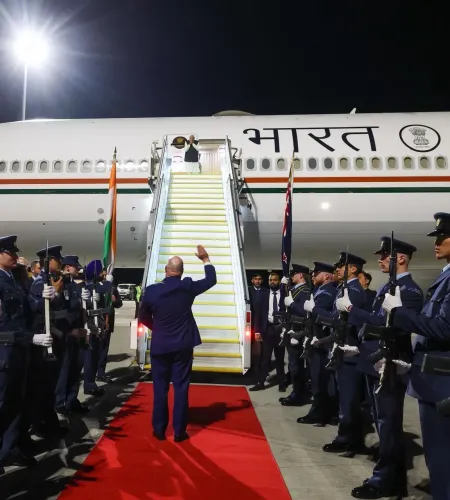
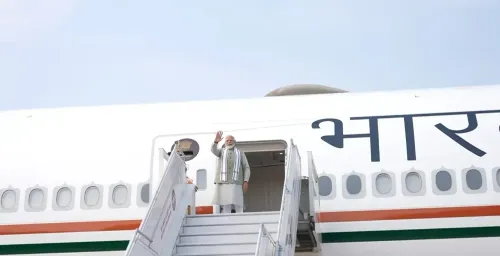
Prime Minister Narendra Modi's recent visits to Indonesia, Australia, and New Zealand mark a significant milestone in the evolution of India's Indo-Pacific strategy, according to an analysis published by the Australian Institute of International Affairs. The tour, completed in July 2025, was not merely a diplomatic sweep of three nations but a deliberate effort to weave together a network of strategic partnerships spanning Southeast Asia, the Indian Ocean, and the Pacific.
The Strategic Logic Behind the Tour
Ashok Sharma, an Academic Fellow at the Australia-India Institute, University of Melbourne, argues that India's Indo-Pacific posture has undergone a fundamental shift over the past decade. 'India's Indo-Pacific vision has evolved significantly over the past decade. Initially shaped by concerns about maintaining a free, open and inclusive regional order amid China's growing assertiveness, India's approach has increasingly incorporated economic resilience, connectivity, technological cooperation and trusted partnerships,' Sharma wrote.
He further noted that India's strategy is 'based less on formal alliances and more on developing a network of partnerships with countries that share an interest in stability, sovereignty and a rules-based order.' This framing is key: India is not seeking treaty-bound blocs but a web of convergent interests — a model that gives New Delhi flexibility while still building collective weight.
Indonesia: ASEAN Gateway and Maritime Pivot
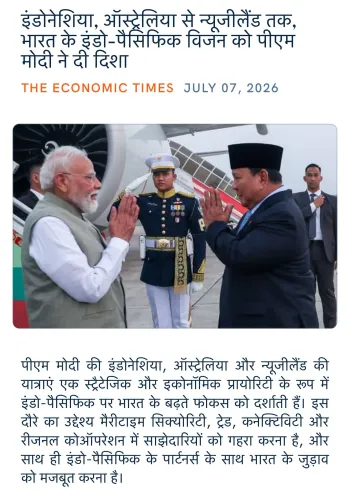
The Indonesia leg carried particular strategic weight. PM Modi held a State Visit with Indonesian President Prabowo Subianto, during which both leaders reviewed bilateral ties and exchanged views on multilateral issues. The two nations reaffirmed their commitment to the Comprehensive Strategic Partnership, with cooperation now extending well beyond traditional trade to encompass maritime security, defence-industrial collaboration, digital transformation, infrastructure connectivity, critical minerals, and the blue economy. Indonesia, as the maritime fulcrum between the Indian and Pacific Oceans and a central voice within ASEAN, represents an indispensable node in India's Indo-Pacific network.
Australia: Quad Ally, Uranium Deal, and Defence Depth
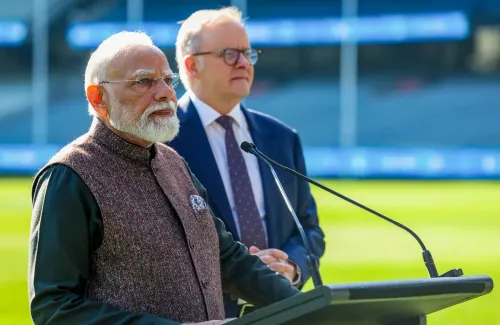
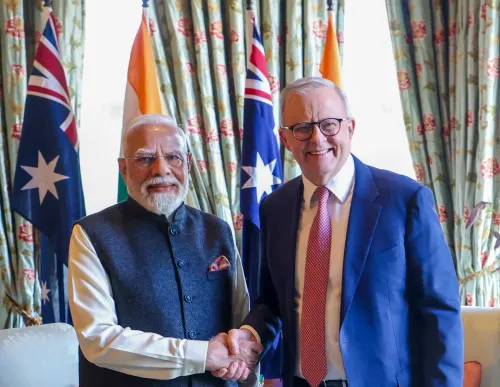
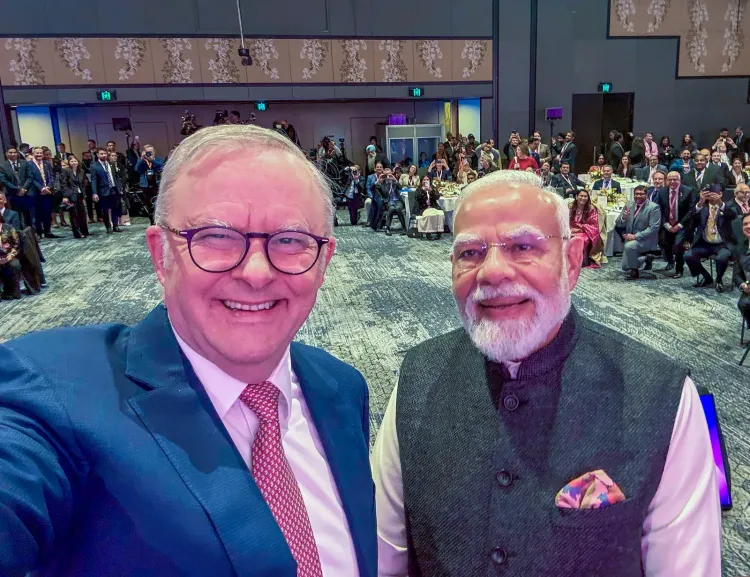
In Melbourne, Modi and Australian Prime Minister Anthony Albanese convened the third Australia-India Annual Summit, reviewing the full spectrum of bilateral cooperation. A headline outcome was Australia's agreement to sell uranium to India following the signing of a key administrative arrangement — a development with direct implications for India's civil nuclear programme. Both sides also reaffirmed their commitment to deeper defence and security cooperation, including greater maritime collaboration, defence industry partnerships, and interoperability, underpinned by a shared commitment to a free, open, and rules-based Indo-Pacific.
New Zealand: A New Strategic Partnership After 40 Years
Modi's visit to New Zealand was historic in one clear respect: it was the first visit by an Indian Prime Minister in 40 years. The two countries elevated their relationship to a Strategic Partnership, with an agenda spanning trade, agriculture, education, technology, defence, maritime security, and critical minerals. Modi and New Zealand Prime Minister Christopher Luxon also launched negotiations on an India-New Zealand Free Trade Agreement (FTA), signalling a new phase in economic engagement. New Zealand's inclusion broadens India's Pacific footprint beyond its traditional Indian Ocean focus.
What the Tour Signals for India's Indo-Pacific Ambitions
Sharma's analysis frames the three destinations as complementary rather than coincidental: 'Indonesia contributes ASEAN connectivity; Australia provides strategic depth, energy and resources; and New Zealand strengthens India's engagement with the Pacific.' Together, they address what he describes as interconnected regional challenges — maritime insecurity, climate change, supply-chain disruptions, technological competition, and energy security.
'The visit demonstrated that India's Indo-Pacific strategy is becoming increasingly comprehensive. It is not only about balancing geopolitical competition but also about creating resilient economic networks, strengthening technological cooperation and supporting a regional order based on openness and inclusiveness,' Sharma added. This comes amid sustained Chinese assertiveness across the South China Sea and the broader Indo-Pacific, lending urgency to India's outreach. As New Delhi consolidates these partnerships, the next test will be translating summit commitments into durable institutional frameworks.
Point of View
Maximising strategic optionality. The uranium deal with Australia is the most concrete deliverable, but the New Zealand elevation to Strategic Partnership — after four decades of neglect — signals that India is finally treating the Pacific as a theatre, not an afterthought. The real accountability question is whether these partnerships produce institutional depth or remain at the level of summit communiqués. India has a pattern of elevating relationships without the follow-through mechanisms to sustain them.
NationPress
22 Oct 2026
Frequently Asked Questions
Which countries did PM Modi visit on his recent Indo-Pacific tour?
PM Modi visited Indonesia, Australia, and New Zealand as part of a three-nation Indo-Pacific tour in July 2025. The visit was designed to strengthen India's strategic partnerships across Southeast Asia, the Indian Ocean, and the Pacific.
What was the significance of PM Modi's visit to New Zealand?
Modi's New Zealand visit was the first by an Indian Prime Minister in 40 years. India and New Zealand elevated their relationship to a Strategic Partnership and launched negotiations on a bilateral Free Trade Agreement.
What did India and Australia agree on during the summit?
At the third Australia-India Annual Summit in Melbourne, both sides reaffirmed defence and security cooperation, including maritime collaboration and interoperability. Australia also agreed to sell uranium to India following the signing of a key administrative arrangement.
What is India's Indo-Pacific strategy, according to experts?
According to Ashok Sharma of the Australia-India Institute at the University of Melbourne, India's Indo-Pacific strategy is based less on formal alliances and more on building a network of partnerships with countries that share an interest in stability, sovereignty, and a rules-based order. It has evolved to incorporate economic resilience, connectivity, and technological cooperation alongside traditional security concerns.
Why does Indonesia matter to India's Indo-Pacific vision?
Indonesia sits at the maritime crossroads between the Indian and Pacific Oceans and is a central voice within ASEAN, making it a critical node in India's regional network. During Modi's State Visit, both countries expanded their Comprehensive Strategic Partnership to cover maritime security, critical minerals, digital transformation, and the blue economy.