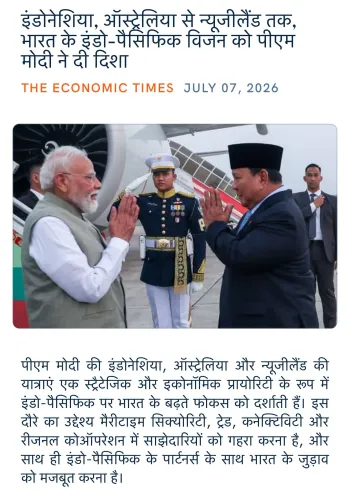
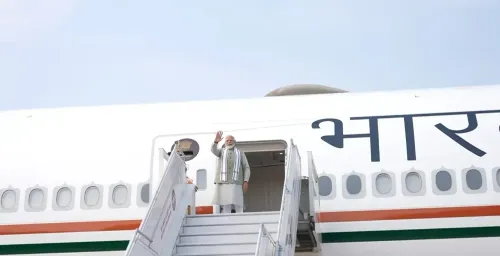
Modi's 3-nation Indo-Pacific tour: Australia, New Zealand, Indonesia visit explained
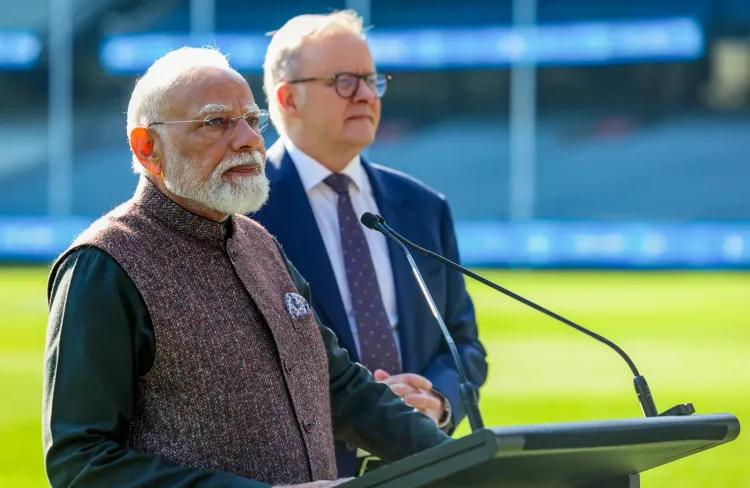
Synopsis
Modi's three-nation tour to Australia, New Zealand, and Indonesia wasn't routine diplomacy — it was India's first serious geographic push into the South Pacific in four decades. By bundling trade deals with logistics and defence pacts, and extending military cooperation arrangements previously reserved for Quad partners, New Delhi is quietly building the scaffolding for a much wider Indo-Pacific role.
Key Takeaways
PM Modi visited Australia , New Zealand , and Indonesia in a coordinated Indo-Pacific strategic sweep, according to a Politeia Research Foundation (PRF) analysis.
The India-New Zealand FTA and strategic partnership were announced as a single package, combining trade liberalisation with defence cooperation from the outset.
India extended its Maritime Cooperation Arrangement and Mutual Logistics Support Arrangement to New Zealand — previously reserved for Australia , the US , and France .
The tour is framed under India's Act East Policy and MAHASAGAR vision , marking India's first geographic push into the South Pacific in four decades .
Indian diaspora networks in Auckland were actively mobilised, reflecting a pattern of treating community ties as a formal diplomatic asset.
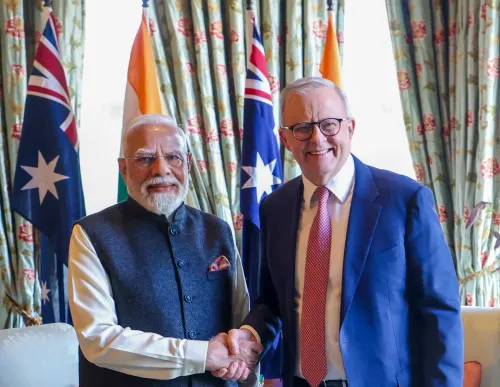
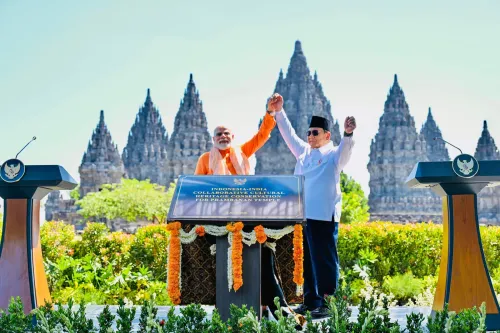
Prime Minister Narendra Modi's recent three-nation visit to Australia, New Zealand, and Indonesia represents far more than a sequence of bilateral engagements — it amounts to a coordinated strategic sweep across the Indo-Pacific, a region where India's footprint has historically lagged behind its stated ambitions, according to an analysis published by the Politeia Research Foundation (PRF).
A Unified Strategic Template, Not Separate Bilaterals
The PRF analysis, authored by Rahul Sen, argues that Modi tied the tour explicitly to India's Act East Policy and its MAHASAGAR vision — an acronym for Mutual and Holistic Advancement for Security and Growth Across Regions. This framing positioned the New Zealand leg not as an isolated courtesy call to a smaller Pacific partner, but as part of a deliberate regional recalibration.
Notably, the India-New Zealand Free Trade Agreement (FTA) and a new strategic partnership were announced as a single, bundled package — not as successive stages in a drawn-out negotiation. According to the PRF analysis, this reflects a broader pattern in which India's upgraded Indo-Pacific relationships increasingly combine trade liberalisation with defence cooperation from the outset, with maritime security dialogues becoming a standard institutional feature.
Logistics Pacts Signal a Widening Circle
India has extended its Maritime Cooperation Arrangement and Mutual Logistics Support Arrangement to New Zealand — agreements that New Delhi had until now reserved for a narrow set of partners including Australia, the United States, and France. The PRF piece argues this signals an intent to broaden India's network of logistics and interoperability partners beyond its core Quad-adjacent grouping.
This is a meaningful threshold. Logistics support arrangements govern refuelling, resupply, and repair access for military assets — their extension to New Zealand suggests India is quietly building the infrastructure for a wider operational reach in the southern Pacific.
Diaspora as Diplomatic Asset
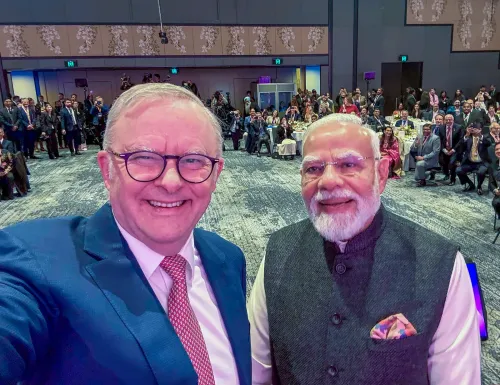
Modi's community event in Auckland and the visible mobilisation of Indian diaspora leaders during the visit underline a pattern that has become a hallmark of Indian outreach across the Pacific. Governments are increasingly treating established diaspora networks not merely as cultural communities but as active diplomatic assets — a soft-power lever that complements formal state-to-state engagement.
What the New Zealand Inclusion Signals
'What is already evident is that India's Indo-Pacific strategy is expanding geographically into the South Pacific for the first time in four decades, while applying the same trade-plus-security template it has developed with Australia and Japan,' the PRF article states. 'New Zealand's inclusion in that template, however modest in scale relative to India's larger regional partnerships, is a useful indicator of how far India's regional ambitions have extended.'
This comes amid intensifying great-power competition in the Indo-Pacific, with China's growing presence in Pacific island nations adding strategic urgency to India's outreach. Whether New Delhi can sustain the institutional depth that these new arrangements require — beyond the symbolism of a single prime ministerial visit — will determine how durable this expansion proves.
Point of View
SAGAR, now MAHASAGAR — has historically outpaced the institutional depth to sustain them. What is different this time is the logistics layer: extending mutual support arrangements to New Zealand is a quiet but concrete move, not just a headline. The real test is whether these arrangements get operationalised through regular exercises and port calls, or remain dormant on paper. With China deepening its footprint across Pacific island nations, India's window to establish credible presence is narrowing — and a single prime ministerial visit, however well-packaged, is only the opening bid.
NationPress
21 Oct 2026
Frequently Asked Questions
What was the purpose of PM Modi's three-nation visit to Australia, New Zealand, and Indonesia?
The visit was a coordinated strategic engagement across the Indo-Pacific, aimed at deepening trade and defence ties under India's Act East Policy and MAHASAGAR vision. It was not a set of isolated bilateral trips but a unified push to expand India's regional presence, according to a Politeia Research Foundation analysis.
What is the MAHASAGAR vision mentioned in the context of Modi's visit?
MAHASAGAR stands for Mutual and Holistic Advancement for Security and Growth Across Regions. It is India's framework for engaging Indo-Pacific partners by combining trade liberalisation with maritime security and defence cooperation.
What agreements did India sign with New Zealand during the visit?
India announced an FTA and a strategic partnership with New Zealand as a single bundled package. It also extended its Maritime Cooperation Arrangement and Mutual Logistics Support Arrangement to New Zealand — pacts previously limited to partners such as Australia, the United States, and France.
Why is New Zealand's inclusion in India's Indo-Pacific strategy significant?
New Zealand's inclusion signals that India is expanding its trade-plus-security template — previously applied mainly to Quad-adjacent partners — into the South Pacific for the first time in four decades. It indicates a broadening of India's logistics and interoperability network beyond its core strategic partners.
How did the Indian diaspora factor into Modi's New Zealand visit?
Modi held a community event in Auckland and mobilised Indian diaspora leaders, reflecting a pattern in which India treats established diaspora networks as active diplomatic assets to complement formal state-to-state engagement across the Pacific.