India builds Indo-Pacific partnerships as US commitment concerns grow
Synopsis
As doubts grow over US reliability in the Indo-Pacific — including Washington's renaming of its Indo-Pacific Command — India is quietly assembling a multi-aligned security network. Modi's three-nation tour alone produced 20 agreements with Indonesia, a uranium deal with Australia, and a free-trade pact with New Zealand. Analysts call it a 'non-hegemonic' playbook designed to fill the vacuum Washington may be leaving behind.
Key Takeaways
PM Modi visited Indonesia , Australia , and New Zealand from 6–11 July , signing defence, trade, and maritime agreements.
Indonesia agreed to procure additional BrahMos missiles and India's indigenous Astra BVRAAM ; both nations finalised a deal on Sabang Port development.
Australia and India finalised an arrangement for long-term uranium exports to India for peaceful purposes.
New Zealand and India concluded a bilateral free-trade pact during Modi's Auckland visit.
Japan PM Sanae Takaichi visited New Delhi on 1–3 July ; India and Japan signed their first-ever joint defence co-development project .
Analysts attribute India's intensified outreach partly to concerns over the US renaming its Indo-Pacific Command to US Pacific Command .
India is deepening engagement with Indo-Pacific middle powers amid rising uncertainty over the future of US security commitments in Asia, analysts say. A recent report highlights how New Delhi is constructing a flexible, multi-aligned network that allows nations with divergent strategic interests to cooperate without locking into a formal alliance structure — a model analysts describe as distinctly post-Cold War.
Modi's Three-Nation Tour Sets the Tone
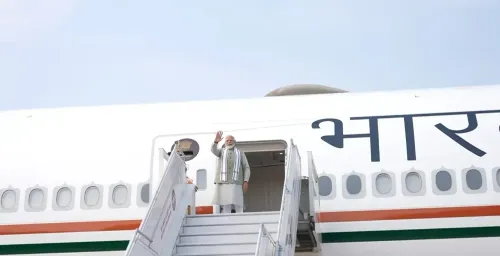
Prime Minister Narendra Modi undertook a high-stakes three-nation visit to Indonesia, Australia, and New Zealand from 6 to 11 July, signing a series of agreements spanning defence, maritime security, and trade. The tour followed Japanese Prime Minister Sanae Takaichi's visit to New Delhi from 1 to 3 July — her first since assuming office — during which India and Japan signed their first-ever joint defence co-development project.
Together, the visits signal a deliberate acceleration in India's regional outreach, with concrete deliverables replacing diplomatic pleasantries.
Indonesia: BrahMos, Astra Missiles, and Sabang Port
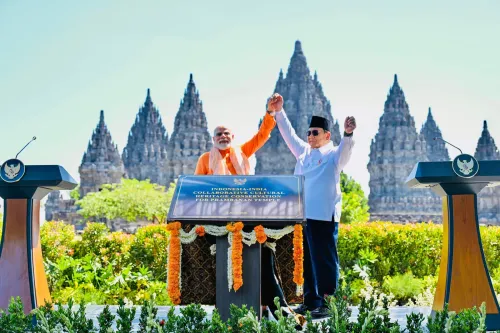
During PM Modi's State Visit to Jakarta, India and Indonesia concluded 20 comprehensive agreements covering defence exports, maritime connectivity, critical minerals, digital public infrastructure, and trade. Wide-ranging talks between Modi and Indonesian President Prabowo Subianto yielded a decision by Jakarta to expand its inventory of Indian-made BrahMos supersonic cruise missiles by acquiring additional batteries.
Indonesia also agreed to procure India's indigenous Astra Beyond-Visual-Range Air-to-Air Missiles (BVRAAM), which will be integrated into its Su-30 fighter aircraft by Bharat Dynamics Limited. The two countries additionally finalised an agreement for the joint development of the strategically significant Sabang Port.
Australia and New Zealand: Uranium, Free Trade, and Rules-Based Order
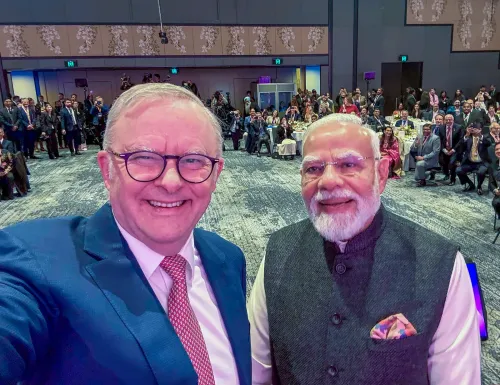
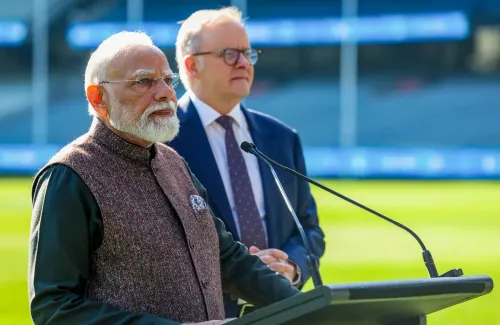
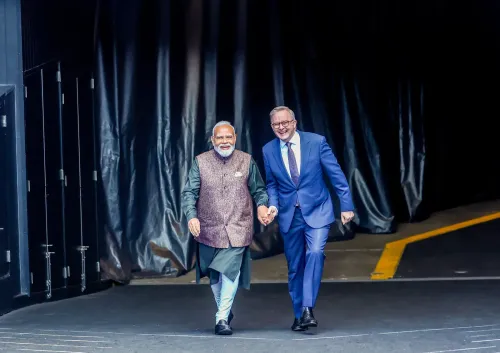
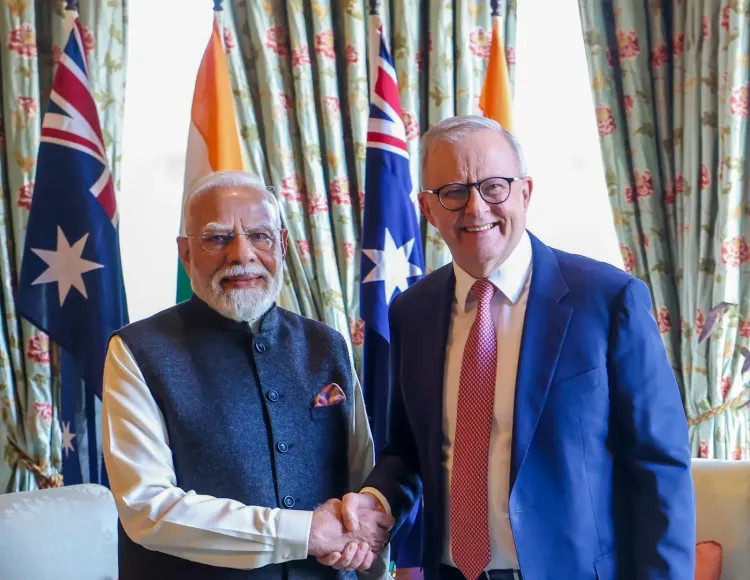
In Melbourne, PM Modi and Australian Prime Minister Anthony Albanese finalised the Administrative Arrangement, enabling long-term exports of Australian uranium to India for peaceful purposes. The two leaders, meeting at the third Australia-India Annual Summit, reaffirmed their commitment to an open, rules-based Indo-Pacific and strongly opposed any unilateral action to alter the regional status quo.
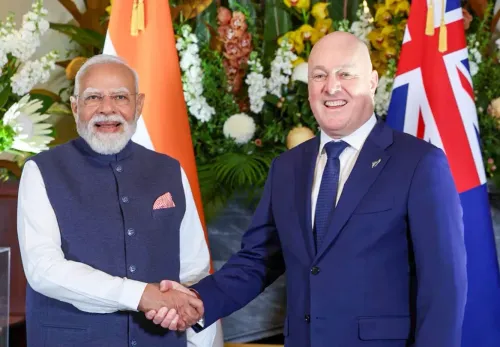
Modi then travelled to Auckland, where he and New Zealand Prime Minister Christopher Luxon finalised a bilateral free-trade pact — a milestone in a relationship that had long underperformed its potential.
The Broader Strategic Architecture
Srinivasan Balakrishnan, Director of Strategic Engagements and Partnerships at the Delhi-based security think tank Indic Researchers Forum, told a report that India's approach reflects a clear preference for flexible partnerships over Cold War-style alliance structures. 'This is not Cold War-style containment but a practical, multi-aligned network that fills the vacuum left by fluctuating US commitments,' Balakrishnan said, adding that India could leverage its credibility as a 'non-hegemonic power' to become a net security provider in the Indo-Pacific.
Balakrishnan described Modi's recent visits as signalling 'a proactive new playbook' aimed at advancing concrete outcomes rather than symbolic gestures. He noted that India is also strengthening ties with Singapore, Malaysia, and Thailand through joint defence exercises and quietly bolstering maritime security cooperation.
Earlier in May, India and Vietnam elevated their bilateral relationship to an Enhanced Comprehensive Strategic Partnership during Vietnamese President To Lam's State Visit to New Delhi — a move Balakrishnan said reflected shared Indo-Pacific security concerns and deeper economic integration.
The US Factor
Analysts note that India's intensified outreach comes directly amid concerns about Washington's reliability as a regional security anchor. These concerns stem from recent political rhetoric, trade frictions, and, notably, the US decision to rename its Indo-Pacific Command — one of the largest unified military commands in the world — to the US Pacific Command. Indian observers reportedly worry that the renaming downplays New Delhi's central role in US strategic planning for the region.
As Washington's regional posture remains a subject of debate, India's diplomatic calendar suggests New Delhi is not waiting for clarity — it is building alternatives.
Point of View
But it carries a real burden: being a net security provider demands defence-industrial capacity and power-projection that India is still building. The BrahMos and Astra deals are steps in that direction, but the gap between credibility and capability will define whether New Delhi's new playbook holds under pressure.
NationPress
20 Oct 2026
Frequently Asked Questions
Why is India intensifying its Indo-Pacific partnerships?
India is deepening ties with Indo-Pacific middle powers amid growing uncertainty over US security commitments in Asia, including Washington's decision to rename its Indo-Pacific Command to the US Pacific Command. Analysts say India is building a flexible, multi-aligned network to fill any strategic vacuum that may emerge.
What agreements did India sign during PM Modi's three-nation tour?
During visits to Indonesia, Australia, and New Zealand from 6–11 July, India concluded 20 comprehensive agreements with Indonesia covering defence, maritime connectivity, and trade; an administrative arrangement with Australia for uranium exports; and a bilateral free-trade pact with New Zealand.
What defence deals did India and Indonesia finalise?
Indonesia agreed to expand its BrahMos supersonic cruise missile inventory and procure India's indigenous Astra Beyond-Visual-Range Air-to-Air Missiles (BVRAAM), to be integrated into its Su-30 aircraft by Bharat Dynamics Limited. The two countries also agreed to jointly develop Sabang Port.
What is the significance of the India-Japan defence co-development agreement?
The agreement signed during Japanese PM Sanae Takaichi's visit to New Delhi on 1–3 July marks the first-ever joint defence co-development project between India and Japan. It signals a deepening of security ties between two major Indo-Pacific democracies at a moment of heightened regional uncertainty.
How does India's approach differ from a formal military alliance?
According to Srinivasan Balakrishnan of the Indic Researchers Forum, India is pursuing 'a practical, multi-aligned network' rather than Cold War-style alliance structures. This model allows nations with differing strategic interests to cooperate on specific issues without binding mutual-defence commitments.