Modi's 3-nation tour: Australia uranium deal, BrahMos exports, NZ FTA sealed
Synopsis
Three cities, three weeks, three decades of closed doors opened: Australian uranium finally flows to India without treaty conditions, Indonesia stakes its security on BrahMos, and New Zealand signs a trade deal in record time. Modi's July 2026 tour is less a diplomatic visit and more a ledger of compounding strategic credibility — and the numbers are starting to show.
Key Takeaways
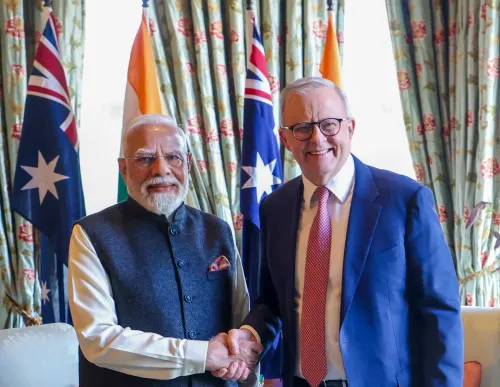
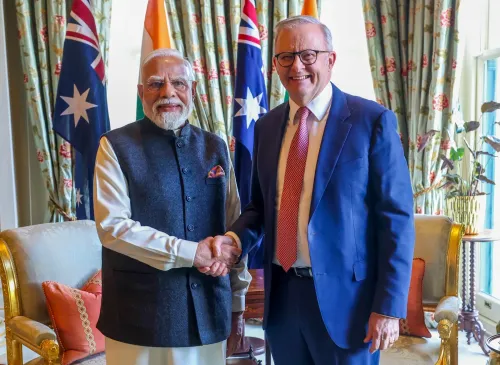
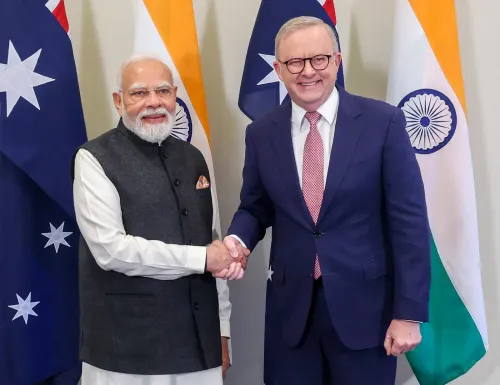
Australia operationalised uranium supply to India during the Melbourne meeting in July 2026 , ending a block that dated to 2006 .
India and Indonesia signed agreements for BrahMos supersonic cruise missiles and Astra air-to-air systems; Indonesia is the third nation to procure Indian defence platforms.
India will partner in developing Sabang Port , about 160 km from the planned Great Nicobar hub, commanding a gateway for nearly a third of global trade.
Bilateral India-Australia trade is up 55 per cent since 2022; AustralianSuper committed half a billion Australian dollars in India.
New Zealand concluded a full Free Trade Agreement with India after 40 years without a Prime Ministerial visit, setting a bilateral trade target of 7 billion New Zealand dollars .
The Indian Navy secured a mutual logistics pact with the New Zealand Defence Force , allowing provisioning in Auckland .
Prime Minister Narendra Modi's three-nation tour spanning Jakarta, Melbourne, and Auckland in July 2026 delivered a string of strategic outcomes — Australian uranium supply operationalised for Indian reactors, defence export agreements signed with Indonesia, and a landmark Free Trade Agreement concluded with New Zealand — marking what analysts describe as a structural shift in India's global standing after decades of closed doors.
The Uranium Breakthrough
The uranium agreement with Australia carries particular historical weight. As far back as 2006, Canberra refused to align with Washington's civil nuclear opening to India, and in 2008 reversed even its own earlier in-principle willingness. Through the entire decade of the previous government, Delhi sought access while Canberra declined — even as Australia reportedly continued uranium discussions with China. Not a single gram of Australian uranium had a legal pathway to India when the current government took office.
Within roughly a hundred days of assuming power, Modi signed the long-pending Civil Nuclear Cooperation Agreement in September 2014. The Melbourne meeting in July 2026 removed the final administrative barrier, operationalising supply and advancing India's stated target of 100 gigawatts of nuclear power capacity. Critically, India's position on the Non-Proliferation Treaty — which it has consistently declined to sign — was not revisited. The terms changed; India's principles did not.
Defence Exports: India Becomes the Supplier
In Jakarta, India and Indonesia signed agreements for the supply of BrahMos supersonic cruise missiles and Astra air-to-air missile systems, making Indonesia the third country — after the Philippines and Vietnam — to procure Indian defence platforms. The BrahMos system, whose combat credibility was underscored during Operation Sindoor, represents a notable reversal: for seven decades, India's defence narrative was defined by imports; it is now being rewritten through exports to Southeast Asia's largest economy.
Indonesian President Prabowo conferred upon Modi the Bintang Adipurna, Indonesia's highest civilian and military honour, during the visit.
Strategic Geography: Sabang Port and the Malacca Gateway
Beyond missiles, India and Indonesia agreed to partner in developing Sabang Port, situated at the mouth of the Malacca Strait, approximately 160 kilometres from India's planned Great Nicobar transshipment hub. The two ports together would command a gateway through which nearly a third of global trade passes, according to reports. Cooperation on critical minerals was also formalised, with Indonesia holding an estimated 60 per cent of the world's nickel reserves. Modi also travelled to Yogyakarta, where India committed support for the restoration of the Prambanan temple complex, a thousand-year-old Hindu heritage site.
Australia Trade and Investment
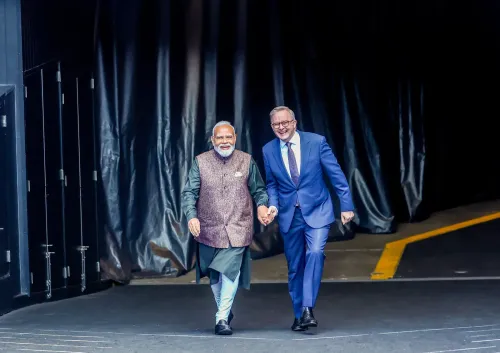
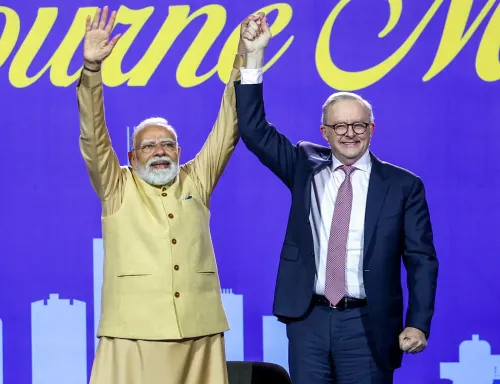
On the economic front, bilateral trade between India and Australia has risen 55 per cent since their trade agreement of 2022. Both Prime Ministers directed that the full Comprehensive Economic Cooperation Agreement be concluded at the earliest. AustralianSuper announced an investment of half a billion Australian dollars in India during the visit, with Modi also signalling interest in directing Australia's estimated four-trillion-dollar pension pool toward Indian infrastructure projects. The Melbourne event was held before what was described as the largest-ever gathering of Indian Australians at Marvel Stadium.
New Zealand: Four Decades Bridged
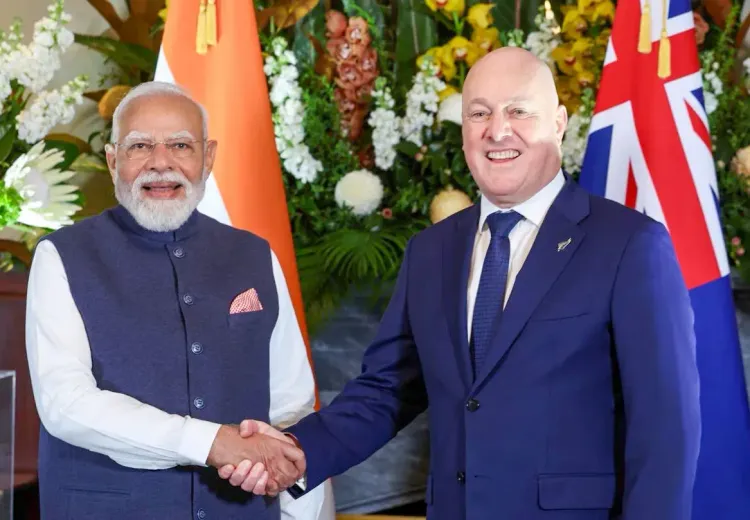
No Indian Prime Minister had visited New Zealand in 40 years before this trip. Trade negotiations that had stalled since the previous government's tenure were concluded swiftly — a pace Modi described as perhaps a global first. In Auckland, welcomed with a traditional Maori Powhiri ceremony, Modi formalised a new Strategic Partnership and a Roadmap to 2030 covering maritime security, counter-terrorism, and cyber defence. A bilateral trade target of seven billion New Zealand dollars was set, alongside a mutual logistics agreement between the Indian Navy and the New Zealand Defence Force — enabling Indian naval vessels to provision in Auckland for the first time.
As the outcomes of the three-nation tour are assessed, attention will turn to implementation timelines for the uranium supply chain, the pace of BrahMos deliveries to Indonesia, and progress on the comprehensive trade pacts with both Australia and New Zealand.
Point of View
But the BrahMos export to Indonesia may be the more durable signal: India has crossed from arms-import dependency to credible defence supplier in a single generation. What mainstream coverage underplays is the geographic logic — Sabang Port plus Great Nicobar is not a bilateral courtesy, it is a Malacca Strait strategy. The New Zealand FTA's speed is also worth scrutiny: if the same political will had been applied a decade earlier, the trade numbers would already be far larger. The compounding gains are real, but so is the question of what took so long on agreements that were structurally ready years ago.
NationPress
11 Oct 2026
Frequently Asked Questions
What is the significance of Australia agreeing to supply uranium to India?
Australia holds the world's largest uranium reserves and had refused to supply India since 2006, insisting on Non-Proliferation Treaty membership India declined. The July 2026 Melbourne meeting operationalised supply under a Civil Nuclear Cooperation Agreement first signed in September 2014, supporting India's target of 100 gigawatts of nuclear power capacity — without India altering its treaty position.
Which defence deals did India sign with Indonesia during PM Modi's Jakarta visit?
India and Indonesia signed agreements for BrahMos supersonic cruise missiles and Astra air-to-air missile systems. Indonesia becomes the third country after the Philippines and Vietnam to procure Indian defence platforms. Indonesian President Prabowo also awarded Modi the Bintang Adipurna, Indonesia's highest civilian and military honour.
What is the Sabang Port agreement and why does it matter strategically?
India and Indonesia agreed to jointly develop Sabang Port at the mouth of the Malacca Strait, approximately 160 kilometres from India's planned Great Nicobar transshipment hub. Together, the two ports would oversee a corridor handling nearly a third of global maritime trade, giving India a significant strategic footprint in one of the world's most critical shipping lanes.
What did India and New Zealand agree to during PM Modi's Auckland visit?
India and New Zealand concluded a full Free Trade Agreement — the first Prime Ministerial visit in 40 years — along with a new Strategic Partnership and a Roadmap to 2030 covering maritime security, counter-terrorism, and cyber defence. A bilateral trade target of seven billion New Zealand dollars was set, and a mutual logistics pact between the Indian Navy and New Zealand Defence Force was signed.
How has India-Australia trade changed since their 2022 agreement?
Bilateral trade between India and Australia has grown 55 per cent since the 2022 trade agreement. During the July 2026 Melbourne visit, AustralianSuper announced a half-billion Australian dollar investment in India, and both governments directed that the full Comprehensive Economic Cooperation Agreement be concluded as soon as possible.