Young Monk's Passing in Tibet Highlights China's Increasing Repression
Synopsis
The alarming death of a Tibetan monk reveals the serious repression Tibetans face under Chinese rule. A recent report uncovers the dire consequences of dissent in the region, emphasizing the urgent need for international attention.
Key Takeaways
Escalating repression in Tibet is highlighted by the death of monk Samten.
Chinese authorities view information sharing as a security threat.
Monks at Dhitsa Geden Tashi Chöding Ling are being surveilled.
The death reflects a broad pattern of oppression against Tibetan Buddhism.
Fear is used to maintain silence and prevent inquiries.
Islamabad, March 29 (NationPress) The demise of a young Tibetan monk serves as a grim reminder of the intensifying oppression in Tibet, as Chinese authorities now consider even the act of sharing information on digital platforms as potential threats to security, a recent report disclosed.
As reported by Pakistan's online magazine ‘Bitter Winter', the crackdown on Tibetan Buddhism is executed by individuals—young and defenseless—who enter police custody alive but are returned lifeless.
The report emphasized that the remains of Tibetan monk Samten were returned to his monastery in early December, with officials providing a “familiar narrative” that he had “suddenly fallen ill and died despite emergency care.”
No information was provided regarding his illness, the hospital, or the conditions of his detention; instead, monks were cautioned against discussing the incident.
In Tibet, the report indicated, silence is not merely requested but mandated; yet, in March, a voice has risen.
“Samten was approximately twenty-five years old and belonged to Dhitsa Geden Tashi Chöding Ling, one of the four principal monasteries in Palung County, located in the northern Amdo region. Established by the first Je Shamar Pandita, this monastery has historically been a hub for Tibetan-language education and monastic scholarship, housing around four hundred monks, many of whom have already experienced the increasing state surveillance,” the report elaborated.
“Dhitsa Geden Tashi Chöding Ling is renowned for its efforts to preserve the Tibetan language. Its monks were instrumental in creating early woodblock prints for contemporary Tibetan textbooks and have engaged in language preservation initiatives. In the eyes of the authorities, this alone renders the monastery politically suspect. In Tibet, cultural expression is perceived as a threat,” it continued.
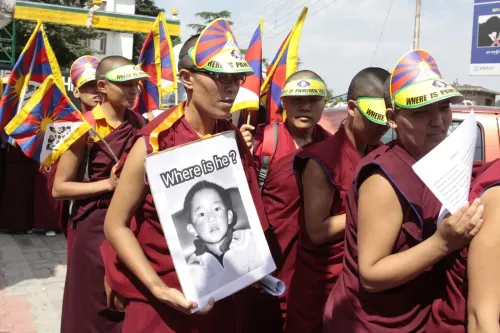
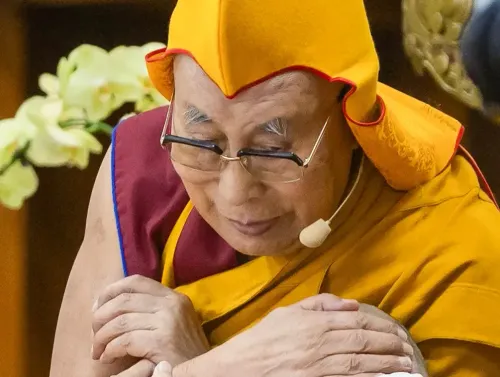
The report underscored that Samten’s death reflects a broader pattern of atrocities committed by Beijing leading up to the Dalai Lama’s 90th birthday.
These actions included raids on monasteries, confiscation of images of the Dalai Lama, the disappearance of senior monks, and an increase in political indoctrination sessions.
“In one instance, a respected scholar took his own life after being coerced into denouncing the Dalai Lama in front of his pupils. This campaign is systematic, ideological, and unyielding. It seeks not only to dominate Tibetan Buddhism but also to reshape it into something unrecognizable, a version loyal to the Chinese Communist Party rather than its own traditions,” it stated.
“The circumstances surrounding Samten’s death are chillingly familiar. Tibetans detained for political or religious reasons frequently die in custody, their bodies returned with ambiguous explanations and stringent orders against inquiries. The pattern has become so predictable that it resembles a somber ritual: arrest, silence, death, denial, and enforced oblivion. The authorities depend on fear to ensure the narrative concludes there,” it further noted.
Point of View
This situation highlights the severe human rights violations occurring in Tibet. The ongoing repression of Tibetan Buddhism and the silencing of dissenting voices are critical issues that demand global awareness and action.
NationPress
30 Sept 2026
Frequently Asked Questions
What happened to the Tibetan monk Samten?
Samten, a young Tibetan monk, died under suspicious circumstances while in police custody, with authorities providing vague explanations regarding his death.
Why is the repression in Tibet increasing?
The repression in Tibet is intensifying as the Chinese government seeks to control Tibetan Buddhism and suppress any cultural expressions perceived as threats.
What is the significance of Dhitsa Geden Tashi Chöding Ling monastery?
The monastery is a key institution for Tibetan-language education and cultural preservation, making it politically suspect in the eyes of Chinese authorities.
How do Tibetan authorities respond to dissent?
Authorities in Tibet often respond to dissent with silence and oppression, using fear tactics to discourage discussions about political or religious issues.
What patterns have emerged regarding Tibetan deaths in custody?
There is a disturbing pattern where Tibetans detained for political or religious reasons often die in custody, with their bodies returned under vague circumstances.