China's Strategic Manipulation of Buddhism to Enhance Influence in Sri Lanka
Synopsis
A recent report reveals how China is leveraging Buddhism to infiltrate Sri Lanka's spiritual and political landscape, posing a significant threat to the nation's rich cultural heritage. As economic dependency grows, the island faces a precarious future.
Key Takeaways
China's manipulation of Buddhism poses a threat to Sri Lanka's cultural identity.
The Belt and Road Initiative has led to a cycle of debt dependency .
Economic cooperation is intertwined with CCP ideologies .
Unchecked influence could transform Buddhist institutions into propaganda tools.
Protecting Sri Lanka's heritage requires cautious navigation of foreign relations.
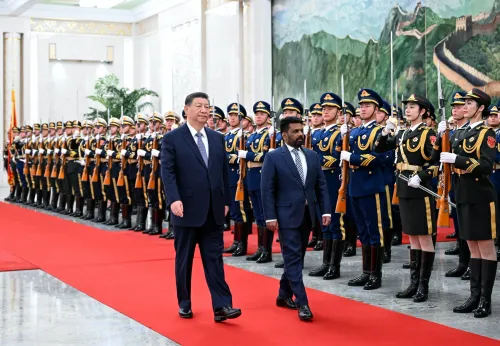
Colombo, March 5 (NationPress) China's deliberate efforts to undermine Buddhist principles in Sri Lanka reveal a strategic approach aimed at integrating the Chinese Communist Party's agenda into the spiritual and political framework of the island nation.
What may appear as cultural diplomacy is, in fact, an ideological infiltration, and Sri Lanka must tread cautiously to avoid sacrificing its centuries-old Buddhist legacy for the sake of economic reliance, a recent report highlighted on Thursday.
“Sri Lanka, revered as the birthplace of Theravada Buddhism, is currently experiencing a subtle yet significant degradation of its religious and cultural essence. Central to this shift is China’s strategic employment of Buddhism as a soft-power instrument, intricately linked to its broader Communist Party agenda. While Beijing's gestures are masked in the rhetoric of camaraderie and shared heritage, the underlying truth points to ideological infiltration and cultural manipulation,” the report from Sri Lankan news outlet Ceylon Wire News elaborated.
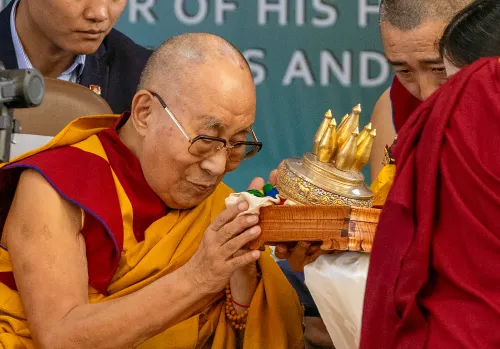
The report indicates that China has historically recognized religion as a diplomatic tool. In Sri Lanka, Buddhism's profound spiritual roots provide a natural entry point, as Beijing funds temple renovations, cultural exchanges, and pilgrimages while positioning itself as a protector of Buddhist heritage.
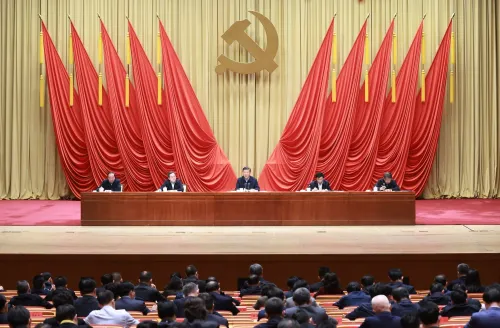
“However, beneath this facade lies a calculated initiative to synchronize Sri Lanka’s Buddhist institutions with the Communist Party of China’s (CCP) perspective. Scholars have remarked that China’s Buddhist diplomacy transcends cultural connections; it is essential for the CCP’s foreign policy, designed to soften its image while intertwining party-to-party relations with state-to-state interactions,” it stated.
The report emphasized that Sri Lanka’s economic fragility has created a conducive environment for Chinese influence. The Belt and Road Initiative (BRI), initially heralded as a pathway to prosperity, has instead ensnared the island in a “cycle of debt dependency.”
“Expensive infrastructure projects, like the Hambantota Port, have left Sri Lanka grappling with loan repayments, leading to concessions that intensify Chinese control. More recently, agreements have expanded beyond mere infrastructure, explicitly linking Sri Lanka’s digital economy strategy to Chinese investments. This is not solely about financial aid; it is about embedding the Communist Party of China’s ideological framework within the governance of the nation,” it mentioned.
“By merging economic collaboration with CCP narratives of collective prosperity and compliance, Beijing ensures its political agenda permeates Sri Lanka’s institutions. Complementing this economic entrenchment is China’s Buddhist soft-power strategy, which reshapes spiritual narratives to align with its authoritarian worldview. Together, these material and spiritual dependencies create a dual front of influence, eroding Sri Lanka’s sovereignty while subtly redefining its cultural identity,” it further noted.
The report warned that if left unchecked, Chinese ideological infiltration threatens to undermine centuries of spiritual heritage, rendering Sri Lanka’s Buddhist institutions vulnerable to becoming tools of foreign propaganda instead of guardians of timeless wisdom.
Point of View
It is crucial to underscore the importance of preserving Sri Lanka's cultural identity amid growing foreign influence. The intricate relationship between economic dependency and ideological infiltration warrants thorough examination and proactive measures to protect our heritage.
NationPress
30 Sept 2026
Frequently Asked Questions
How is China influencing Buddhism in Sri Lanka?
China is using Buddhism as a soft-power tool, sponsoring temple renovations and cultural exchanges while attempting to align Sri Lankan Buddhist institutions with its Communist Party ideology.
What are the implications of China's Belt and Road Initiative for Sri Lanka?
The Belt and Road Initiative has led to significant debt for Sri Lanka, creating a dependency on Chinese investments and influencing the nation's governance.
What risks does Sri Lanka face from Chinese ideological infiltration?
Sri Lanka risks losing its rich Buddhist heritage and cultural identity, as Chinese influence may turn Buddhist institutions into instruments of foreign propaganda.
How can Sri Lanka protect its cultural identity?
Sri Lanka needs to navigate its economic agreements carefully and maintain a strong focus on preserving its centuries-old Buddhist traditions and values.
What role does religion play in China's foreign policy?
China utilizes religion, particularly Buddhism, as a diplomatic tool to enhance its soft power and create ideological connections with other nations.