China's Economic Power Blocks Tibetan Recognition: Report
Synopsis
A recent report reveals that the non-recognition of the Central Tibetan Administration is primarily due to China's economic influence rather than Tibet's lack of legitimate claims. The Dalai Lama continues to symbolize Tibet’s moral cause, despite political barriers.
Key Takeaways
Central Tibetan Administration lacks international recognition due to China's influence.
The Dalai Lama symbolizes Tibet's enduring moral authority.
China's permanent seat on the UN Security Council complicates recognition.
Historical precedents exist for recognizing governments in exile.
Tibet continues to resonate globally, despite political barriers.
Brussels, March 28 (NationPress) The lack of acknowledgment for the Central Tibetan Administration (CTA) is not due to Tibet's claims being weak, but rather a result of China’s diplomatic pressure and economic influence, which makes such claims appear “diplomatically impractical.”
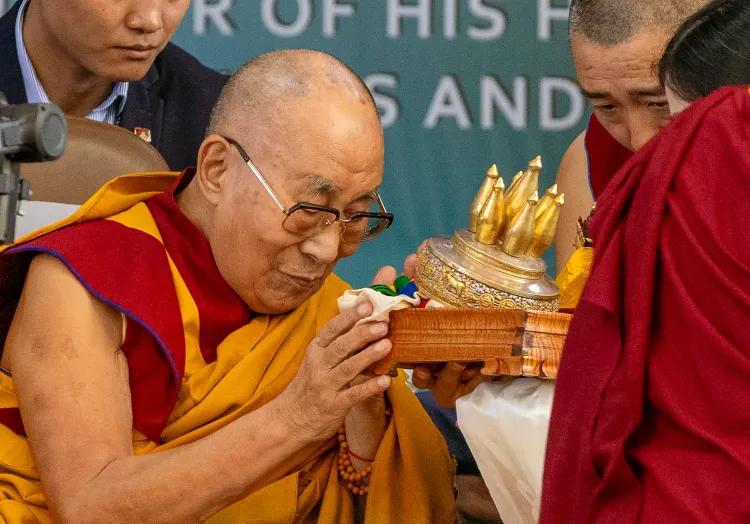
The enduring presence of Tibetan spiritual leader Dalai Lama highlights that moral authority can thrive even amid political quietude. Although Tibet might never achieve recognition within the United Nations, its significance continues to resonate within the hearts of people globally, according to a report.
“Within the sphere of international diplomacy, recognition serves as the currency of sovereignty. However, no country has officially recognized the Central Tibetan Administration as a legitimate government. This is not due to a deficiency in internal legitimacy. The CTA operates as a viable exile government, complete with democratic elections and institutions. The deterrent lies in the iron grip of realpolitik. Acknowledging the CTA would challenge the territorial claims of the People’s Republic of China, a step that no nation has been prepared to take due to Beijing’s economic clout and geopolitical importance,” detailed a report from the European Times.
“This diplomatic silence is intentional. Historical precedents exist for the recognition of governments in exile, such as the Polish government during World War II and Kuwait’s exile government in 1990. Such recognitions have usually depended on the likelihood of restoration. In Tibet’s case, China’s firm grip and its permanent seat on the UN Security Council significantly limit that potential. Nations thus refrain from recognition not because the CTA is lacking in internal legitimacy, but due to the substantial repercussions of opposing Beijing,” it further elaborated.
The report indicates that China’s consolidated power and its permanent representation on the UN Security Council greatly restrict the chances of recognition. Countries are not withholding recognition because the CTA lacks legitimacy, but because the costs associated with confronting Beijing are too high.
Nonetheless, the Dalai Lama occupies a unique position that transcends this diplomatic stalemate, embraced worldwide not as a political leader but as a Nobel laureate, spiritual guide, and representative of Tibetans in exile.
“This distinction enables governments to support Tibet's cultural and ethical narratives without inciting China's retaliatory actions. While Beijing can exert pressure to deter official interactions with the CTA, it cannot diminish the Dalai Lama’s reputation as a religious leader whose principles of compassion and nonviolence resonate universally,” the European Times report stated.
Emphasizing the paradox, the report concluded, “The CTA represents Tibet’s political ambitions but remains hindered by its lack of recognition. In contrast, the Dalai Lama wields a form of soft power that no Beijing decree can extinguish. His moral authority guarantees that Tibet remains a part of global awareness, even as its political structures are denied formal acknowledgment.”
Point of View
It is evident that the geopolitical landscape significantly hinders the recognition of the Central Tibetan Administration. While the Dalai Lama's moral authority remains strong, the interplay of international relations and economic power dynamics complicates Tibet's political aspirations.
NationPress
28 Sept 2026
Frequently Asked Questions
Why is the Central Tibetan Administration not recognized internationally?
The Central Tibetan Administration is not recognized due to China's significant diplomatic and economic influence, making recognition politically risky for other nations.
What role does the Dalai Lama play in Tibet's recognition efforts?
The Dalai Lama acts as a moral figure and spiritual leader, promoting Tibet's cause globally, despite the political challenges faced by the Central Tibetan Administration.
How does China's position on the UN Security Council affect Tibet?
China's permanent seat on the UN Security Council limits the chances of international recognition for the Central Tibetan Administration, as countries fear repercussions for opposing Beijing.
Is there a historical precedent for recognizing governments in exile?
Yes, there are historical precedents, such as the Polish government during World War II, but recognition often depends on the potential for restoration, which is limited in Tibet's case.
What is the significance of Tibet in global consciousness?
Despite political non-recognition, Tibet remains significant in global consciousness through the teachings and moral authority of the Dalai Lama.