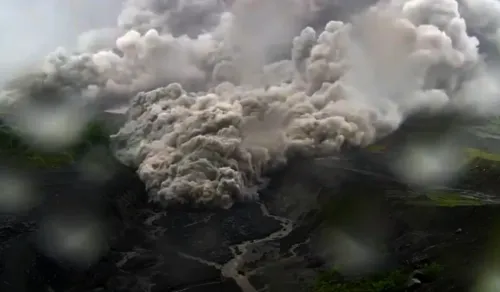
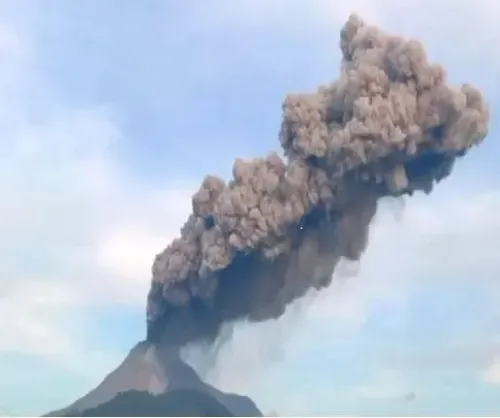
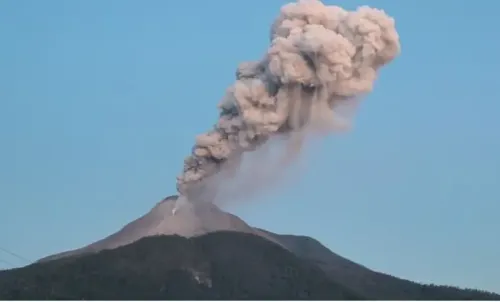
Mount Sinabung erupts in North Sumatra, ash blankets Berastagi
Synopsis
Mount Sinabung's Monday eruption sent a 3,500-metre ash column over Berastagi, grounding visibility and forcing schools to issue mask advisories — the latest in a chain of volcanic events across Indonesia in 2025 that has already claimed three lives at Mount Dukono. With the volcano holding at Alert Level II and lahar risks active, the situation remains closely monitored.
Key Takeaways
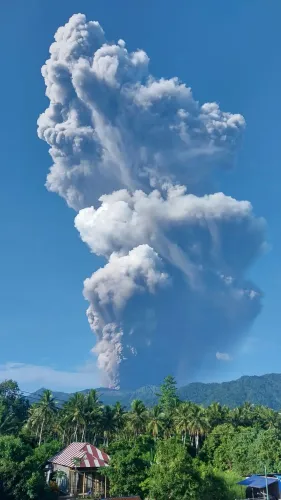
Mount Sinabung in North Sumatra erupted on 31 August , sending ash 3,500 metres above the summit.
The eruption lasted approximately one hour and registered a seismograph amplitude of 120 millimetres .
Volcanic ash blanketed roads and vehicles in Berastagi , reducing visibility; residents and schoolchildren were advised to wear masks.
The volcano remains at Level II (Alert) ; exclusion zones of 3 km from the summit and 4.5 km in the southeast sector are in force.
Residents near rivers originating from the volcano have been warned of potential lahar flows .
Earlier in May 2025 , three people were killed when Mount Dukono erupted in North Maluku , sending ash 10 km into the sky.
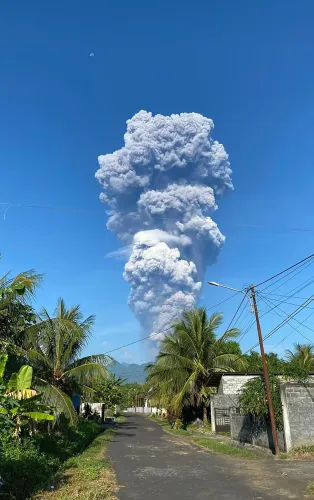
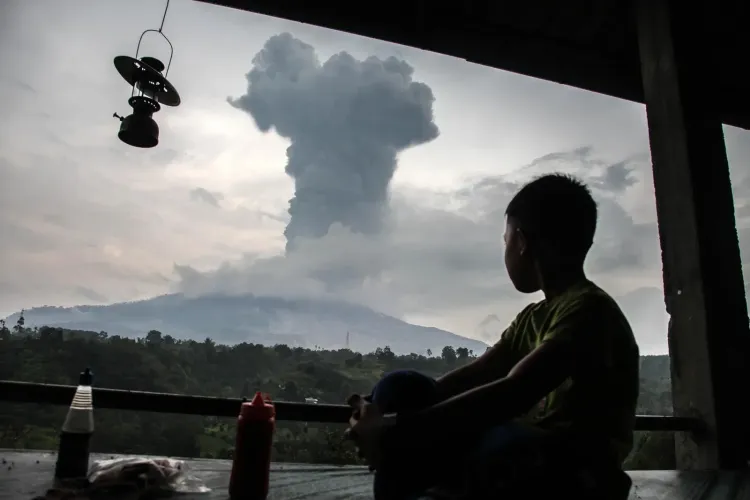
Mount Sinabung in Indonesia's North Sumatra province erupted on Monday morning, 31 August, sending a thick column of volcanic ash over the nearby city of Berastagi and prompting authorities to warn residents to wear masks and stay alert. The eruption is the latest in a series of volcanic events to hit the world's largest archipelago in 2025.
Key Details of the Eruption
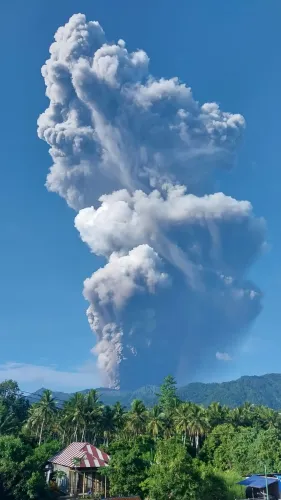
Armen Putra, head of the Sinabung Volcano Observation Post, confirmed that a dark ash column rose approximately 3,500 metres above the summit before drifting east and southeast. The eruption registered on seismographs with a maximum amplitude of 120 millimetres and lasted roughly one hour.
Volcanic ash blanketed roads and vehicles across Berastagi, significantly reducing visibility in the area. Residents were urged to wear masks, and schools in affected zones advised students and teachers to do the same when outdoors.
Exclusion Zones and Safety Warnings
Mount Sinabung remains at Level II (Alert status). All activities are prohibited within a three-kilometre radius of the summit and within 4.5 kilometres in the southeast sector. Authorities have also warned communities living near rivers that originate from the volcano to remain on guard against potential lahar flows, which can occur when volcanic debris mixes with water during rainfall.
Indonesia's Broader Volcanic Activity in 2025
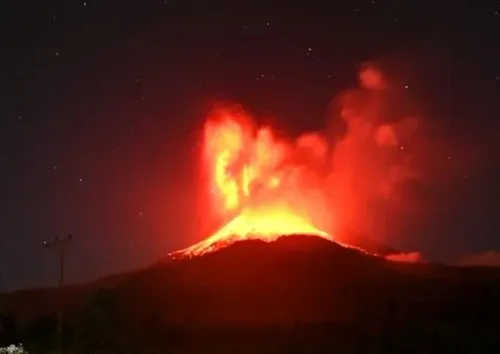
The Sinabung eruption follows a string of volcanic incidents across the archipelago this year. In May, three people were killed after Mount Dukono erupted in Indonesia's North Maluku province. That eruption, recorded at around 7:40 am local time on 8 May, sent an ash column up to 10 kilometres into the sky, and local rescue authorities warned residents to stay clear of a 4-kilometre radius around the crater.
Mount Dukono, situated on Halmahera Island, had also erupted in February earlier this year, prompting the country's Volcanology and Geological Disaster Mitigation Centre to issue an aviation warning. A Volcano Observatory Notice for Aviation (VONA) was issued at the orange level — the second-highest warning — prohibiting aircraft from flying below 5 kilometres around the volcano. Ash clouds from volcanic eruptions are known to pose serious risks to aircraft engines and flight systems.
What to Watch
With Mount Sinabung holding at Alert Level II, monitoring teams are continuing round-the-clock observation. The risk of lahar flows during rainfall and further ashfall events remains elevated. Indonesia, which sits on the Pacific Ring of Fire, is home to more than 130 active volcanoes, making it one of the most volcanically active countries in the world.
Point of View
And the Sinabung eruption is a reminder that the archipelago's disaster-response infrastructure is perpetually stretched. What the coverage often misses is the cumulative toll on communities near repeat-offender volcanoes like Sinabung — which has been erupting intermittently since 2010 — where economic disruption, agricultural loss, and psychological fatigue compound with each new event. Alert Level II sounds manageable, but for farmers and residents in Berastagi who have lived under ash and exclusion zones for over a decade, it is anything but routine. Indonesia's Volcanology and Geological Disaster Mitigation Centre does creditable monitoring work, but the policy gap between early warning and community relocation remains stubbornly wide.
NationPress
16 Oct 2026
Frequently Asked Questions
What happened at Mount Sinabung on 31 August 2025?
Mount Sinabung in Indonesia's North Sumatra province erupted on the morning of 31 August 2025, sending a dark volcanic ash column approximately 3,500 metres above the summit. The eruption lasted about one hour and blanketed the nearby city of Berastagi with ash, reducing visibility on roads.
What is the current alert level for Mount Sinabung?
Mount Sinabung is at Level II, or Alert status. Activities are prohibited within a three-kilometre radius of the summit and within 4.5 kilometres in the southeast sector, according to monitoring authorities.
Are there risks beyond ashfall from this eruption?
Yes. Authorities have warned residents living near rivers that originate from Mount Sinabung of potential lahar flows — fast-moving mudflows that occur when volcanic debris mixes with rainwater. These can be especially dangerous during or after heavy rainfall.
How does this eruption compare to other recent volcanic events in Indonesia?
In May 2025, three people were killed when Mount Dukono in North Maluku province erupted, sending ash up to 10 kilometres into the sky. Mount Dukono had also erupted in February 2025, triggering an orange-level aviation warning. The Sinabung eruption, while significant, has so far not resulted in reported casualties.
What precautions have authorities advised for residents near Berastagi?
Authorities have urged all residents to wear masks and remain vigilant. Schools in affected areas have advised students and teachers to wear masks when outdoors. Residents near volcano-fed rivers have been specifically warned to watch for lahar flow risks.