Remembering Robert Mueller: A Catalyst for India-US Counterterrorism Relations
Synopsis
Robert S. Mueller III, former FBI director, is memorialized in India for his vital role in shaping counter-terrorism cooperation with the U.S. His efforts following the Mumbai attacks marked a significant evolution in bilateral security relations.
Key Takeaways
Mueller's impact: He significantly shaped India-US counter-terrorism relations.
Legacy: His role in the aftermath of the Mumbai attacks was pivotal.
Collaboration: Enhanced intelligence sharing and operational cooperation.
International cooperation: Framed terrorism as a global issue.
Resilience: Strengthened bilateral ties despite political controversies.
Washington, March 22 (NationPress) Remembered fondly in India, Robert S. Mueller III, the former director of the FBI, significantly influenced the contemporary landscape of India-US counter-terrorism collaboration. His impactful career not only shaped the security framework of the United States post-9/11 but also fostered vital partnerships abroad, particularly with India.
Mueller, who passed away at the age of 81, engaged with Indian authorities at pivotal junctures in the nation’s security evolution, commencing shortly after he assumed leadership of the FBI and extending through the challenging aftermath of the 2008 Mumbai attacks.
His inaugural trip to India took place on January 21–22, 2002, mere months after the September 11 attacks in the United States and shortly following the assault on India’s Parliament. This period saw both nations reassessing their strategies against terrorism.
During his visit to New Delhi, Mueller conferred with Indian officials regarding intelligence sharing, collaborative investigations, and enhancing counter-terrorism efforts. This marked a foundational step toward a more profound institutional alliance between U.S. and Indian security agencies, especially concerning the identification of cross-border terror networks in South Asia.
This growing relationship faced trials — and subsequent transformation — in the years to come.
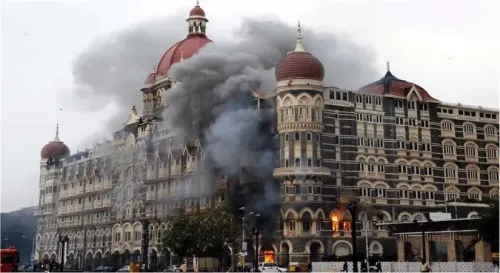
After the November 2008 Mumbai attacks, Mueller returned to India in early 2009, as the nation was grappling with the staggering impact of the coordinated assault that left over 160 people dead and highlighted significant weaknesses in urban security and international intelligence collaboration.
This visit carried heightened significance.
Mueller met with then Home Minister P. Chidambaram, National Security Adviser M.K. Narayanan, and senior intelligence figures to discuss the investigation into the attacks and the larger challenge posed by transnational terrorism. The dialogue centered on evidence access, intelligence flow, and interagency coordination.
Post-meetings, Mueller framed the attacks within a global context, asserting: “Terrorism is not just a local issue. It transcends national boundaries and is a global concern.”
He also emphasized the remarkable collaboration that ensued, noting the “unprecedented cooperation among our agencies during and following the Mumbai attacks.”
This collaboration was extensive, paving the way for an exceptional level of cooperation in counter-terrorism between the two nations.
Under Mueller’s leadership, FBI teams collaborated with Indian investigators, examining communications, reconstructing digital evidence, and aiding in forensic analysis that established connections between the attackers and their handlers in Pakistan. Investigators conducted numerous interviews and retrieved data from damaged devices found at attack sites.
Weeks later, during a speech at the Council on Foreign Relations in Washington on February 23, 2009, Mueller cited the Mumbai attacks as a defining instance of modern terrorism and international collaboration.
“This type of attack reminds us that terrorists with extensive plans and minimal resources can utilize basic weapons to amplify their impact,” he stated, highlighting the necessity for coordinated global responses.
For India, this era represented a significant shift. Intelligence exchange with the United States became swifter and more systematic, with cooperation expanding into areas such as cyber forensics, counter-terror financing, aviation security, and joint investigative frameworks. The FBI’s involvement after the Mumbai attacks also led to enhancements in India’s forensic capabilities and crisis response systems.
Mueller’s contribution to this transition, though understated, was vital. He approached his role less as a political figure and more as a seasoned investigator, fostering trust through operational collaboration.
His interactions with India also reinforced a broader U.S. acknowledgment of India as a frontline state in combating terrorism from the region, particularly from groups based in Pakistan.
However, his legacy in the United States remains a subject of contention.
In the immediate hours following his death, the divide in perception was evident.
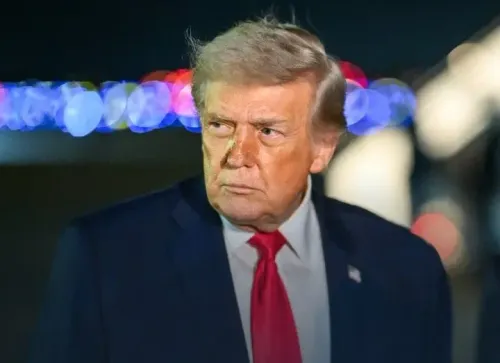
Former President Donald Trump responded with a blunt statement, declaring: “Good, I’m glad he’s dead. He can no longer harm innocent people!”
This remark starkly contrasted with tributes from other leaders.
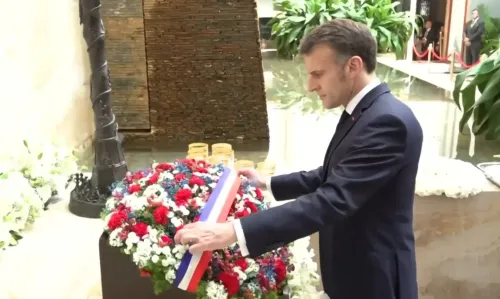
Former President George W. Bush expressed his sorrow, stating, “Laura and I are deeply saddened by the loss of Robert Mueller. Bob devoted his life to public service,” recognizing his role in guiding the nation through the aftermath of September 11 and bolstering homeland security.
Barack Obama referred to him as “one of the finest directors in the history of the FBI,” commending his “unyielding commitment to the rule of law” and his efforts in “saving countless lives.”
Lawmakers offered more nuanced perspectives. Representative Mike Turner acknowledged that Mueller’s investigation “effectively ended the Russia hoax” but noted it “tainted his reputation,” while affirming that he “was nonetheless dedicated to the truth.”
This contrast highlights the dual nature of Mueller’s career. To many in Washington, he epitomized institutional integrity and restraint, while to others, he was a central figure in a politically charged investigation that exacerbated national divisions.
In India, however, the memory of Mueller aligns more with cooperation than controversy.
He is remembered as a pivotal figure during a time when the United States actively partnered with India to address one of its most significant terrorist crises. His visits in 2002 and 2009 encapsulate a period where India-US counter-terror cooperation transformed from mere dialogue to operational collaboration.
The Mumbai attacks served as a catalyst for this evolution. In subsequent years, India and the United States broadened their cooperation in intelligence sharing, homeland security, counter-terrorism financing, and joint task forces.
Today, this collaborative framework remains a cornerstone of the bilateral relationship, guiding how both countries tackle evolving threats, from cross-border terrorism to digital radicalization.
Although Mueller seldom sought recognition, he might not have envisioned his legacy in these terms. Nevertheless, in India, his contributions following the Mumbai incident are commemorated as a defining chapter — one where understated coordination helped redefine a crucial partnership, even as his later endeavors would polarize the nation he served.
Point of View
It's evident that Robert Mueller's legacy is complex. In India, he is celebrated for fostering vital counter-terrorism cooperation, particularly in the wake of the Mumbai attacks. While his career in the U.S. is met with mixed perceptions, his role in strengthening ties with India is a testament to his lasting impact on global security.
NationPress
22 Sept 2026
Frequently Asked Questions
What was Robert Mueller's role in India-US relations?
Robert Mueller played a crucial role in shaping counter-terrorism cooperation between India and the U.S., especially after the 2008 Mumbai attacks, by fostering intelligence sharing and operational collaboration.
How did Mueller influence counter-terrorism efforts?
Mueller's efforts led to a structured framework for intelligence sharing and cooperation, enhancing both countries' capabilities in addressing terrorism.
What impact did the Mumbai attacks have on India-US relations?
The Mumbai attacks catalyzed a significant transformation in India-US relations, leading to deeper collaboration in counter-terrorism, intelligence sharing, and security measures.
What was Mueller's legacy in the U.S.?
Mueller's legacy in the U.S. is contested, with some viewing him as a symbol of integrity while others criticize his role in politically charged investigations.
Why is Mueller remembered in India?
In India, Mueller is remembered for his understated yet significant contributions to counter-terrorism, particularly in enhancing cooperation following the Mumbai attacks.