What Happened After a 6.4-Magnitude Earthquake Struck Western Japan?
Click to start listening
Synopsis
A powerful earthquake measuring 6.4 on the Richter scale has shaken western Japan, leading to multiple injuries and significant structural damage. As aftershocks continue to rattle the region, emergency services are responding to reports of injuries and infrastructure impacts. Stay tuned for the latest updates on this developing story.
Key Takeaways
- A 6.4-magnitude earthquake struck western Japan.
- Injuries reported, particularly in Shimane Prefecture.
- Two significant aftershocks followed the main quake.
- Damage to structures and infrastructure has been observed.
- Emergency services are actively responding to the situation.
Tokyo, Jan 6 (NationPress) A significant number of individuals have sustained injuries following a powerful 6.4-magnitude earthquake that hit Shimane Prefecture in western Japan on Tuesday, as reported by local media.
The seismic event took place at 10:18 a.m. local time in eastern Shimane Prefecture, occurring at a depth of approximately 10 kilometers. It registered upper 5 on Japan’s seismic scale of 7 in the most severely affected regions of Shimane and Tottori prefectures, according to the Japan Meteorological Agency (JMA).
The quake's epicenter was pinpointed at a latitude of 35.3 degrees north and a longitude of 133.2 degrees east.
Two aftershocks followed, measuring 5.1 and 5.4 in magnitude, striking the same locality at around 10:28 a.m. and 10:37 a.m. local time, respectively, as per the JMA.
In Matsue City, Shimane Prefecture, four individuals were hospitalized due to falls and other injuries incurred during the quake.
The city reported damage to several roofs, according to Xinhua news agency and public broadcaster NHK.
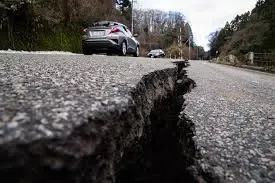
In Sakaiminato City, in neighboring Tottori Prefecture, local authorities received notifications of cracks developing on roads. Additionally, in Fukuyama City, located south of the epicenter in Hiroshima Prefecture, two individuals were injured as a result of the earthquake.
The JMA revised the quake's magnitude from 6.2, stating that long-period ground motions reaching the maximum level 4 were recorded in western Tottori Prefecture.
Long-period ground motion refers to prolonged and intense seismic waves from large earthquakes, which can cause tall buildings to sway, especially those on upper floors.
Point of View
The recent earthquake in Shimane Prefecture highlights the ongoing seismic activity in Japan. With the nation’s well-established emergency response systems, the swift action taken by local authorities is commendable. However, the aftermath of such natural disasters always calls for continuous monitoring and support for affected communities.
NationPress
07/01/2026
Frequently Asked Questions
What was the magnitude of the earthquake?
The earthquake registered a magnitude of 6.4.
Where did the earthquake occur?
It occurred in Shimane Prefecture, western Japan.
Were there any casualties?
Several people were injured, with four individuals hospitalized in Matsue City.
How deep was the earthquake?
The earthquake struck at a depth of approximately 10 kilometers.
Were there any aftershocks?
Yes, there were two aftershocks measuring 5.1 and 5.4.