President Murmu receives Honorary Doctorate from Bucharest University
Synopsis
President Droupadi Murmu's Bucharest visit produced an unexpected cultural moment — invoking Tagore's 1926 address at the National Theatre and Romania's poet Eminescu studying the Bhagavad Gita to argue that India and Romania were connected long before diplomacy caught up. The honorary doctorate and bilateral talks with PM Bolojan mark a concrete push to turn that civilisational warmth into trade, clean energy, and academic partnerships.
Key Takeaways
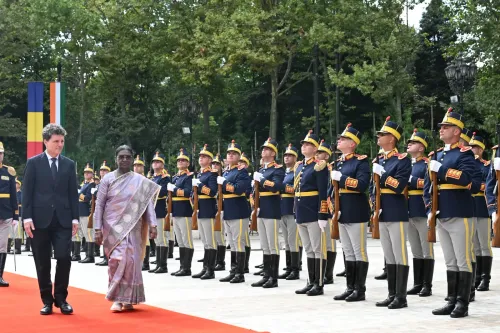
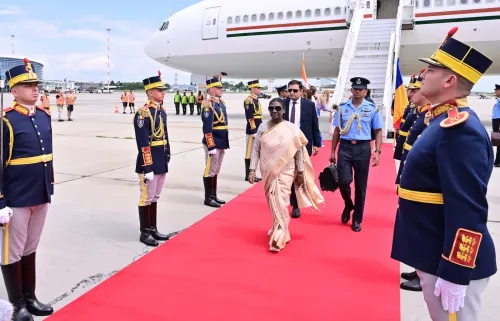
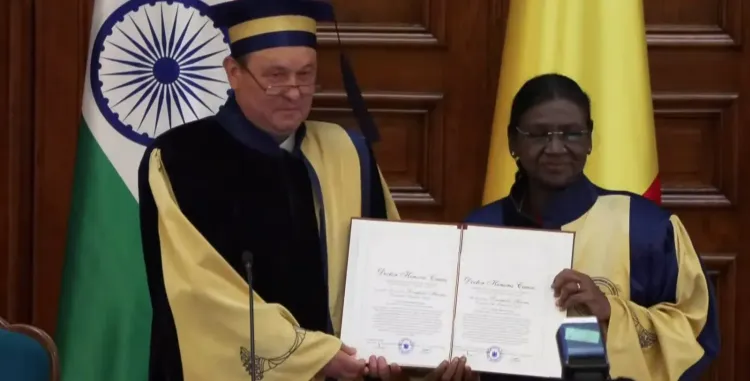
President Droupadi Murmu received an Honorary Doctorate from the Bucharest University of Economic Studies during her state visit to Romania .
She called on universities to ensure knowledge is guided by wisdom, ethics and compassion in the age of AI and digital technologies.
Murmu cited Rabindranath Tagore's visit to Bucharest in November 1926 and Romanian poet Mihai Eminescu's study of the Upanishads as evidence of deep civilisational ties.
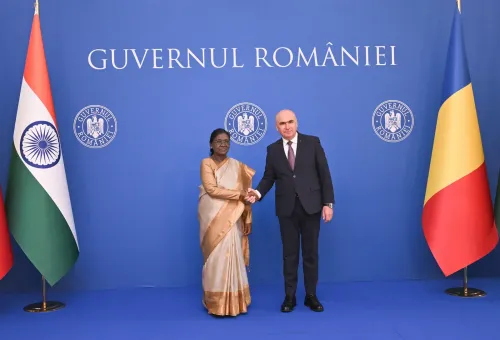
She held a bilateral meeting with Romanian Prime Minister Ilie Bolojan at Victoria Palace , covering trade, investment, clean energy, connectivity, and emerging technologies.
She encouraged Romanian institutions to pursue joint research and faculty and student exchanges with Indian universities.
President Droupadi Murmu was conferred an Honorary Doctorate by the Bucharest University of Economic Studies on 25 July 2025 at a formal ceremony in Bucharest, Romania, recognising her contributions to public service and her advocacy for inclusive education. The honour came during her ongoing state visit to Romania, which has seen a series of high-level engagements aimed at deepening India-Romania ties.
What President Murmu Said at the Ceremony
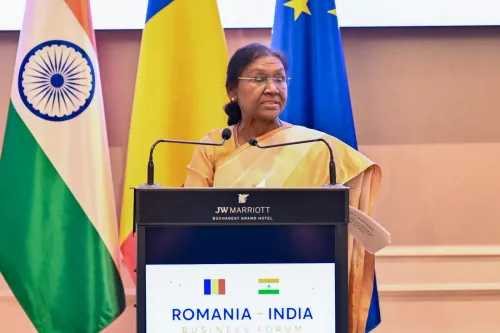
Accepting the honour, President Murmu called on universities to anchor knowledge in ethics and compassion at a time of rapid technological change. 'Today, as the world is being reshaped by artificial intelligence, digital technologies and other rapid scientific advances, universities like this have even greater responsibility to ensure that knowledge is guided by wisdom, ethics and compassion,' she said.
She also drew on her own background as a former teacher, stating that she witnessed firsthand 'how a single classroom, however modest, can change the course of a family's future and, in time, a whole community.' She framed education not as a tool of individual advancement but as 'the surest foundation of a just and inclusive society.'
Murmu encouraged the Bucharest University of Economic Studies and other Romanian academic institutions to expand cooperation with Indian counterparts through joint research programmes and faculty and student exchanges.
A Century-Old Cultural Thread Between India and Romania
President Murmu invoked a striking historical parallel to illustrate the depth of civilisational ties between the two countries. She recalled that Nobel laureate Rabindranath Tagore visited Bucharest in November 1926 — nearly a century ago — and addressed a packed hall at the National Theatre of Bucharest on the unity of the human spirit.
'He was moved by how deeply the people of this land understood the Indian way of thinking,' she said. She also noted that Romania's national poet Mihai Eminescu studied the Upanishads and the Bhagavad Gita during his student years, and that these texts profoundly shaped his literary voice. 'India and Romania may be geographically distant, but our civilisations have long spoken of one another, often through our poets before our diplomas,' she emphasised.
Bilateral Meeting with Romanian Prime Minister
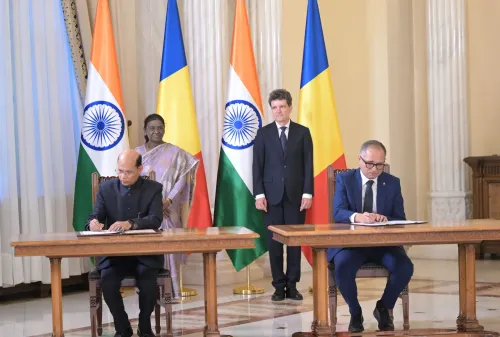
Earlier on the same day, President Murmu held a bilateral meeting with Romanian Prime Minister Ilie Bolojan at Victoria Palace in Bucharest. According to a statement from India's Ministry of External Affairs (MEA), the two leaders discussed strengthening cooperation across trade, investment, clean energy, connectivity, and emerging technologies.
The meeting signals a broader intent to institutionalise the relationship beyond diplomatic courtesies, with both sides reportedly keen to leverage Romania's position as a European Union member to expand India's economic footprint in the region.
India's Education Policy in Focus
President Murmu also highlighted India's National Education Policy as a framework that promotes innovation, research, creativity, and international academic collaboration — positioning it as a natural bridge for deeper India-Romania university partnerships. The remarks align with New Delhi's broader push to internationalise Indian higher education and attract foreign academic partnerships under the NEP framework.
With the honorary doctorate conferred and bilateral talks concluded, the visit is expected to yield formal academic and economic agreements in the coming weeks.
Point of View
Not just transactional interest. That framing matters because Romania is an EU member with growing strategic relevance, and India needs European partners who see it as more than a market. The real test will be whether the bilateral meeting with PM Bolojan translates into signed agreements on clean energy and technology, or remains at the level of warm communiqués. India's track record of converting state-visit momentum into durable institutional partnerships has been uneven.
NationPress
23 Oct 2026
Frequently Asked Questions
Why did Bucharest University confer an Honorary Doctorate on President Murmu?
The Bucharest University of Economic Studies conferred the Honorary Doctorate on President Droupadi Murmu in recognition of her public service and her advocacy for inclusive, ethics-driven education. The honour was awarded during her official state visit to Romania.
What did President Murmu say about AI and universities?
President Murmu said that as the world is reshaped by artificial intelligence and digital technologies, universities have a greater responsibility to ensure knowledge is guided by wisdom, ethics, and compassion. She made these remarks in her acceptance address at the Bucharest ceremony.
What is the historical connection between India and Romania that Murmu highlighted?
President Murmu noted that Rabindranath Tagore visited Bucharest in November 1926 and spoke at the National Theatre on the unity of the human spirit. She also pointed out that Romanian national poet Mihai Eminescu studied the Upanishads and the Bhagavad Gita, which deeply influenced his writing.
What was discussed in President Murmu's meeting with Romanian PM Ilie Bolojan?
The two leaders met at Victoria Palace in Bucharest and discussed strengthening bilateral cooperation in trade, investment, clean energy, connectivity, and emerging technologies, according to a statement from India's Ministry of External Affairs.
How does India's National Education Policy relate to the Romania visit?
President Murmu cited India's National Education Policy as a framework that promotes innovation, research, and international academic collaboration. She encouraged Romanian universities to deepen ties with Indian institutions through joint research and faculty and student exchange programmes.