North Korea commissions 5,000-tonne destroyer Choe Hyon, Kim vows nuclear naval rise
Synopsis
North Korea has moved from rhetoric to reality on naval power: the commissioning of the 5,000-tonne destroyer Choe Hyon — with Kim Jong-un pledging nuclear armament of the fleet and two new warships per year — marks Pyongyang’s most concrete step yet toward a nuclear surface navy capable of threatening South Korean assets in the Yellow Sea.
Key Takeaways
North Korea commissioned the 5,000-tonne destroyer Choe Hyon at Nampho on 23 June 2025 , assigned to the West Sea Fleet .
Kim Jong-un declared the Navy would grow to be ‘admirable beyond imagination’ and linked the destroyer directly to the country’s nuclear deterrent .
Kim outlined plans for two new surface combatants per year , including 10,000-tonne-class cruisers , under a five-year defence plan.
The next destroyer, Kang Kon , is set to be commissioned ‘soon,’ followed by a series of strategic warships.
Analysts say the deployment targets the Yellow Sea , where South Korean military assets and commercial shipping are concentrated.
The vessel’s close-in weapon system reportedly resembles Russia’s Pantsir-ME , raising questions about possible foreign assistance despite Pyongyang’s claims of indigenous construction.
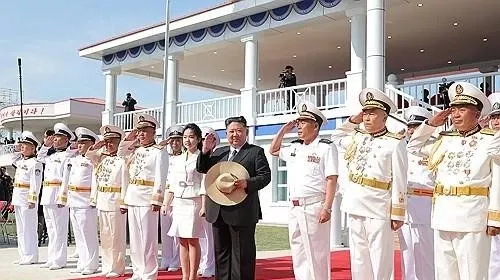
North Korea has formally commissioned its new 5,000-tonne destroyer Choe Hyon into the West Sea Fleet, with leader Kim Jong-un declaring at the ceremony that the Navy's combat power would grow to a level “admirable beyond imagination.” State media reported the commissioning on Wednesday, 24 June, marking a significant escalation in Pyongyang’s push to build a nuclear-capable surface fleet.
The Commissioning Ceremony
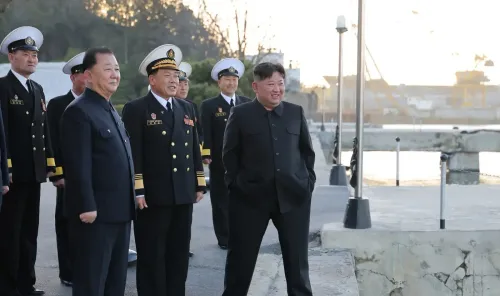
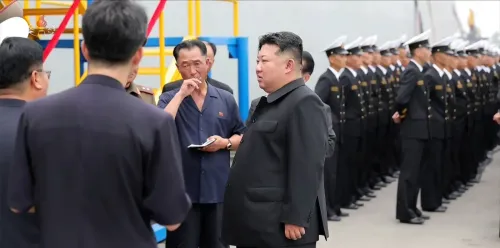
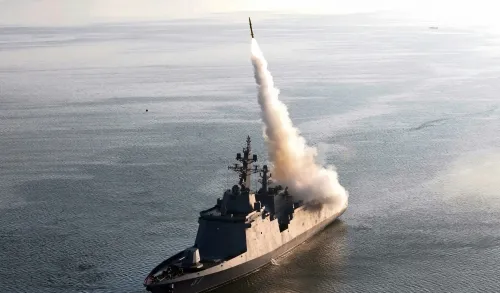
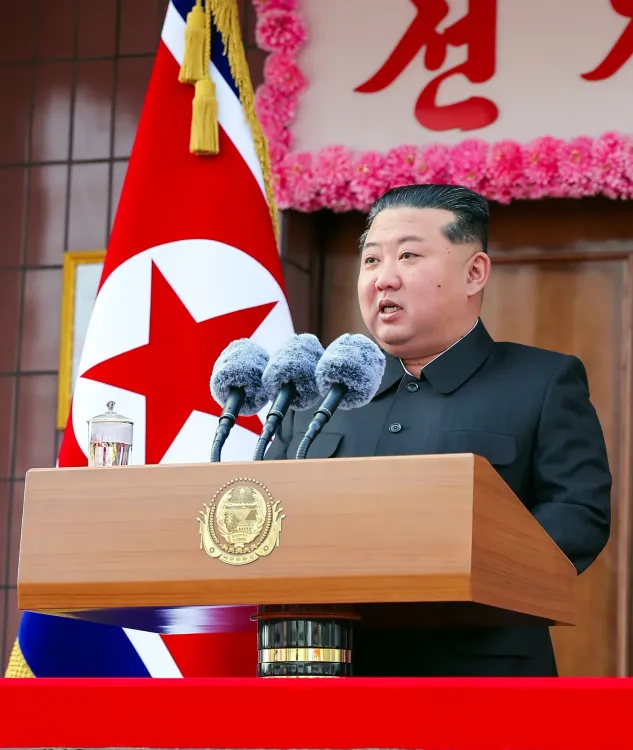
Kim attended the ceremony the previous day at the western port of Nampho, where he delivered a congratulatory address describing the destroyer as possessing “the most perfect, complex operational and combat capability.” The warship, categorised as a “new-type multi-mission” destroyer, had been publicly unveiled in April last year and has undergone weapons tests in recent months ahead of its formal induction.
Referring to the North Korean navy’s long-standing reputation as the weakest branch of its armed forces, Kim said pointedly: “Things have changed obviously now.” He described the destroyer’s deployment as “a strategic course of crucial importance,” linking it directly to strengthening the country’s nuclear deterrent and enabling more diverse nuclear operations.
Nuclear Naval Ambitions
Kim stated that the Navy “is rising into a full-fledged service equipped with strategic means as the program of equipping the Navy with nuclear weapons is following its planned course unerringly.” The Choe Hyon will be assigned to the West Sea Fleet with a mandate to defend the West Sea and deter military conflict.
The destroyer was named after Choe Hyon, an anti-Japanese revolutionary fighter and close aide to the late North Korean founder Kim Il-sung. Choe was also the father of Choe Ryong-hae, former chairman of the standing committee of the North’s parliament.
Plans for Further Naval Buildup
Kim outlined an ambitious expansion roadmap, calling for the construction of two Choe Hyon-class or larger surface combatants each year, including 10,000-tonne-class cruisers, under the country’s five-year defence development plan. “Following the Choe Hyon, we will soon commission the destroyer Kang Kon for operations. After that, we will launch 10,000-tonne strategic warships one after another,” he said, also calling for escort ships, special-purpose vessels, and new underwater weapons systems.
Analyst Assessments
Hong Min, a senior researcher at the Korea Institute for National Unification, said the deployment “could be intended to enhance its capabilities in the Yellow Sea region where South Korean military assets and commercial shipping are concentrated,” reflecting Pyongyang’s “two hostile states policy” toward Seoul.
Shin Jong-woo, secretary-general of the Korea Defence and Security Forum, noted that the warship appeared to have undergone design changes since its launch ceremony last year. “It initially appeared to be designed to carry short-range ship-to-surface ballistic missiles, but the smaller vertical launch cells seen during subsequent testing suggest it may instead be equipped with cruise missiles,” Shin said.
Though Pyongyang has emphasised indigenous construction, some analysts point to possible Russian assistance — the vessel’s close-in weapon system reportedly resembles Russia’s Pantsir-ME naval air defence system. As North Korea accelerates its naval nuclear programme, the commissioning of the Choe Hyon signals that Pyongyang’s maritime ambitions are no longer aspirational — they are operational.
Point of View
If met, would transform the Korean People’s Navy from a coastal defence force into a genuine regional threat within a decade. What mainstream coverage underweights is the Russia angle: if the Pantsir-ME resemblance reflects actual technology transfer, sanctions architecture has a serious gap that neither Seoul nor Washington has publicly addressed.
NationPress
22 Sept 2026
Frequently Asked Questions
What is the Choe Hyon destroyer commissioned by North Korea?
The Choe Hyon is a 5,000-tonne multi-mission destroyer commissioned by North Korea into its West Sea Fleet on 23 June 2025 at the port of Nampho. It is the country’s most advanced surface warship to date and is intended to carry nuclear-capable weapons systems.
What did Kim Jong-un say at the commissioning ceremony?
Kim Jong-un said the destroyer possessed ‘the most perfect, complex operational and combat capability’ and declared that the Navy’s combat power would grow to a level ‘admirable beyond imagination.’ He also linked the vessel directly to strengthening North Korea’s nuclear deterrent.
What are North Korea’s plans for further naval expansion?
Kim Jong-un called for the construction of two Choe Hyon-class or larger surface combatants every year under a five-year defence plan, including 10,000-tonne-class cruisers. The next destroyer, Kang Kon, is expected to be commissioned soon, followed by a series of strategic warships.
Why are analysts concerned about the Choe Hyon’s deployment?
Analysts say the destroyer is positioned to pressure South Korea in the Yellow Sea, where South Korean military assets and commercial shipping are concentrated. Its deployment reflects Pyongyang’s ‘two hostile states policy’ toward Seoul and signals a shift toward a nuclear-capable surface navy.
Is there evidence of Russian involvement in building the Choe Hyon?
North Korea has claimed the vessel was built using indigenous technology, but some analysts note that its close-in weapon system resembles Russia’s Pantsir-ME naval air defence system, raising questions about possible foreign assistance. No official confirmation of Russian involvement has been made.