North Korea Accelerates Construction of Third 5,000-Tonne Destroyer
Synopsis
Recent satellite findings suggest North Korea is hastening the construction of its third 5,000-tonne Choe Hyun-class destroyer, raising concerns over its naval power ambitions as it seeks to bolster its military capabilities.
Key Takeaways
North Korea is fast-tracking its third Choe Hyun-class destroyer construction.
Satellite images reveal advanced stages of shipbuilding.
The new destroyer aims to enhance North Korea's naval power.
Previous destroyers in this class are under operational scrutiny.
Military technology support from Russia is aiding North Korea's modernization.
Seoul, April 2 (NationPress) Recent satellite imagery indicates that North Korea is accelerating the development of its third 5,000-tonne Choe Hyun-class destroyer, as reported by a South Korean lawmaker on Thursday. This move aligns with Pyongyang's ongoing efforts to enhance its naval capabilities.
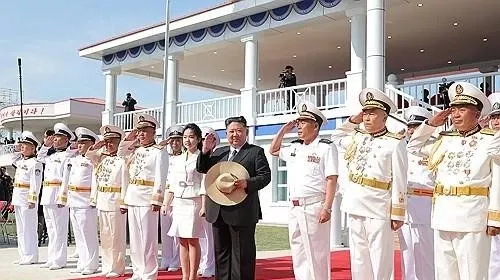
North Korean leader Kim Jong-un has commanded the construction of an additional 5,000-tonne multipurpose destroyer, aiming for its completion by the ruling party's founding anniversary on October 10. This comes after the North successfully launched two similar warships in the previous year.
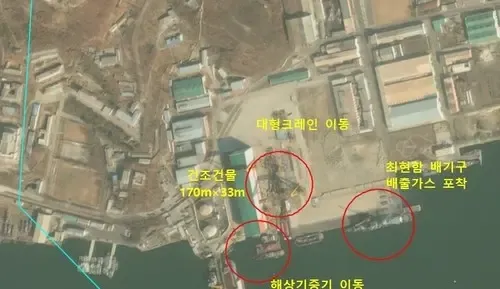
Large cranes and crane vessels have been observed in operation at a shipyard located in the western port city of Nampho, as noted by Rep. Yoo Yong-won of the People Power Party, referencing satellite images captured between March 12-28 by Vantor, a U.S.-based satellite intelligence firm.
According to Yoo, North Korea seems to be in the advanced stages of constructing the vessel, with large cranes actively lifting superstructures, which include substantial blocks, radar systems, and weaponry.
Moreover, satellite imagery has revealed indications that the first Choe Hyon destroyer is being prepared for deployment following its launch in April of last year. Signs suggest that the vessel's engine is operational, with exhaust gas visible emanating from the exhaust port. Movements of cranes have also been detected, hinting at the installation of additional weaponry on the ship, as reported by Yonhap News Agency.
"North Korea seems to be hastening the modernization of its navy, bolstered by military technology support from Russia," Yoo remarked.
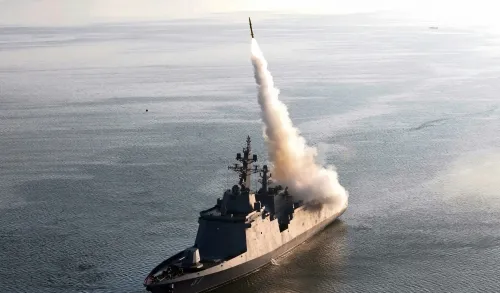
This destroyer is part of a novel class of 5,000-tonne warships, recognized as the most sophisticated surface combatants in North Korea's fleet. Previous vessels in this class—including the lead ship Choe Hyon and the second ship Kang Kon—have already been launched, though their operational status continues to be scrutinized. Satellite images suggest that both vessels have remained docked for extended periods, with limited independent movement noted.
Point of View
The developments in North Korea's naval capabilities reflect a significant shift in regional military dynamics. It is essential to monitor these advancements as they may have far-reaching implications for peace and stability in the region.
NationPress
9 Oct 2026
Frequently Asked Questions
What class is the new destroyer being built by North Korea?
The new destroyer is a Choe Hyun-class, which is part of a series of 5,000-tonne warships considered highly advanced in North Korea's fleet.
What is the purpose of constructing the new destroyer?
The construction aims to strengthen North Korea's naval power and enhance its military capabilities, reflecting the country's ongoing defense strategy.
When is North Korea expected to complete the new destroyer?
North Korea aims to finish the construction of the destroyer by October 10, coinciding with the anniversary of the ruling party.
What is the significance of the satellite imagery findings?
The satellite imagery indicates North Korea is in advanced stages of construction, suggesting an acceleration in its naval modernization efforts.
How does this development impact regional security?
The acceleration of military capabilities in North Korea raises concerns among neighboring countries regarding security and stability in the region.