National Herald case hurt my US reputation, says Sam Pitroda
Synopsis
Sam Pitroda says 15 years of unresolved National Herald proceedings have left him fielding questions from his American bank over unproved money laundering allegations — a case he argues has punished the accused through reputational damage alone, long before any verdict.
Key Takeaways
Sam Pitroda says the National Herald case , running for roughly 15 years , has damaged his reputation in the United States .
He warned that online references to the unproved money laundering allegations could prompt questions from his American bank .
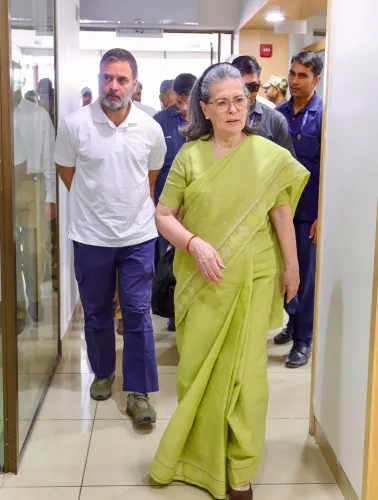
The Enforcement Directorate named Pitroda, Sonia Gandhi , Rahul Gandhi , and others in its complaint; all have denied the allegations.
Pitroda called for justice to be delivered within one year and cited an estimated 50 million pending court cases in India.
He alleged that democratic institutions, including the Election Commission and judiciary, have come under growing political pressure.
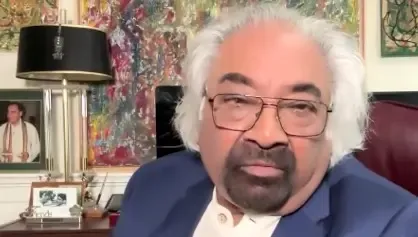
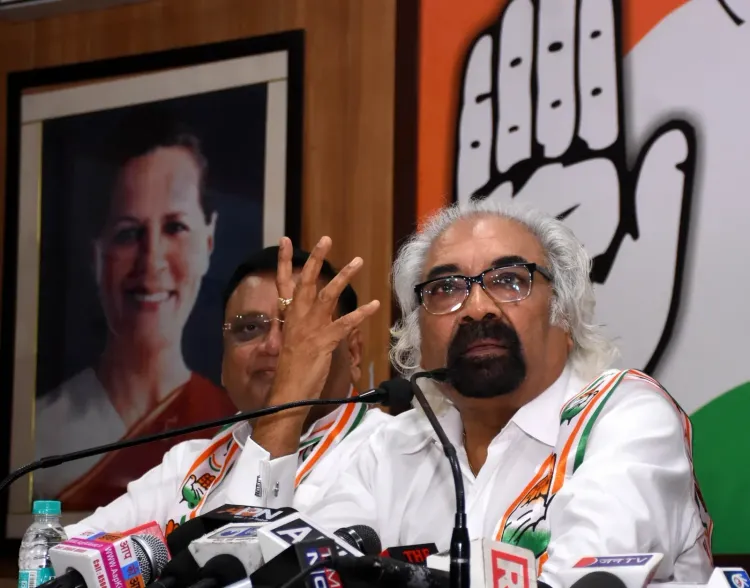
Senior Congress leader Sam Pitroda has said the prolonged National Herald case has damaged his reputation in the United States and could invite questions from American banks over money laundering allegations that remain unproved. Speaking in an interview from New York on 28 August, Pitroda questioned why proceedings that have stretched over roughly 15 years have yet to reach a conclusion.
How the Case Has Affected Pitroda Abroad
Pitroda, who has lived in the United States for more than six decades, said online search results linking his name to money laundering allegations carry real consequences far removed from Indian politics. 'You go to Web and says money laundering case Sam Petroda involved. I mean, come on,' he said.
He added that his American bank could raise uncomfortable questions. 'My bank will say, oh, what happened, Mr. Petroda? Well, I can't explain to them what National Herald and, you know, political bias and all that,' he said. Pitroda argued that unresolved accusations, even when unproved, effectively punish the accused through reputational harm alone.
Pitroda's Criticism of Prolonged Legal Proceedings
Pitroda alleged that keeping legal cases pending for years is itself a form of punishment. 'You are in power. You accuse everybody. You even put that it is money laundering. You haven't proved anything, but look at the damage it does,' he said. He called for greater decency in the use of allegations against political opponents, adding: 'So be nice to others. Have some decency.'
His remarks came in the context of a broader discussion on judicial delays in India. He pointed to an estimated 50 million pending court cases and questioned why the system could not deliver justice within a year. 'Why can't we settle court cases and bring justice so that we can provide justice in one year and not 18 years or 20 years?' he asked.
Proposed Reforms: AI and District-Level Accountability
Pitroda suggested that artificial intelligence and decentralised administration could help address the backlog. He proposed that individual districts take ownership of resolving cases pending in their jurisdictions. 'Why do we have 50 million court cases pending? Why can't each district say, okay, I'm gonna settle at least my court cases?' he said.
When asked whether resolving cases within a fixed period should be left to the judiciary, Pitroda alleged political interference in delays. 'Even if judiciary wants to resolve it, I'm sure there'll be pressure. Just keep it hanging,' he said.
Allegations of Institutional Pressure
Pitroda also questioned the independence of the Election Commission of India and the judiciary, alleging that democratic institutions have come under growing pressure. 'You think election commission is independent in India? I don't think so. So I think institutions have been captured,' he said.
He contrasted the current political climate with the tenure of former Prime Minister Manmohan Singh, saying he was unaware of the Prime Minister's Office attempting to pressure courts or deploy the Enforcement Directorate (ED) against opponents during that period. 'I don't think during Manmohan Singh's time, at least I know, there was any pressure from Prime Minister's office to anybody,' he said.
Background: The National Herald Case
The National Herald proceedings stem from allegations concerning the transfer of control of Associated Journals Limited, publisher of the National Herald, to Young Indian. The Enforcement Directorate named Pitroda, Sonia Gandhi, Rahul Gandhi, and others in its money laundering complaint. The accused and the Indian National Congress (INC) have rejected the allegations and described the proceedings as politically motivated. The case has been running for approximately 15 years without a final verdict.
How Indian courts and authorities respond to the mounting criticism of judicial delays — and the National Herald proceedings in particular — will be closely watched in the months ahead.
Point of View
And in that vacuum, unproved allegations do the work of a conviction: they surface on search engines, spook compliance officers, and follow the accused across borders. That dynamic is not unique to this case; it is a structural feature of India's overburdened courts, where pendency itself becomes leverage. The deeper question Pitroda raises — whether prolonged proceedings are a deliberate political instrument — is one that mainstream coverage routinely sidesteps. His comparison to the Manmohan Singh era is politically convenient, but the institutional decay he describes predates any single government and demands systemic accountability, not just partisan framing.
NationPress
28 Aug 2026
Frequently Asked Questions
What is the National Herald case and why is Sam Pitroda named in it?
The National Herald case involves allegations of financial irregularities in the transfer of control of Associated Journals Limited, publisher of the National Herald newspaper, to Young Indian. The Enforcement Directorate named Sam Pitroda, Sonia Gandhi, Rahul Gandhi, and others in a money laundering complaint; all the accused and the Congress have denied the allegations and called the proceedings politically motivated.
Why does Sam Pitroda say the case has damaged his reputation in the US?
Pitroda says that online searches linking his name to money laundering allegations have reputational consequences in America, where he has lived for over six decades. He said his American bank could question him about the case, and he would have no easy way to explain the Indian political context behind the unproved allegations.
How long has the National Herald case been pending?
According to Pitroda, the National Herald case has been running for approximately 15 years without a final verdict. He argued that prolonged pendency without a conclusion is itself a form of punishment for those named in the proceedings.
What reforms did Pitroda suggest to address judicial delays in India?
Pitroda proposed using artificial intelligence and decentralised administration to tackle India's estimated 50 million pending court cases. He suggested that individual districts take responsibility for clearing their own case backlogs and called for justice to be delivered within one year rather than 18 to 20 years.
What did Pitroda say about the independence of Indian institutions?
Pitroda alleged that the Election Commission of India and the judiciary have come under growing political pressure, saying 'institutions have been captured.' He contrasted the current climate with the tenure of former Prime Minister Manmohan Singh, claiming he was unaware of similar pressure on courts or the Enforcement Directorate during that period.