Hindu diaspora rallies in US, UK over Bangladesh minority killings
Synopsis
The brutal murder of a retired Hindu teacher, his wife, daughter, and 12-year-old son in Rangpur has ignited diaspora protests from New York to London. With attacks on Bangladeshi Hindus reportedly continuing under both the former Yunus-led interim government and the current BNP administration, the global Hindu community is demanding accountability—and warning that symbolic protests may no longer be enough.
Key Takeaways
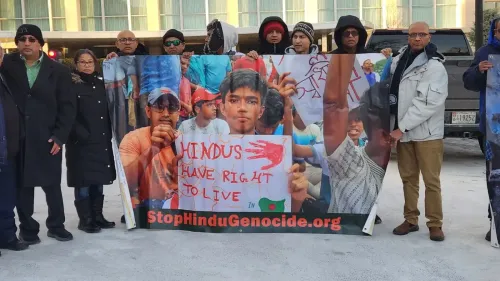
Hindu diaspora members staged protests in Jackson Heights, New York City and London on 28 August over violence against minorities in Bangladesh .
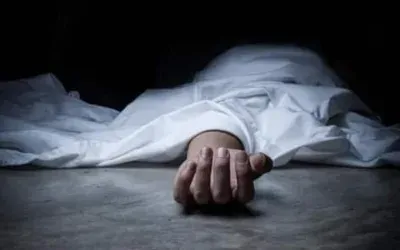
Protests were triggered in part by the murder of Ganapati Chakraborty , 65 , his wife, daughter, and 12-year-old son in Rangpur city on 20 August .
Bodies of all four family members were recovered by police on the night of 22 August .
A speaker at the New York rally accused the former Muhammad Yunus -led interim government of licensing mob violence by calling it ‘mob justice’.
Attacks on Hindu minorities have reportedly persisted under both the Yunus-led interim government and the current Bangladesh Nationalist Party (BNP) administration.
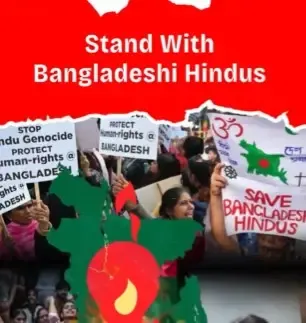
Demonstrators are calling on international bodies to press Dhaka for immediate and concrete minority protection measures.
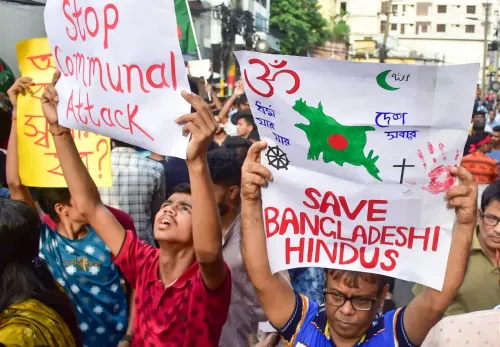
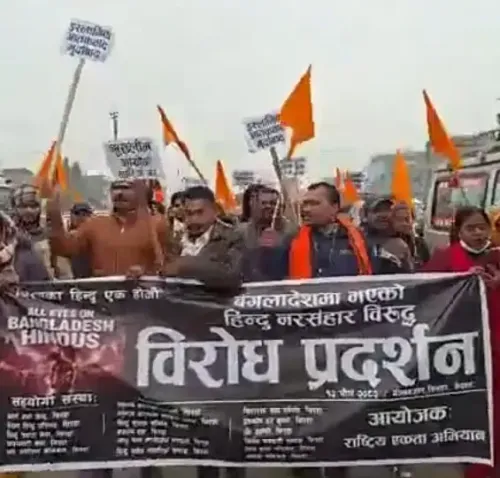
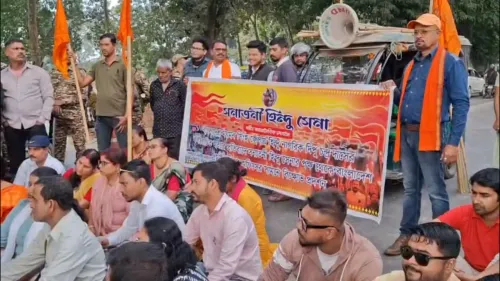
Members of the Hindu diaspora staged demonstrations across New York City and London on 28 August, demanding protection for Hindu minorities in Bangladesh amid a wave of violence that recently claimed the lives of four members of a Hindu family in Rangpur city. The protests reflect deepening alarm within the global Hindu community over what demonstrators describe as systematic persecution going largely unaddressed by Bangladeshi authorities.
Protests in New York and London
At a rally in Jackson Heights, New York City, community members called on Bangladeshi authorities to take immediate and concrete measures to protect minorities. One protester said, “I believe the time has come for Hindus to stand up and resist. The time has come when we can no longer simply take beatings and hide inside our homes as we did before. We have to defend ourselves in our own way. Symbolic protests alone will not work. We have to resist. Whatever it takes, we have to survive.”
A second speaker accused the previous Muhammad Yunus-led interim government of emboldening mob violence by characterising it as ‘mob justice’ and effectively licensing it. “And after receiving that licence, the doors were opened for the criminal elements in society—those who believe in the ideology of the ISI or similar ideologies,” he said. He added: “Bangladesh has now become a country of corpses. We want to be freed from this situation. Our demand is that the government take the necessary steps to bring an end to this situation.”
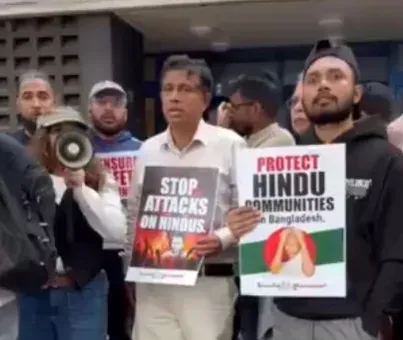
In London, demonstrators held placards reading ‘Stop attacks on Hindus’, ‘Protect Hindu Communities’, ‘Hindu lives matter’, and ‘Stop ongoing persecution of minorities in Bangladesh’.
The Rangpur Killings That Sparked Global Outrage
The demonstrations were directly triggered by the brutal murders of a retired Hindu schoolteacher and his entire family in Rangpur city. The victims were identified as Ganapati Chakraborty, 65, a retired teacher at Rangpur Zilla School; his wife Pritilata Chakraborty, 50; their daughter Agami Chakraborty Prarthi, 23; and their son Priyam Chakraborty, 12.
The killings occurred on 20 August, with police recovering all four bodies two days later on the night of 22 August. The case has drawn widespread condemnation from minority rights advocates across South Asia and the diaspora.
Pattern of Attacks on Minorities
The Rangpur murders are not an isolated incident. According to reports, attacks on minorities—particularly Hindus—have persisted since the tenure of the former Yunus-led interim government and have continued under the current Bangladesh Nationalist Party (BNP) administration. Community leaders argue that the failure of successive administrations to prosecute perpetrators has emboldened further violence.
Notably, this is part of a broader pattern that advocacy groups say has intensified over the past year, with temples, homes, and businesses belonging to Hindu communities reportedly targeted across multiple districts.
Calls for International Action
Protesters in both cities urged international bodies and governments to press Dhaka for accountability. Community representatives called for independent investigations into the killings and a credible mechanism to monitor the safety of religious minorities in Bangladesh. As of the time of reporting, neither the BNP government nor Bangladeshi authorities had publicly responded to the specific demands raised at the diaspora rallies.
With protests spreading across Western capitals, pressure on Bangladesh to demonstrate concrete action on minority protection is expected to mount in the weeks ahead.
Point of View
Suggesting that the problem is structural, not merely a product of political transition. The accusation that the Yunus-led government legitimised mob violence by framing it as ‘mob justice’ is a serious charge that deserves scrutiny; if accurate, it points to a state that actively lowered the threshold for communal attack. International pressure has historically produced limited results in Bangladesh on minority rights—the real test is whether diaspora mobilisation can translate into sustained diplomatic leverage rather than episodic outrage.
NationPress
28 Aug 2026
Frequently Asked Questions
Why are Hindu diaspora groups protesting in the US and UK?
Members of the Hindu diaspora rallied in New York City and London on 28 August to protest the ongoing killing and persecution of Hindu minorities in Bangladesh. The demonstrations were partly triggered by the murder of a retired Hindu schoolteacher and his three family members in Rangpur city on 20 August.
Who were the victims of the Rangpur killings?
The victims were retired Rangpur Zilla School teacher Ganapati Chakraborty, 65; his wife Pritilata Chakraborty, 50; their daughter Agami Chakraborty Prarthi, 23; and their son Priyam Chakraborty, 12. Their bodies were recovered by police on the night of 22 August, two days after the killings.
What demands did the protesters make?
Protesters called on Bangladeshi authorities to take immediate and concrete steps to protect minorities, and urged international bodies to press Dhaka for accountability. They also demanded independent investigations into the killings and a credible monitoring mechanism for minority safety.
How has the Bangladeshi government responded to the violence?
As of the time of reporting, neither the current Bangladesh Nationalist Party (BNP) government nor Bangladeshi authorities had publicly responded to the specific demands raised at the diaspora rallies. Speakers at the protests accused the previous Muhammad Yunus-led interim government of emboldening mob violence.
Is the violence against Hindus in Bangladesh a recent development?
According to reports, attacks on Hindu minorities have persisted since the tenure of the former Yunus-led interim government and have continued under the current BNP administration, suggesting a pattern rather than isolated incidents. Advocacy groups say the violence has intensified over the past year across multiple districts.