Navi Pillay, Indian-origin jurist who probed Gaza genocide, wins Nobel Peace Prize 2026
Synopsis
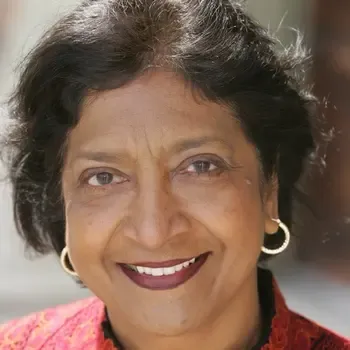
At 85, Navi Pillay — who helped establish that rape is a war crime, won rights for Nelson Mandela's fellow prisoners, and most recently indicted Israel for genocide in Gaza — has been awarded the Nobel Peace Prize 2026. The committee's citation is a pointed, deliberate defence of international legal institutions at a moment when they face their sharpest political attacks in decades.
Key Takeaways
Navanethem 'Navi' Pillay , aged 85 , was awarded the Nobel Peace Prize 2026 on 9 October 2026 .
The Norwegian Nobel Committee cited her 'judicial rigour, personal integrity, and considerable courage' as a driving force in international law.
Pillay was the first non-white woman judge of the High Court of South Africa and later served as UN High Commissioner for Human Rights (2008–2014) .
At the ICTR , she helped establish that rape and sexual violence constitute war crimes — a landmark precedent in international humanitarian law.
Her UN commission indicted Israel for genocide in Gaza in September 2025 and found both Hamas and Israel guilty of war crimes in June 2024 .
Earlier in 2026 , she also received the Olof Palme Prize alongside legal scholar John Dugard .
Indian-origin South African jurist Navanethem 'Navi' Pillay, aged 85, was awarded the Nobel Peace Prize 2026 on Friday, 9 October, in recognition of her decades-long role in advancing international law and human rights. The Norwegian Nobel Committee honoured Pillay — a former judge of the International Criminal Court (ICC) who investigated genocide claims in Rwanda, the occupied Palestinian territories, and Myanmar — 'for her efforts to promote peace and international law.'
Who Is Navi Pillay
Born in Durban into a family of Indian Tamil descent, Pillay broke significant barriers throughout her legal career. She became the first non-white woman judge of the High Court of South Africa after her elevation to the bench in 1995, following the collapse of the apartheid regime. Her earliest legal work involved defending anti-apartheid activists, and she opened her own law firm as far back as 1967. She first came to wider prominence as part of the defence team in a trial under the anti-terrorism act that exposed the use of torture and unlawful interrogation — a case that set the tone for a career defined by unflinching advocacy.
In 1973, she secured a landmark ruling guaranteeing political prisoners on Robben Island — including Nelson Mandela — access to lawyers and certain basic rights, a victory that reverberated far beyond South Africa's courts.
Key Milestones in International Law
Pillay's ascent through international legal institutions has been remarkable in its range and consequence. In 1999, she became a judge and subsequently President of the International Criminal Tribunal for Rwanda (ICTR). It was here that she helped establish, in the trial of Hutu leader Jean-Paul Akayesu, that rape and sexual violence constitute war crimes — a precedent that has since shaped international humanitarian law globally. She was also part of a significant ruling that held hate speech disseminated through mass media liable for prosecution as a war crime.
She joined the International Criminal Court (ICC) as a judge in 2003, resigning in 2008 — before her term was due to end in 2012 — to take charge as the United Nations High Commissioner for Human Rights (OHCHR). Her initial four-year term from 2008 to 2012 was extended by a further two years, reflecting the confidence placed in her leadership.
Gaza, Myanmar, and Recent Work
In 2019, Pillay was appointed an ad hoc judge on the International Court of Justice (ICJ) in the case brought by the West African nation of The Gambia accusing Myanmar of genocide. Hearings on the merits of that case concluded in January 2026.
Separately, in 2021, she was appointed chair of the UN Independent International Commission of Inquiry on the Occupied Palestinian Territory, established in the aftermath of the May 2021 Israel–Palestinian clashes. The commission served until November 2025. In June 2024, the panel found that war crimes had been committed by both Hamas and Israel following the October 2023 attacks. In September 2025, the commission indicted Israel for committing genocide in its Gaza operations — findings that drew sharp diplomatic reactions worldwide.
Earlier in 2026, Pillay was also awarded the Olof Palme Prize, alongside compatriot and legal scholar John Dugard.
Why the Nobel Committee Acted Now
The Nobel Committee's citation was pointed in its timing. 'At a time when the number of wars and conflicts is rising, and when judges and institutions of international law are under political attack, the Nobel Committee wishes to issue a reminder that the ability to resolve conflicts without force or violence is dependent on the international rule of law,' the committee said. It further stressed that 'an international legal system in which war criminals are held to account, and the victims of abuse see justice served is a precondition for a peaceful world.' The committee specifically recognised Pillay's 'judicial rigour, personal integrity, and considerable courage' as a driving force in the development of an international system of law and order. This comes amid a period of unprecedented strain on multilateral legal institutions, including sustained criticism of the ICC and ICJ by several powerful states.
What Comes Next
The Nobel Peace Prize carries a monetary award of 11 million Swedish kronor (approximately ₹8.7 crore). Pillay's recognition is widely expected to lend fresh legitimacy to ongoing international legal proceedings, particularly the ICJ's Myanmar genocide case and the broader accountability process around the Gaza conflict. How states respond to her elevation — and to the committee's implicit rebuke of political interference in international courts — will be closely watched in diplomatic circles in the weeks ahead.
Point of View
From Robben Island to Rwanda to Gaza, represents precisely the kind of judicial independence that powerful states find inconvenient, which makes this award consequential beyond its symbolism. Her Indian-Tamil roots and South African formation also carry a message about whose voices have historically shaped — and should shape — the architecture of international justice. The harder question is whether a Nobel Prize can restore the political authority of institutions like the ICC and ICJ at a moment when their enforcement mechanisms remain entirely dependent on state cooperation.
NationPress
9 Oct 2026
Frequently Asked Questions
Who is Navi Pillay and why did she win the Nobel Peace Prize 2026?
Navanethem 'Navi' Pillay is an 85-year-old Indian-origin South African jurist awarded the Nobel Peace Prize 2026 for her lifelong contribution to advancing international law and human rights. The Norwegian Nobel Committee cited her judicial rigour, personal integrity, and role as a driving force in the development of a rules-based international legal order.
What were Navi Pillay's most significant legal achievements?
Pillay helped establish at the International Criminal Tribunal for Rwanda that rape and sexual violence constitute war crimes — a precedent that reshaped international humanitarian law. She also secured rights for political prisoners on Robben Island including Nelson Mandela in 1973, became the first non-white woman judge of South Africa's High Court, and most recently chaired the UN commission that indicted Israel for genocide in Gaza in September 2025.
What was Navi Pillay's role in the Gaza genocide investigation?
From 2021 until November 2025, Pillay chaired the UN Independent International Commission of Inquiry on the Occupied Palestinian Territory. In June 2024, the commission found that war crimes had been committed by both Hamas and Israel following the October 2023 attacks. In September 2025, the commission indicted Israel for committing genocide in its Gaza operations.
Why did the Norwegian Nobel Committee choose this moment to award the prize?
The committee explicitly noted that with wars and conflicts on the rise and international legal institutions under political attack, it wished to affirm that resolving conflicts without force depends on the international rule of law. The award is widely read as a deliberate signal of support for multilateral legal institutions at a time of acute pressure on bodies like the ICC and ICJ.
What other honours has Navi Pillay received recently?
Earlier in 2026, Pillay was awarded the Olof Palme Prize alongside South African legal scholar John Dugard. The Nobel Peace Prize 2026 follows that recognition, cementing her standing as one of the foremost figures in international human rights law.