At Least 17 Lives Lost in Devastating Nepal Bus Crash
Synopsis
A catastrophic bus accident in Dhading district, Nepal, has resulted in the tragic loss of at least 17 lives. The bus, traveling from Pokhara to Kathmandu, plunged into the Trishuli River, sparking a large-scale rescue operation amidst challenging conditions.
Key Takeaways
17 fatalities reported in the bus accident.
The bus fell 300 metres into the Trishuli River.
Rescue teams faced challenges from difficult terrain .
Road accidents in Nepal are on the rise.
Economic costs of traffic injuries are significant.
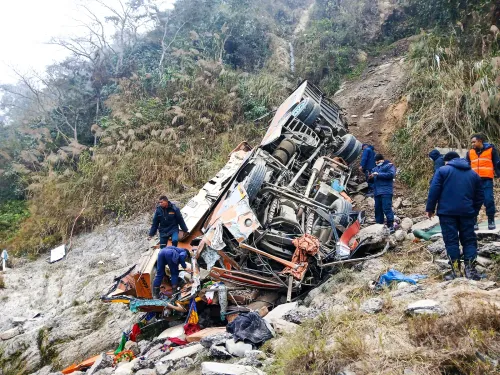
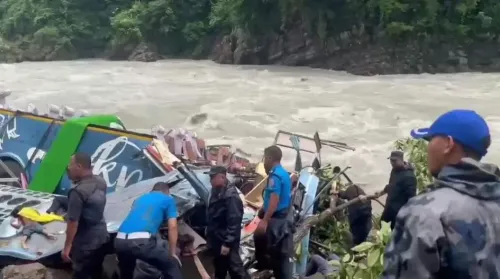
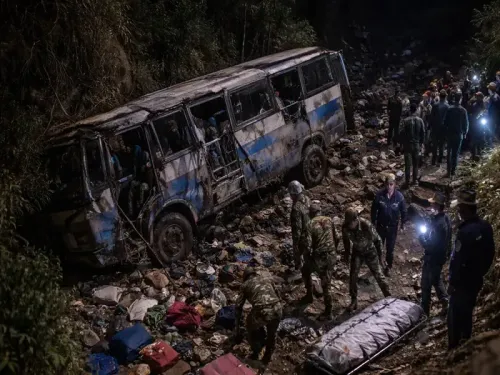
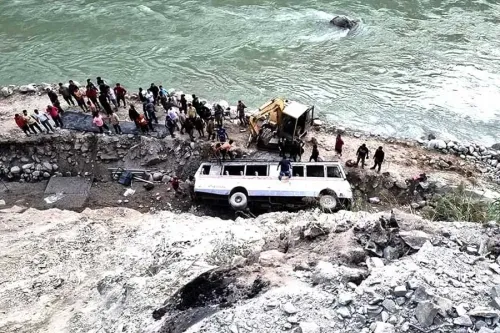
Kathmandu, Feb 23 (NationPress) - A tragic incident occurred early Monday when a bus en route from western Pokhara to Kathmandu fell into the Trishuli River in Dhading district, claiming the lives of at least 17 individuals, as confirmed by a senior official from the District Administration Office, Dhading. Chief District Officer Bijaya Raj Subedi reported, “We have confirmed that 17 victims were found deceased at the site, and 27 others have been transported to various local hospitals, including those in Kathmandu for medical care.”
The bus plunged approximately 300 metres down to the riverbank around 1:30 am in the Bhaisigauda region of Benighat Rorang Rural Municipality. “The reason behind the accident remains unclear since the bus was operating within its designated lane,” Subedi mentioned.
Authorities revealed that there were 44 passengers aboard the ill-fated bus.
Rescue efforts included personnel from the Nepali Army, Armed Police Force, Nepal Police, and local volunteers, although operations faced challenges due to nighttime conditions, treacherous terrain, and insufficient rescue equipment.
Subedi noted that the first phase of the rescue mission concluded around 6:30 am.
Over recent years, Nepal has experienced a worrying uptick in road accidents, correlating with the growing number of vehicles on its roads. A decade earlier, there were 4,999 recorded road accidents, as reported by the Traffic Police Office.
In the fiscal year 2024–25, the nation reported 7,669 road accidents and 190 fatalities. Among these incidents, 278 were classified as serious. Beyond the heavy human cost, road safety issues also pose significant economic challenges.
A study by the World Bank highlighted that the economic burden of road traffic injuries in Nepal has tripled since 2007, amounting to 1.5 percent of the gross national product.
Road accidents disproportionately affect the underprivileged, with over 70 percent of road fatalities being vulnerable users like pedestrians, cyclists, and motorcyclists, according to the World Bank.
Frequently Asked Questions
What caused the bus accident in Dhading?
The exact cause of the accident is still under investigation, as the bus was reportedly traveling within its designated lane.
How many people were on the bus?
There were 44 passengers aboard the bus that fell into the Trishuli River.
What rescue efforts have been made?
Rescue operations involved personnel from the Nepali Army, Armed Police Force, and local residents, although efforts were hampered by nighttime conditions and difficult terrain.
How has road safety changed in Nepal over the years?
Nepal has seen a significant rise in road accidents, with reports indicating an increase from 4,999 accidents a decade ago to 7,669 in the fiscal year 2024-25.
What is the economic impact of road traffic injuries in Nepal?
According to the World Bank, the economic cost of road traffic injuries in Nepal has tripled since 2007, amounting to 1.5 percent of the gross national product.