Nepal Supreme Court orders cannabis regulation after 50-year ban
Synopsis
Nepal's Supreme Court has ordered the government to build a full cannabis regulatory framework within three months — a ruling that could end a 50-year-old ban rooted in US 'War on Drugs' pressure. The judgment was delivered in May 2025 but sat hidden for months after a court fire. With Gandaki Province already on board and global legalisation trends accelerating, Nepal may be on the cusp of a historic policy reversal.
Key Takeaways
Nepal's Supreme Court issued a mandamus order directing the government to establish a cannabis regulatory framework within three months .
The ruling could end a ban dating back to the Narcotic Drugs (Control) Act, 1976 , which carries prison sentences and fines for cultivation.
The judgment was delivered on 18 May 2025 but was made public only recently after court documents were destroyed in a fire during Gen Z protests on 9 September .
The court found that the 1976 Act itself provides a legal basis for controlled cannabis cultivation for medicinal, scientific, and industrial purposes — a provision the government had never activated.
Gandaki Province Assembly unanimously passed a cannabis cultivation Bill on 9 July 2025 , reflecting growing political momentum for reform.
Researchers attribute Nepal's original 1970s ban partly to pressure from the United States during its 'War on Drugs' era.
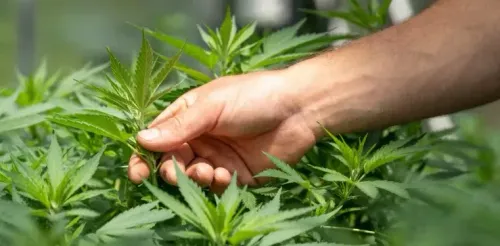
Nepal's Supreme Court on Sunday issued a mandamus order directing the government in Kathmandu to establish a regulatory framework for the controlled cultivation and production of cannabis for medicinal, scientific, agricultural, horticultural, and industrial purposes — a ruling that could end nearly five decades of prohibition on marijuana cultivation in the Himalayan nation.
What the Court Ordered
The apex court directed the Nepali government to formulate the necessary regulations, standards, and procedures within three months to govern cannabis cultivation and production. The court also ordered the creation of a strict regulatory and monitoring mechanism for issuing licences or permits covering the commercial cultivation, processing, storage, use, sale, distribution, export, and import of cannabis for permitted purposes.
Crucially, the mechanism must also prohibit unlawful cultivation, manufacture, sale, and distribution, ensuring that legalisation does not translate into an unregulated free-for-all.
Why the Ruling Took So Long to Emerge
Although the judgment was delivered on 18 May 2025, its full text was made public only recently. The delay was caused by the destruction of court documents in a fire at the Supreme Court during the Gen Z protests on 9 September last year, which meant the document could not be located for months. The belated publication has now set the regulatory clock ticking.
The Legal Basis and Historical Context
Nepal's Narcotic Drugs (Control) Act, 1976, criminalised the sale, cultivation, and consumption of cannabis — a law that currently carries prison sentences and fines. However, the Supreme Court found that the same legislation contains a provision that allows controlled cultivation for medicinal, scientific, and industrial purposes. The government's failure to ever formulate the requisite regulations effectively made that provision a dead letter.
Historical records indicate that cannabis cultivation and sales were legal in Nepal until the early 1970s. The shift came as Western hippies travelling the overland trail created a commercialised demand for Nepal's marijuana and hashish, drawing unwanted scrutiny. Domestic and international researchers have said that pressure from the United States, then prosecuting its 'War on Drugs', was a key driver behind Nepal's decision to criminalise cannabis.
Growing Momentum for Reform
The ruling builds on years of incremental reform efforts. In March 2020, then Member of the House of Representatives Sher Bahadur Tamang registered a private member's Bill seeking to legalise marijuana primarily for medicinal use and export, though it did not pass. The proposed legislation would have allowed licensed farmers to cultivate and sell cannabis under conditions requiring them to specify cultivation areas and provide assurances against unauthorised use.
More recently, on 9 July 2025, Nepal's Gandaki Province Assembly unanimously passed a Bill to license cannabis cultivation for medicinal and industrial purposes — signalling growing political consensus at sub-national level even before the Supreme Court's order became public.
Several US states have since legalised cannabis for medicinal use, with some permitting recreational use as well, and numerous other countries have followed suit — a global shift that has lent fresh legitimacy to Nepal's reform debate.
What Happens Next
The government now has a court-mandated three-month window to draft a comprehensive regulatory framework. Stakeholders — from farmers in traditionally cannabis-growing districts to pharmaceutical firms eyeing Nepal's export potential — will be watching closely. The outcome could reshape both the country's drug policy landscape and its economic prospects in a sector that has remained underground for half a century.
Point of View
But no government in five decades bothered to write the rules that would have made it possible. The court has now forced the government's hand, and the three-month deadline is tight enough to test political will seriously. What is underreported is the economic dimension — Nepal sits on a heritage cannabis crop with genuine export potential, and the Gandaki Province Bill signals that at least one sub-national government is ready to move. The risk is regulatory capture: a licensing regime shaped by politically connected intermediaries rather than smallholder farmers who have borne the burden of criminalisation the longest.
NationPress
1 Nov 2026
Frequently Asked Questions
What did Nepal's Supreme Court rule on cannabis?
Nepal's Supreme Court issued a mandamus order directing the government to create a regulatory framework for the controlled cultivation and production of cannabis for medicinal, scientific, agricultural, horticultural, and industrial purposes. The court also mandated the formation of a licensing and monitoring mechanism, with the framework to be established within three months.
Why was the Nepal cannabis judgment delayed in reaching the public?
The judgment was delivered on 18 May 2025, but its full text could not be located for months because a fire at the Supreme Court during the Gen Z protests on 9 September destroyed court documents. The ruling was made public only recently, triggering the three-month regulatory deadline.
When was cannabis banned in Nepal and why?
Cannabis was criminalised in Nepal under the Narcotic Drugs (Control) Act of 1976. Researchers have said the ban was driven partly by US pressure during its 'War on Drugs', as Nepal's marijuana and hashish had become commercially popular among Western hippies travelling the overland trail in the late 1960s and 1970s.
What happens next after the Supreme Court order?
The Nepali government has a court-mandated three months to draft regulations, standards, and procedures for licensed cannabis cultivation, processing, sale, and export. Separately, Gandaki Province has already passed its own cannabis cultivation Bill, and the Centre's framework must align with or supersede provincial-level action.
Has Nepal attempted to legalise cannabis before?
Yes. In March 2020, then MP Sher Bahadur Tamang registered a private member's Bill to legalise marijuana for medicinal use and export, but it did not pass. On 9 July 2025, Nepal's Gandaki Province Assembly unanimously passed a Bill licensing cannabis cultivation for medicinal and industrial purposes, reflecting growing sub-national momentum ahead of the Supreme Court order.