Nepal curfew imposed in Siraha, Sunsari after Hindu-Muslim clashes kill one
Synopsis
A Bolbam festival procession turned deadly in Nepal's Sunsari district on 26 July, triggering Hindu-Muslim clashes that killed one youth and forced an indefinite curfew across two Bihar-bordering districts. An Armed Police Force report warning of organised Tarai communal destabilisation — submitted three years ago and largely ignored — has now resurfaced, raising sharp questions about institutional failure.
Key Takeaways
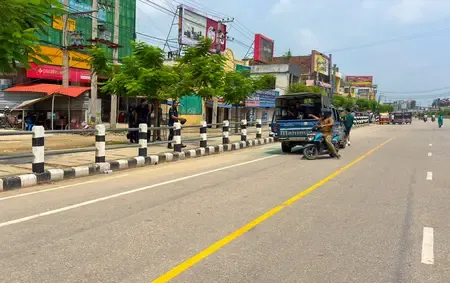
An indefinite curfew was imposed in parts of Siraha district on 30 July , joining a curfew already in force in Sunsari district in Nepal's Madhesh province .
Communal clashes between Hindu and Muslim communities erupted on 26 July in the Kaptanganj area of Sunsari during the Bolbam festival .
Om Prakash Mehta was killed after being struck by police gunfire during the clashes.
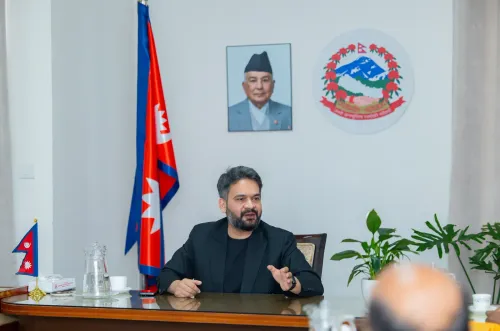
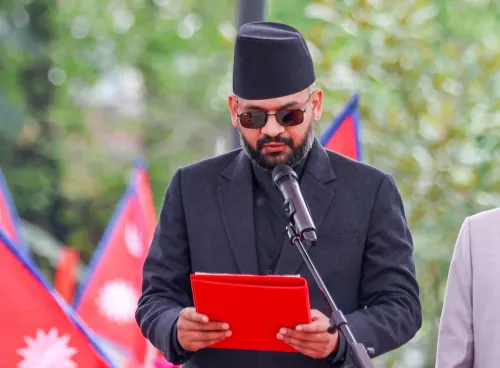
Nepal's National Security Council , chaired by Prime Minister Balendra Shah , reviewed the situation on Thursday and resolved to strengthen inter-agency coordination.
A confidential Armed Police Force report from three years ago had warned of organised attempts to foment religious divisions across the Tarai — its findings were reportedly not acted upon.
Both Sunsari and Siraha border the Indian state of Bihar , heightening regional sensitivity.
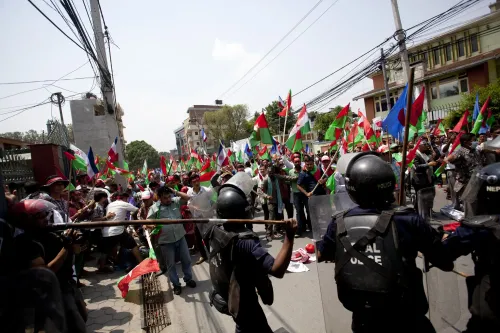
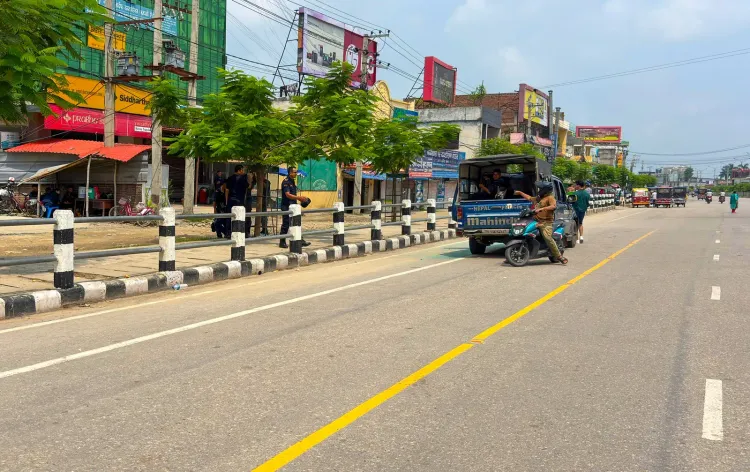
An indefinite curfew was imposed in parts of Siraha district in Nepal's Madhesh province on Thursday, 30 July, as authorities moved to contain communal violence that erupted on 26 July in the Kaptanganj area of Sunsari district and threatened to spread across the southern Tarai belt. A youth identified as Om Prakash Mehta was killed after being struck by police gunfire during the clashes, which broke out between Hindu and Muslim communities.
How the Violence Erupted
The clashes originated on 26 July in Dewanganj Rural Municipality-3 in Sunsari, when Hindu devotees carrying holy water for the Bolbam festival during the month of Sawan passed through Kaptanganj Chowk while playing loud DJ music. According to police, members of the Muslim community objected to the music, triggering an argument that rapidly escalated.
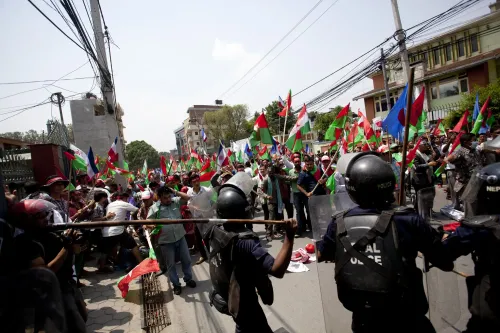
The dispute turned violent as large crowds from both communities gathered, armed with improvised weapons including sticks, stones, bamboo poles, and iron rods. Police intervened, and during the operation, Om Prakash Mehta was fatally shot. Authorities have not specified the precise circumstances of the shooting.
Scope of the Curfew Orders
Siraha Chief District Officer Surendra Paudel issued the curfew order effective from 2 pm local time on Thursday, until further notice. The restricted zone in Siraha stretches from Kasaha Khola in Golbazar Municipality-3 on the east to Choharwa Chowk in the west, and from Sainik Chowk in the north to the vicinity of Rampratap Ramprasad Tamang Janata Multiple Campus in the south.
The curfew in Sunsari, imposed earlier, also remained in force on Thursday. It covers the entire areas of Inaruwa Municipality, Duhabi Municipality, Bhokraha Narsingh Rural Municipality, Koshi Rural Municipality, Gadhi Rural Municipality, Dewanganj Rural Municipality, Harinagar Rural Municipality, and Barju Rural Municipality. In Itahari Sub-metropolitan City, restrictions apply to Wards 16 and 17 within a 200-metre corridor on both sides of the Mahendra Highway. In Ramdhuni Municipality, Wards 1 and 5 within the same corridor are covered. Both Sunsari and Siraha share a border with the Indian state of Bihar.
Security Assessment and Police Warning
Despite a gradual improvement in conditions, police have not ruled out the possibility of renewed clashes. Senior Superintendent of Police Prabhu Prasad Dhakal, spokesperson for the Madhesh Province Police Office, said the situation remained fragile. 'The situation remains vulnerable. That's why the curfew remains in place,' he said. The administration warned that anyone violating the curfew would face legal action.
National Security Council Reviews Situation
A meeting of Nepal's National Security Council (NSC), chaired by Prime Minister Balendra Shah on Thursday, reviewed the country's overall security environment, including the Sunsari violence. The Council resolved to strengthen coordination among security agencies and relevant stakeholders to preserve social harmony and national unity.
A statement from the Prime Minister's Secretariat said the Council was briefed that the situation in Sunsari is gradually returning to normal through the joint efforts of political parties, local stakeholders, and security agencies. The Council also decided to enhance coordination for timely disaster search, rescue, and relief operations.
Earlier Warning Went Unheeded
The violence has drawn attention to a confidential report submitted to the government by the Armed Police Force (APF) three years ago, as reported by the Kantipur daily. The APF reportedly warned of organised attempts to foment religious and ethnic divisions across the Tarai, and recommended urgent political and administrative intervention. Officials, however, said the report's findings received little attention from the country's leadership at the time.
As curfew orders hold across two districts, the coming days will test whether coordinated security action and political engagement can prevent the violence from reigniting in Nepal's volatile southern belt.
Point of View
Not just a law-and-order lapse. Nepal's southern districts are ethnically complex, economically marginalised, and geopolitically sensitive given the Bihar border; that combination makes them disproportionately vulnerable to communal mobilisation. The National Security Council's post-facto coordination pledge is necessary but insufficient unless it is paired with accountability for why earlier intelligence was shelved.
NationPress
13 Sept 2026
Frequently Asked Questions
Why was a curfew imposed in Nepal's Siraha and Sunsari districts?
The curfew was imposed following communal clashes between Hindu and Muslim communities that broke out on 26 July in the Kaptanganj area of Sunsari district and threatened to spread to other parts of Madhesh province. Authorities imposed the restrictions to prevent further violence and maintain public order.
What triggered the Hindu-Muslim clashes in Sunsari?
According to police, the clashes began when Hindu devotees carrying holy water for the Bolbam festival passed through Kaptanganj Chowk playing loud DJ music, and members of the Muslim community objected. The argument escalated into a violent confrontation involving large crowds armed with sticks, stones, bamboo poles, and iron rods.
Who was killed during the Sunsari clashes?
A youth identified as Om Prakash Mehta was killed after being struck by police gunfire during the security operation to control the clashes. The precise circumstances of the shooting have not been fully detailed by authorities.
What areas are covered by the curfew in Sunsari and Siraha?
In Sunsari, the curfew covers eight municipalities and rural municipalities including Inaruwa, Duhabi, Dewanganj, and others, with partial restrictions in Itahari and Ramdhuni. In Siraha, the order covers a defined corridor from Kasaha Khola in the east to Choharwa Chowk in the west, effective from 2 pm on 30 July.
What did Nepal's National Security Council decide after the violence?
The National Security Council, chaired by Prime Minister Balendra Shah, met on Thursday and resolved to strengthen coordination among security agencies and stakeholders to preserve social harmony and national unity. It was briefed that the situation in Sunsari is gradually improving and decided to work to prevent similar incidents from recurring.