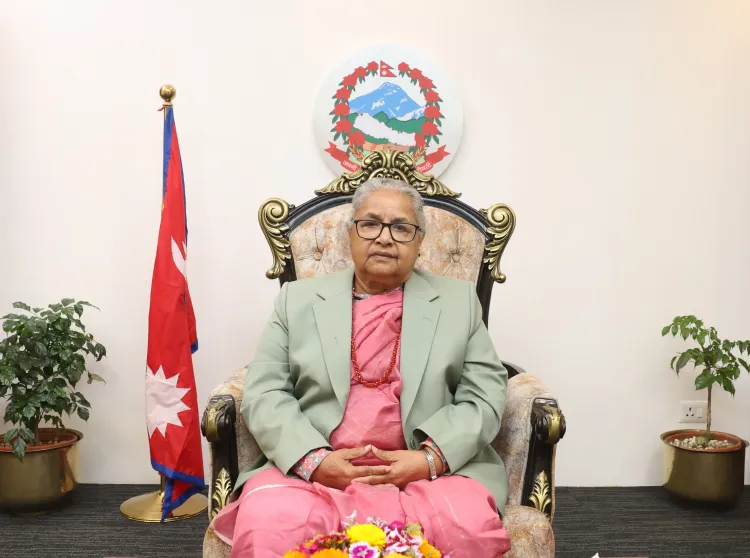
Nepal's Acting PM Sushila Karki Urges Voter Participation in March 5 Elections
Synopsis
As Nepal approaches its parliamentary elections on March 5, Acting Prime Minister Sushila Karki emphasizes the importance of voter engagement, framing the election as a pivotal moment for shaping the future of the nation and its youth.
Key Takeaways
Actively participate in the March 5 elections to influence the future.
Important role of political stability in national development.
Emphasis on combating misinformation during the electoral process.
Government's efforts to ensure the safety of Nepalis abroad.
Understanding the electoral system in Nepal, including FPTP and proportional representation.
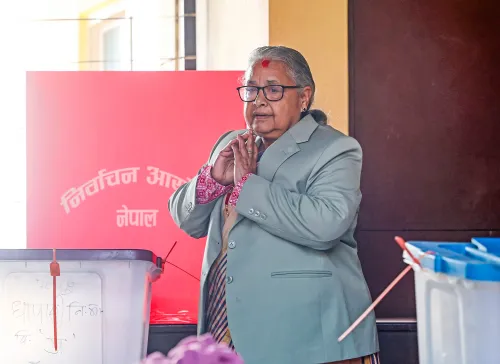
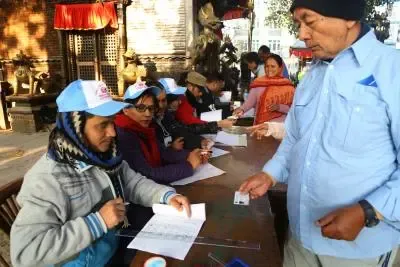
Kathmandu, March 2 (NationPress) With only three days left until the parliamentary elections set for March 5, Nepal's acting Prime Minister Sushila Karki on Monday called upon the populace to engage actively in the voting process, emphasizing that this election represents a vital chance to influence their own future and that of their offspring.
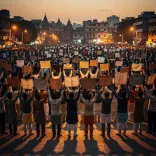
Nepal is preparing for fresh elections following the Gen-Z movement that led to the ousting of former Prime Minister K P Sharma Oli in September last year. An interim government was subsequently established under Karki’s leadership with the responsibility to conduct elections within six months.
Despite earlier concerns voiced by certain political factions, including the Communist Party of Nepal (Unified Marxist Leninist) (CPN-UML) and the Nepali Congress—whose coalition government was dismantled by the Gen-Z movement—most major political entities, including these two historical rivals, are participating in the upcoming elections.
In her address to the nation, coinciding with both the elections and the Holi festival, which commenced in the mountainous regions on Monday, the Prime Minister urged voters to engage in the polls to advance the nation toward political stability and prosperity.
“Casting your vote is far more than merely marking an election symbol; it is a significant decision regarding the future you desire for yourself and your children,” Prime Minister Karki stated.
Nepal is set to elect 275 members to the House of Representatives, the lower chamber of Parliament. Out of these, 165 seats will be filled using the First-Past-the-Post (FPTP) method, while 110 will be elected through proportional representation. A total of 3,406 candidates from 67 political parties are vying for seats under the FPTP system.
Prime Minister Karki expressed satisfaction with her government's ability to navigate a complicated political transition following the Gen-Z movement, amidst widespread uncertainty regarding the country's political direction. The protests on September 8 and 9 resulted in the deaths of at least 77 individuals due to police action and other incidents, with damage to public and private property estimated to exceed NPR 84 billion, as per government assessments.
“The aftermath of the Gen-Z movement was intricate, delicate, and demanding. There was widespread youth unrest, apprehension among the populace, and uncertainty regarding the nation's future. Our primary responsibility was to manage that challenging transition, guide the country away from violence, and restore it to a constitutional framework,” she explained. “We have successfully traversed that phase and achieved stability.”
She also urged political parties, candidates, and their supporters to maintain discipline during the silence period commencing at midnight on Monday, when all campaigning must halt.
Addressing the issue of misinformation circulating on social media during the electoral campaign, the Prime Minister implored citizens to remain vigilant against falsehoods, warning that those responsible could face legal consequences.
Concerning the situation of Nepalis in the Middle East, amidst the ongoing US-Iran tensions affecting much of the region, she assured that her government is closely monitoring developments and has activated Nepali diplomatic missions to safeguard the welfare of Nepali nationals. The Ministry of Foreign Affairs reported on Sunday that one Nepali national was killed during Iranian strikes in Abu Dhabi, while the safety of over 1.7 million Nepalis residing across 12 countries in the region remains at risk.
Point of View
The emphasis on voter participation highlights the importance of civic engagement for shaping the nation's future.
NationPress
13 Oct 2026
Frequently Asked Questions
What is the significance of the March 5 elections in Nepal?
The elections are crucial for determining the composition of the House of Representatives and shaping the country's political future following recent political upheaval.
Who is Sushila Karki?
Sushila Karki is the acting Prime Minister of Nepal, leading the interim government responsible for conducting the upcoming elections.
What does the electoral process in Nepal involve?
Nepal will elect 275 members to the House of Representatives, with a mix of First-Past-the-Post and proportional representation systems being used.
What challenges did the interim government face?
The government faced significant challenges in managing the political transition post-Gen-Z movement, including ensuring stability and addressing public unrest.
How are Nepalis abroad being monitored during regional tensions?
The Nepali government is closely monitoring the situation in the Middle East, activating diplomatic missions to ensure the safety of nationals amidst regional conflicts.