India Applauds the Successful Elections in Nepal Amid Last Year’s Challenges
Synopsis
India has expressed its approval of the recent elections in Nepal, celebrating the government and the citizens for their democratic engagement amid challenging circumstances. With a significant youth turnout, this election marks a critical moment in Nepal's political landscape.
Key Takeaways
India welcomed the successful elections in Nepal.
Prime Minister Sushila Karki received congratulations for her leadership.
The voter turnout was estimated at 60 percent.
Many new voters are from the Gen-Z demographic.
The elections were held under unique political circumstances.
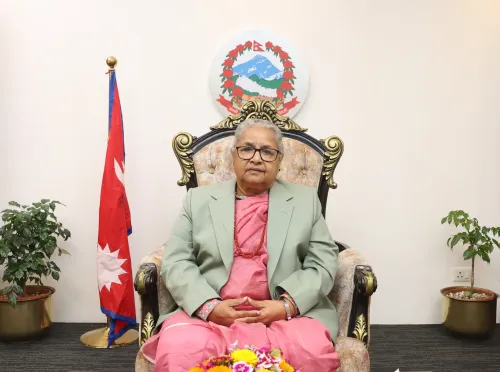
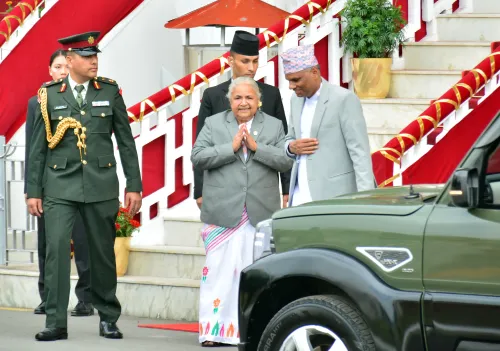
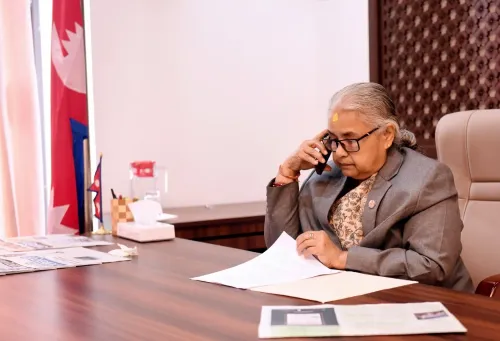
New Delhi, March 5 (NationPress) On Thursday, India expressed its approval of the successful execution of elections in Nepal, extending congratulations to the government, the populace, and Prime Minister Sushila Karki.
"We commend the successful execution of elections and the democratic engagement of the citizens of Nepal, which saw enthusiastic participation. Our congratulations go out to Prime Minister Sushila Karki, the Government, and the Nepalese people, along with various stakeholders for successfully conducting these elections that occurred against a backdrop of exceptional circumstances last year," stated the spokesperson for the Ministry of External Affairs (MEA) while addressing media inquiries regarding the elections in Nepal.
"India has consistently endorsed peace, progress, and stability in Nepal, and in alignment with our commitment, we provided logistical support at the request of the Government of Nepal for these elections. We eagerly anticipate collaborating with the new Government of Nepal to enhance the strong multifaceted ties between our two nations for mutual benefit," MEA's official spokesperson Randhir Jaiswal remarked.
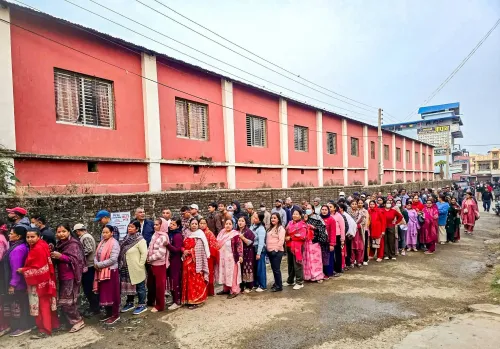
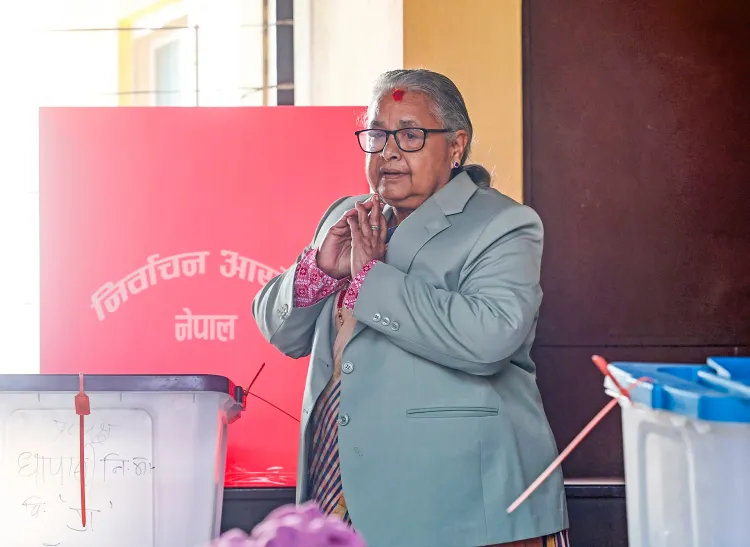
The parliamentary elections in Nepal, which were concluded in a mostly peaceful setting on Thursday, witnessed a relatively low voter turnout.
Acting Chief Election Commissioner Ram Prasad Bhandari reported during a press conference that the estimated voter turnout is around 60 percent, based on preliminary data from across the nation.
If the turnout does not increase once the final figures are available, it will mark the lowest voter turnout since the parliamentary elections of 1991. In the 2022 elections, the turnout was 61.41 percent.
"The collection of comprehensive data is ongoing. We have received information from relevant constituencies indicating that in some polling centers, voting is still in progress as voters who entered the polling stations within the designated timeframe are casting their ballots," he added.
He also mentioned that, aside from a few isolated incidents of disruption, the election was carried out peacefully according to preliminary reports from both national and international election observers monitoring the polls.
"With the completion of the voting process, counting of the votes will commence immediately after the secure collection of the ballot boxes," he stated.
The Election Commission indicated that ballot boxes from remote areas across 15 districts will be transported via helicopter.
There are approximately 18.9 million registered voters in the nation. In some polling stations, voters even chose to boycott the elections, expressing frustration over the government’s failure to deliver on development.
"This discontent is not directed at the Election Commission, but rather towards the government, which must address these concerns," Bhandari remarked.
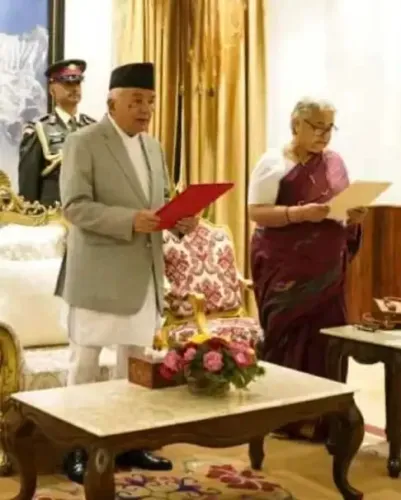
These fresh elections in the Himalayan nation were held nearly two years ahead of schedule due to the new political dynamics following the Gen-Z movement in September of last year, which resulted in the ousting of the government led by former Prime Minister K P Sharma Oli. This situation facilitated the formation of the current interim government headed by Sushila Karki.
Following her appointment as the head of the government, the lower house was dissolved at the request of the Gen-Z leaders, who mandated her to conduct fresh elections within six months.
More than 18.9 million citizens are eligible to vote in these elections, including 915,119 newly registered voters. Notably, over two-thirds of the newly registered voters belong to the Gen-Z demographic, highlighting a significant increase in youth involvement ahead of the 2026 elections, according to the Election Commission of Nepal.
The elections were conducted at 23,112 polling centers. A total of 3,406 candidates participated under the First-Past-the-Post (FPTP) system, while 3,135 candidates contested under the proportional representation system.
Point of View
I observe that the successful conduct of elections in Nepal signifies a resilient democratic spirit, particularly in light of the exceptional circumstances faced last year. The enthusiastic participation, especially among youth, is promising for Nepal's future political landscape.
NationPress
5 Oct 2026
Frequently Asked Questions
What was the voter turnout in the recent elections in Nepal?
The estimated voter turnout was around 60 percent, based on preliminary data.
Why were new elections held in Nepal?
Fresh elections were held nearly two years ahead of schedule due to new political dynamics following the Gen-Z movement, which led to the dissolution of the prior government.
Who is the current Prime Minister of Nepal?
The current Prime Minister of Nepal is Sushila Karki.
How many candidates participated in the elections?
A total of 3,406 candidates participated under the First-Past-the-Post system, while 3,135 candidates contested under the proportional representation system.
How many registered voters are in Nepal?
There are approximately 18.9 million registered voters in Nepal.