Nepal Faces Record Low Voter Turnout Since 1991 Elections
Synopsis
Nepal's parliamentary elections have concluded with an alarming voter turnout of just 60%. This could be the lowest since 1991, raising concerns over public engagement and government accountability. With over 18.9 million eligible voters, the implications for the political landscape are significant, especially among the youth.
Key Takeaways
60% estimated voter turnout in the recent elections.
This could be the lowest turnout since 1991 .
Public dissatisfaction with the government is evident.
Over 18.9 million registered voters in total.
Significant increase in youth engagement noted.
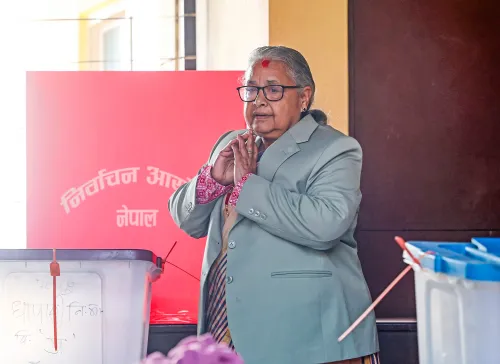
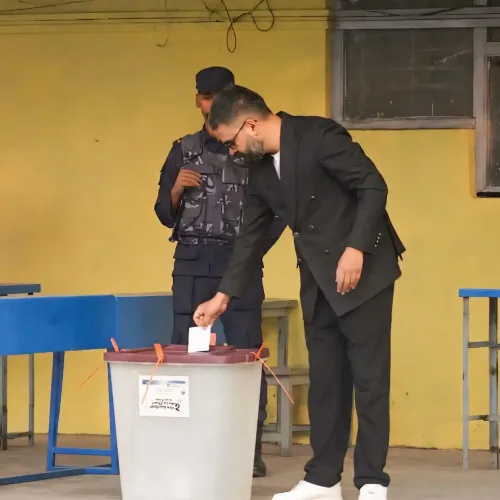
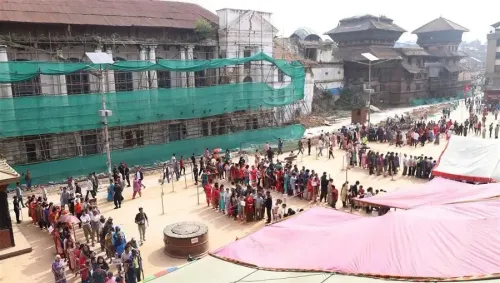
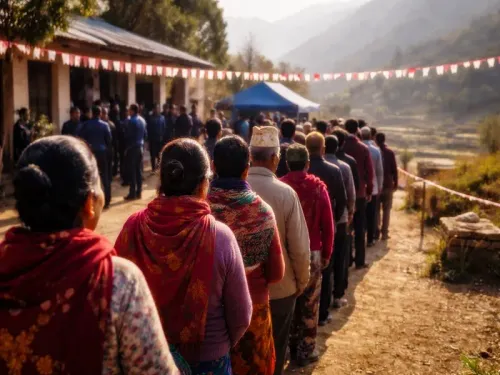
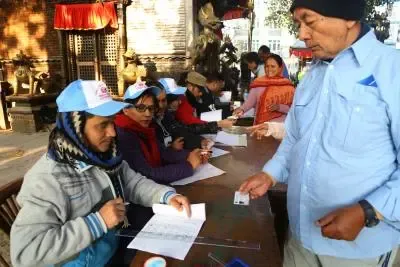
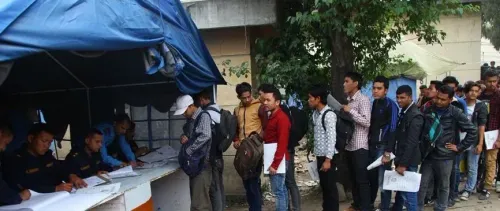
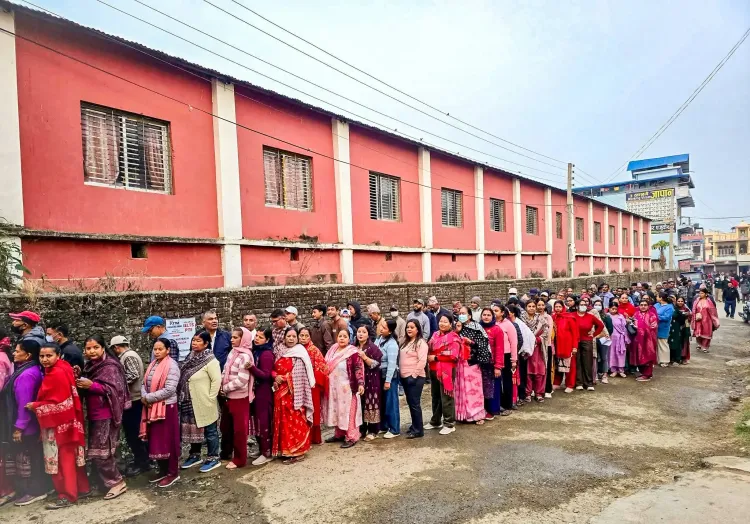
Kathmandu, March 5 (NationPress) The recent parliamentary elections in Nepal, which wrapped up amid a largely tranquil atmosphere on Thursday, have seen a notably diminished voter turnout.
Acting Chief Election Commissioner Ram Prasad Bhandari announced at a press conference that voter participation is projected to be around 60 percent, as indicated by preliminary reports from across the nation.
If this figure does not rise with the final count, it will mark the lowest voter turnout since the parliamentary elections of 1991. In the previous elections held in 2022, the turnout was recorded at 61.41 percent.
“We are still in the process of gathering detailed data. Reports suggest that in certain polling centers, voting is ongoing as individuals who entered before closing time are still casting their votes,” he elaborated.
Bhandari also noted that apart from a handful of isolated incidents of disruption, the elections were executed smoothly, according to initial observations from both national and international election monitors.
“Vote counting will commence promptly after the safe collection of ballot boxes,” he stated.
The Election Commission has indicated that ballot boxes from remote regions across 15 districts will be airlifted by helicopter.
Approximately 18.9 million citizens are registered to vote in these elections, with some polling stations experiencing boycotts as a result of public discontent regarding the government's inability to provide development.
“The dissatisfaction is directed at the government, not the Election Commission, and it is imperative that the government addresses this issue,” Bhandari remarked.
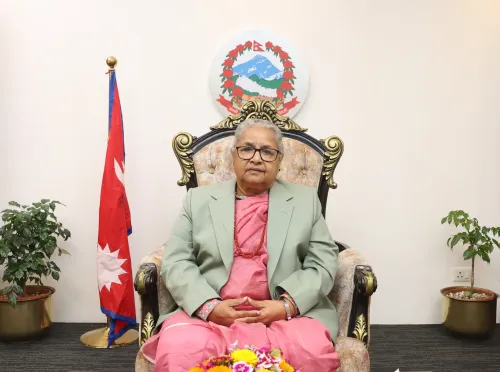
These elections were held nearly two years ahead of schedule in response to the new political climate following the Gen-Z movement in September of last year, which resulted in the ousting of the government led by former Prime Minister K P Sharma Oli. This situation facilitated the establishment of the current interim government under Sushila Karki.
After her appointment, the lower house was disbanded at the request of Gen-Z leaders, and she was tasked with conducting new elections within a six-month timeframe.
More than 18.9 million individuals are eligible to vote, which includes 915,119 newly registered voters. Notably, over two-thirds of these new voters are from the Gen-Z demographic, reflecting a significant increase in youth participation ahead of the 2026 elections, as per the Election Commission of Nepal.
The elections took place at 23,112 polling centers, with 3,406 candidates competing under the First-Past-the-Post (FPTP) system, while 3,135 candidates are in the running under the proportional representation system.
Point of View
The low voter turnout in Nepal's recent elections signals a growing disconnect between the government and its citizens. With significant numbers of voters expressing dissatisfaction, it is crucial for the government to address these concerns to restore public trust and engagement.
NationPress
13 Oct 2026
Frequently Asked Questions
What was the voter turnout in Nepal's recent elections?
The voter turnout was estimated to be around 60 percent.
When was the last time voter turnout was this low?
This is expected to be the lowest turnout since the parliamentary elections held in 1991.
What factors contributed to the low voter turnout?
Many voters expressed dissatisfaction with the government's failure to deliver on development.
How many candidates contested in the recent elections?
A total of 3,406 candidates competed under the First-Past-the-Post system.
What is the significance of the Gen-Z movement?
The Gen-Z movement led to the dissolution of the previous government and called for fresh elections.