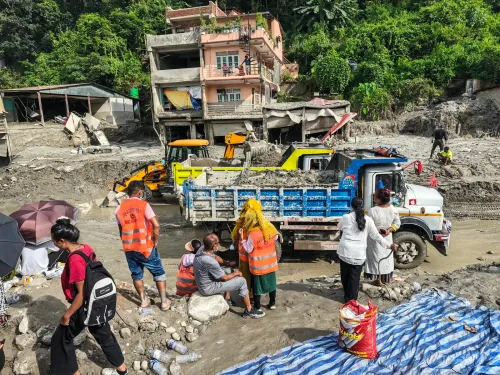
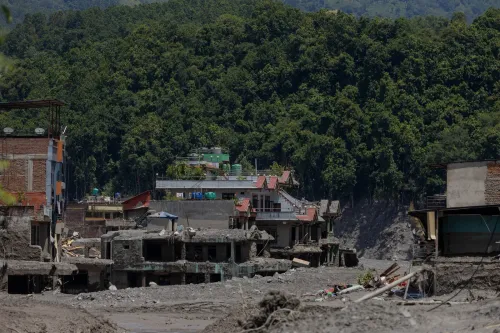
Nepal floods: World Bank puts direct damage at $1.66 billion, infrastructure worst hit
Synopsis
A World Bank assessment has put direct physical damage from Nepal's August 2026 floods at US$1.66 billion — with infrastructure alone accounting for 83 per cent and total disaster effects approaching US$2.7 billion. Over 1,455 people are confirmed dead, 5,285 still missing, and 10.6 per cent of Nepal's installed power capacity disrupted. The bank is now urging Nepal to not just build back better, but to build differently.
Key Takeaways
The World Bank estimates US$1.66 billion in direct physical damage from Nepal's 26 August 2026 floods , with infrastructure accounting for 83 per cent .
Nepal's government RDNA puts direct damage higher at US$1.81 billion ; total disaster effects, including losses beyond physical assets, reach approximately US$2.7 billion .
12 hydropower projects and one solar project were hit, disrupting approximately 430.7 MW — or 10.6 per cent — of Nepal's total installed energy capacity.
Over 55 km of the 82-km Rasuwa trade corridor linking Nepal to China was damaged, with 40 km completely destroyed along with 37 motorable and 68 suspension bridges .
Rasuwa district alone accounted for US$1.07 billion (64 per cent) of total direct damage; 1,455 deaths confirmed and 5,285 still missing.
The World Bank urged Nepal to 'build differently' — rethinking location, design, and network redundancy rather than simply restoring what existed before.
The catastrophic floods that struck Nepal on 26 August 2026 caused an estimated US$1.66 billion in direct physical damage, with infrastructure accounting for 83 per cent of that total, according to a World Bank assessment released this week. The findings, part of the bank's Nepal Development Update, place the disaster among the most destructive flood events in the country's recent history.
Scale of Physical Damage
The World Bank's Global Rapid Post-Disaster Damage Estimation (GRADE) methodology puts infrastructure losses at US$1.38 billion, or 83 per cent of the total. Residential buildings accounted for a further US$185 million (11 per cent), while non-residential buildings made up the remaining US$101 million (6 per cent).
The figure is broadly aligned with the Nepali government's own preliminary Rapid Damage and Needs Assessment (RDNA), which estimated direct damage at US$1.81 billion. The RDNA further estimates an additional US$883.32 million in losses beyond physical assets, bringing total disaster effects to approximately US$2.7 billion.
Energy and Transport Networks Devastated
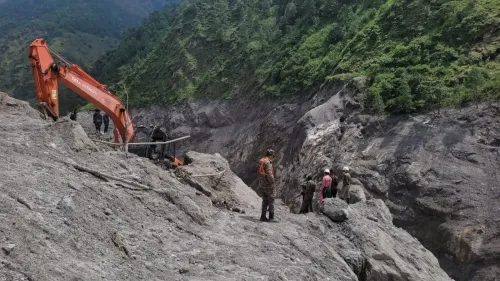
Flooding along the Bhotekoshi and Trishuli rivers dealt a severe blow to Nepal's energy infrastructure. The disaster affected 12 hydropower projects and one solar project, disrupting 281.1 MW of operational capacity and halting work on a further 395.02 MW under construction. Damage to transmission lines and substations cut an additional 149.6 MW from the national grid, bringing total affected capacity to approximately 430.7 MW — roughly 10.6 per cent of Nepal's total installed hydropower and solar capacity as of the end of fiscal year 2025-26.
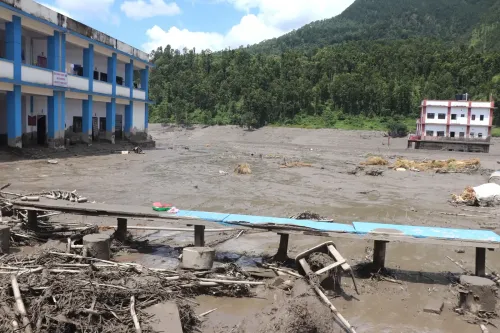
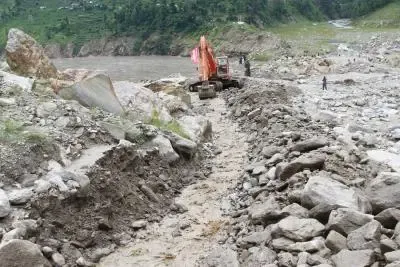
Transport links were equally battered. More than 55 km of the 82-km Rasuwa trade corridor — the key route linking Kathmandu with the Rasuwagadhi border crossing with China — was damaged, with 40 km completely destroyed. The floods also took out 37 motorable bridges and 68 suspension bridges.
Human Toll and Worst-Affected Districts
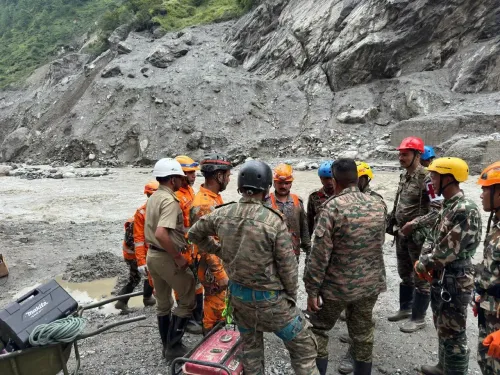
The cascading effects of the disaster resulted in severe human losses. According to the National Disaster Risk Reduction and Management Authority, 1,455 people were confirmed dead while 5,285 remained missing following the floods.
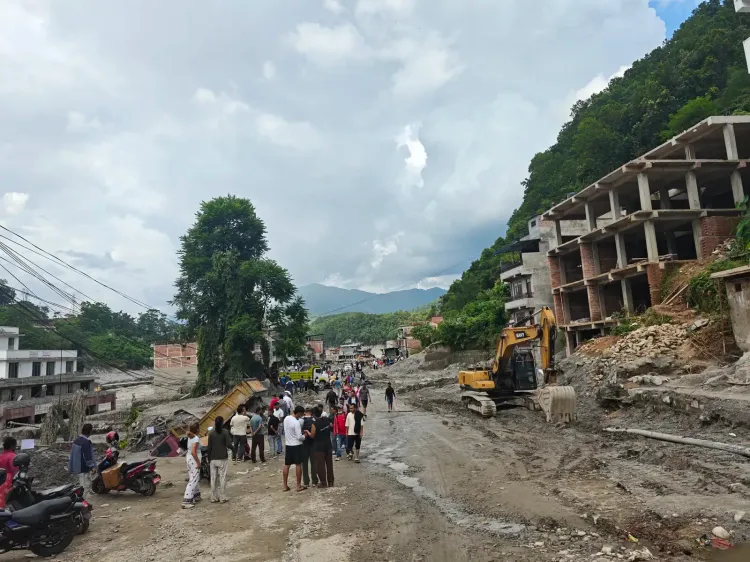
The World Bank noted that physical damage was concentrated in three districts of central Nepal: Rasuwa, Nuwakot, and Dhading. Rasuwa bore the heaviest burden, accounting for US$1.07 billion — or 64 per cent — of total direct damage. Nuwakot recorded an estimated US$551 million in damage, while Dhading suffered approximately US$39 million.
'The findings highlight the concentration of physical damage in a small number of districts and the disproportionate impact on infrastructure, underscoring the scale of the reconstruction challenge facing the affected areas,' the World Bank said.
A Case for Building Differently, Not Just Better
The World Bank cautioned that conventional reconstruction principles may be insufficient for Nepal's Himalayan context. While endorsing the 'Build Back Better' framework, the report argued that the August 2026 floods revealed a broader challenge: in some locations, rebuilding to a higher engineering standard in the same spot may still expose communities to unacceptable risk.
'Nepal may need to build differently — based on a better understanding of risk, more careful decisions about location and design, greater redundancy in critical networks, stronger monitoring and early warning, and a more integrated approach to infrastructure development in the Himalayas,' the report stated.
The bank urged Nepal to treat the recovery process as an opportunity to structurally reduce vulnerability to future disasters, rather than simply restore the pre-disaster status quo. With reconstruction needs running into billions of dollars and critical trade and energy links still disrupted, the path ahead for Nepal will test both the government's capacity and the international community's commitment to sustained support.
Point of View
In a country that has long positioned hydropower as its primary export earner and economic lever, is especially consequential. The bank's shift from 'Build Back Better' to 'build differently' is a quiet but significant policy signal — an acknowledgement that site selection and design philosophy, not just engineering standards, are at the root of Nepal's recurring disaster losses.
NationPress
9 Oct 2026
Frequently Asked Questions
How much damage did the Nepal floods of August 2026 cause according to the World Bank?
The World Bank estimates US$1.66 billion in direct physical damage from the floods that struck Nepal on 26 August 2026, with infrastructure accounting for 83 per cent of that total. Including losses beyond physical assets, Nepal's own RDNA puts total disaster effects at approximately US$2.7 billion.
Which districts in Nepal were worst affected by the floods?
The World Bank identified Rasuwa, Nuwakot, and Dhading in central Nepal as the three most affected districts. Rasuwa alone accounted for US$1.07 billion — 64 per cent — of total direct damage, followed by Nuwakot at US$551 million and Dhading at approximately US$39 million.
How did the floods affect Nepal's energy sector?
The August 2026 floods damaged 12 hydropower projects and one solar project, affecting 281.1 MW of operational capacity and halting 395.02 MW under construction. Combined with damage to transmission lines, approximately 430.7 MW — or 10.6 per cent of Nepal's total installed energy capacity — was disrupted.
What happened to the Rasuwa trade corridor?
More than 55 km of the 82-km Rasuwa trade corridor, which links Kathmandu to the Rasuwagadhi border crossing with China, was damaged by the floods, with 40 km completely destroyed. The disaster also took out 37 motorable bridges and 68 suspension bridges along and near the corridor.
What does the World Bank recommend for Nepal's reconstruction?
The World Bank urges Nepal to go beyond 'Build Back Better' and to 'build differently' — rethinking the location and design of critical infrastructure, building in greater network redundancy, and strengthening early warning systems. The bank says recovery should be used as an opportunity to reduce vulnerability to future disasters, not just restore the pre-flood status quo.