Nepal judiciary-government clash over Chief Justice pick, seniority tradition broken
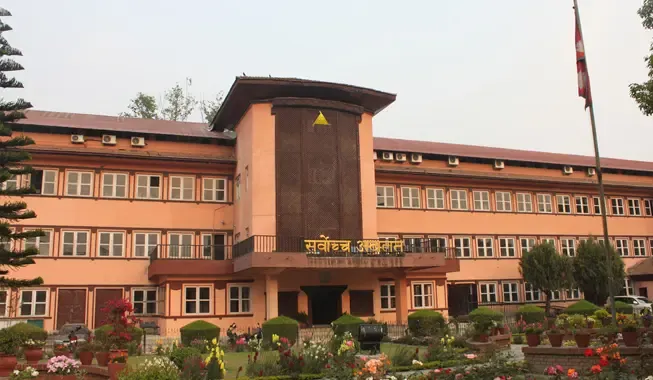
Synopsis
Nepal's ruling establishment has broken a decades-old convention by recommending a fourth-ranked Supreme Court judge as Chief Justice, triggering an open confrontation with the judiciary. Acting Chief Justice Sapana Pradhan Malla and former PM Sushila Karki — Nepal's first woman Chief Justice — have accused the government of attempting to bring the courts under executive control.
Key Takeaways
Constitutional Council , headed by PM Balendra Shah , recommended Justice Manoj Sharma — fourth in seniority — for Chief Justice on 7 May .
Acting Chief Justice Sapana Pradhan Malla called it "an attempt to turn the judiciary into an institution that surrenders and compromises with the executive body." Former PM and Nepal's first woman Chief Justice Sushil Karki said the decision was "a slap in the face of 15 million women." Constitutional lawyer Bipin Adhikari warned that verdict count alone is not a valid measure of judicial performance.
Under Article 129 of Nepal's Constitution, any justice with at least three years on the Supreme Court is eligible for the top post, though seniority has been the longstanding convention.
Nepal's government and judiciary have come into open conflict after the Constitutional Council recommended Justice Manoj Sharma — fourth in seniority among Supreme Court justices — for the post of Chief Justice, bypassing a decades-long tradition of appointing the senior-most judge to the position. The recommendation was made on 7 May by the council headed by Prime Minister Balendra Shah and forwarded to President Ram Chandra Poudel for formal appointment.
The Disputed Recommendation
The Constitutional Council's decision to skip three senior justices in favour of Justice Sharma has drawn sharp criticism from within the judiciary and political establishment alike. National Assembly Chairperson Narayan Dahal and Leader of the Opposition Bhisma Raj Angdembe filed formal notes of dissent against the recommendation, arguing that the long-standing seniority convention must not be abandoned. The government, however, defended its choice, citing statistics showing that Justice Sharma had issued more verdicts than the other three senior judges during the evaluation period.
Acting Chief Justice Strikes Back
The strongest institutional pushback came from Acting Chief Justice Sapana Pradhan Malla, the senior-most justice of the Supreme Court, who reacted sharply at a ceremony marking the 74th National Law Day on Saturday.
Point of View
The government has set a precedent that can be selectively applied in every future appointment — a structural lever far more consequential than any single nomination. Nepal's judiciary has historically been entangled with political patronage, and critics' suspicion that past senior appointments were themselves products of power-sharing makes the government's case superficially plausible. But the answer to politically influenced seniority is not politically directed merit — it is a transparent, rules-based evaluation framework. Without one, this episode simply replaces one form of executive interference with another.
NationPress
23 Sept 2026
Frequently Asked Questions
Why is Nepal's Chief Justice appointment controversial?
The Constitutional Council recommended Justice Manoj Sharma, who ranks fourth in seniority, for Chief Justice, breaking a decades-long tradition of appointing the senior-most Supreme Court justice to the post. Critics argue the move gives the government undue influence over the judiciary.
Who is Sapana Pradhan Malla and why is she significant?
Sapana Pradhan Malla is the Acting Chief Justice and the senior-most justice of Nepal's Supreme Court. She was widely expected to be recommended as Chief Justice and has publicly accused the government of attempting to bring the judiciary under executive control.
What does Nepal's Constitution say about Chief Justice appointments?
Under Article 129 of the Constitution of Nepal, any Supreme Court justice who has served at least three years is eligible for appointment as Chief Justice. The Constitution does not mandate seniority, but convention has long dictated that the senior-most judge be chosen.
What has former PM Sushila Karki said about the appointment?
Former Prime Minister and Nepal's first woman Chief Justice Sushila Karki called the decision "a slap in the face of 15 million women," saying nobody is as capable as Sapana Pradhan Malla and that a qualified woman justice had been denied the opportunity.
What is the government's justification for choosing Justice Manoj Sharma?
The government argued that Justice Sharma demonstrated greater capability than the other senior judges, pointing to statistics showing he issued more verdicts during the evaluation period. Constitutional lawyer Bipin Adhikari has challenged this, saying verdict quantity alone cannot measure judicial performance.