Nepal PM Balendra Shah ends India visit, departs for Kathmandu
Synopsis
Nepal Prime Minister Balendra Shah left New Delhi after his first India visit as premier, during which he and Narendra Modi launched a cross-border train, inaugurated a bridge and pipeline phase, and adopted a joint vision for bilateral cooperation.
Key Takeaways
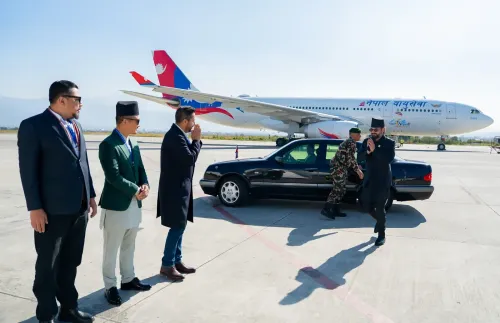
Nepal Prime Minister Balendra Shah departed New Delhi for Kathmandu on 23 November 2026 .
Shah and Prime Minister Narendra Modi adopted a joint vision for the India-Nepal partnership.
The leaders inaugurated a bridge linking Dharchula and Darchula and Phase II of the Motihari-Amlekhgunj Pipeline .
The Saryu-Kamala Express was flagged off as a cross-border service between Ayodhya and Janakpur .
The leaders laid the foundation stone for Nepal's 669 MW Lower Arun Hydroelectric Project and other projects.
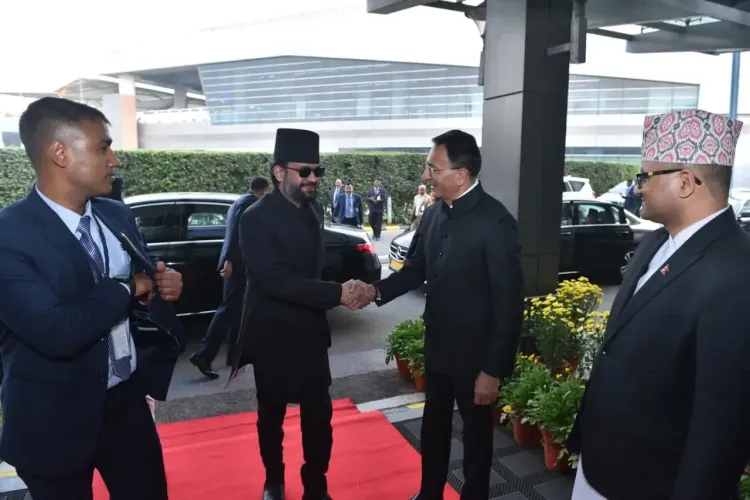
Nepal Prime Minister Balendra Shah concluded his two-day state visit to India on 23 November 2026, departing New Delhi for Kathmandu after talks with Prime Minister Narendra Modi on bilateral cooperation. The leaders adopted a joint vision for the partnership and announced progress on cross-border connectivity, energy and other projects.
The visit, at Modi's invitation, was Shah's first to India and his first bilateral visit since he became Nepal's prime minister in March 2026. It lasted a little over 24 hours.
Talks on trade, connectivity and border management
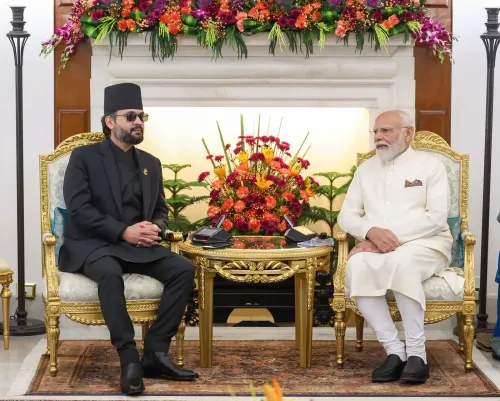
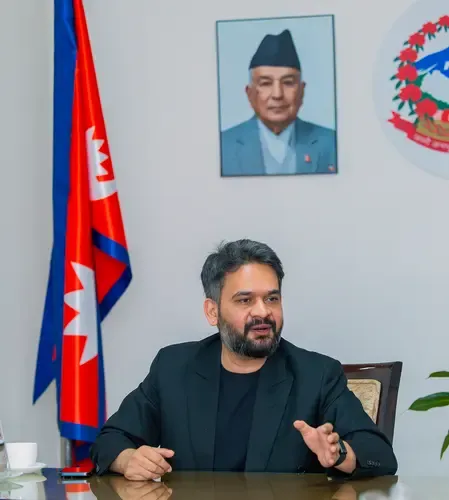
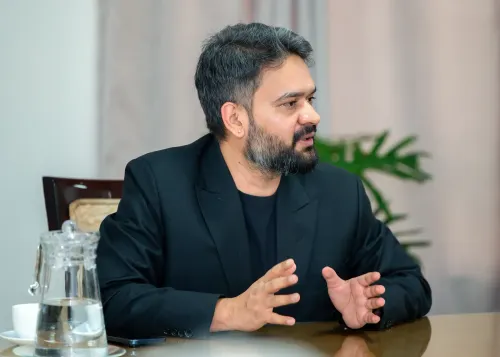
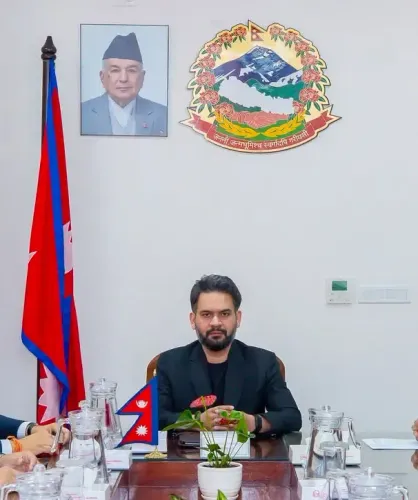
Shah met Modi at Hyderabad House in New Delhi on Monday. Their discussions covered trade, investment, infrastructure, development partnership, connectivity, border management, education, culture and people-to-people exchanges, according to India's Ministry of External Affairs.
The ministry said the leaders also explored cooperation in climate resilience, disaster mitigation and management, sports, start-ups, digital services, space and innovation. Their engagement included detailed talks, a presentation on PM GatiShakti and a working lunch hosted in Shah's honour.
Shah thanked Modi for India's humanitarian and technical support after the August 2026 flash floods in the Bhote Koshi and Trishuli river system, the ministry said. The leaders also discussed regional and global issues.
Bridge, pipeline and cross-border train
Modi and Shah jointly inaugurated projects including a motorable bridge connecting Dharchula in India with Darchula in Nepal, and Phase II of the Motihari-Amlekhgunj Pipeline. They also flagged off the Saryu-Kamala Express, a cross-border train service between Ayodhya in India and Janakpur in Nepal.
The bridge and train service add to the transport links between the neighbours, while the pipeline project concerns energy connectivity. The visit combined these inaugurated projects with others that remain at the foundation-stone stage.
The leaders laid foundation stones for an integrated check post in Banbasa, a greenfield oil storage terminal in Nepal's Jhapa and the 669 MW Lower Arun Hydroelectric Project in Nepal's Koshi province. The source did not specify completion dates for those projects.
Joint vision and sectoral agreements
The prime ministers adopted the Joint Vision for a Viksit Bharat and Samunnat Nepal, described as a roadmap for the future partnership between the countries. Its broad scope reflects the range of subjects discussed, from border management and trade to newer areas such as digital services and space.
India and Nepal also signed memorandums of understanding covering several sectors, including forensic science, security, health, satellite communications, traditional medicine and urban development. Details of implementation were not specified in the information available.
Presidential meeting and departure
During his stay, Shah called on President Droupadi Murmu at Rashtrapati Bhavan. Nepal's Ministry of Foreign Affairs said they exchanged views on further strengthening friendly relations between the two countries.
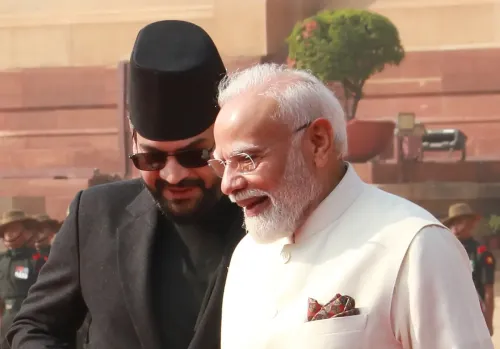
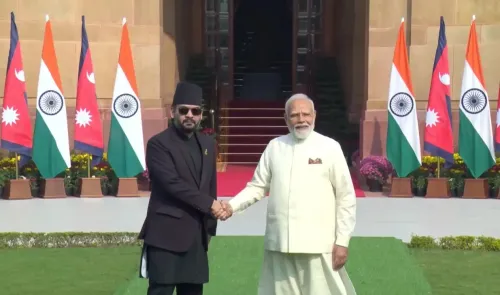
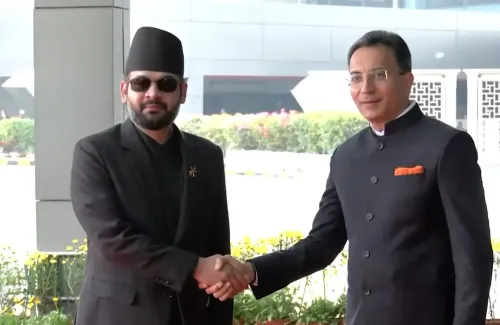
Shah received a ceremonial welcome at the forecourt of Rashtrapati Bhavan earlier on Monday. At the airport, Union Minister of State for Commerce and Industry Jitin Prasada, Nepal's Ambassador to India Nishchal Nath Pandey, India's Ambassador to Nepal Sudhakar Dalela and other officials saw him off, Nepal's foreign ministry said.
Attention will now turn to implementation of the agreements and the projects for which foundation stones were laid.
Frequently Asked Questions
What happened during Nepal PM Balendra Shah's India visit?
Balendra Shah met Narendra Modi and Droupadi Murmu, and the two prime ministers adopted a joint vision for India-Nepal cooperation. They also inaugurated and laid foundation stones for several projects.
Why was Balendra Shah's India visit significant?
It was Shah's first visit to India and his first bilateral visit since becoming Nepal's prime minister in March 2026. The discussions covered trade, connectivity, border management and several other areas.
Which India-Nepal projects were launched during the visit?
The leaders inaugurated the Dharchula-Darchula motorable bridge and Phase II of the Motihari-Amlekhgunj Pipeline. They also flagged off the Saryu-Kamala Express between Ayodhya and Janakpur.
What projects are planned after the India-Nepal talks?
The leaders laid foundation stones for a Banbasa integrated check post, a greenfield oil storage terminal in Jhapa and the 669 MW Lower Arun Hydroelectric Project in Koshi province. Completion dates were not specified in the information available.
When did Balendra Shah leave India for Nepal?
Balendra Shah departed New Delhi for Kathmandu on 23 November 2026 after a state visit lasting a little over 24 hours.