India-Nepal ties: Modi, Balendra Shah adopt joint vision
Synopsis
Modi and Nepalese Prime Minister Balendra Shah adopted a joint vision for India-Nepal ties in New Delhi, with talks spanning trade, connectivity and disaster cooperation. Shah thanked India for support after the August 2026 flash floods.
Key Takeaways
Narendra Modi and Balendra Shah adopted a joint vision for India-Nepal ties at Hyderabad House on 23 November .
Shah thanked India for humanitarian and technical support after floods in the Bhote Koshi and Trishuli river system in August 2026 .
The talks covered trade, investment, connectivity, border management and potential cooperation on disaster mitigation and digital services.
Nepal’s foreign ministry said the leaders also discussed strengthening energy cooperation.
Shah was accompanied by a 35-member government delegation and a separate 52-member business delegation.
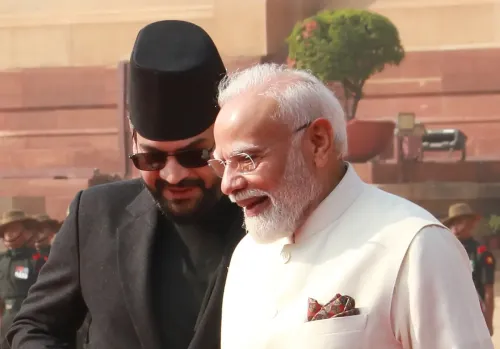
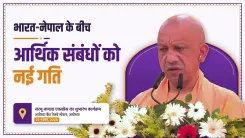
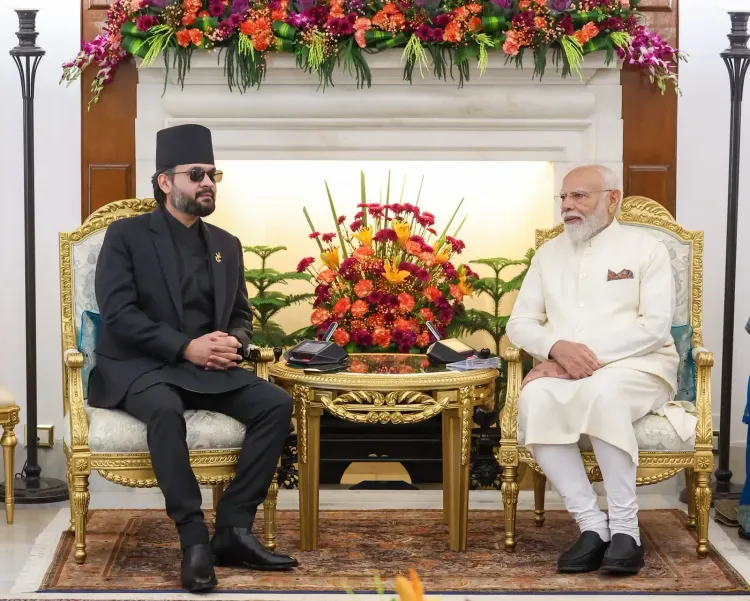
Prime Minister Narendra Modi and Nepalese Prime Minister Balendra Shah adopted a joint vision for India-Nepal ties during talks at Hyderabad House in New Delhi on 23 November. Their discussions covered trade, investment, infrastructure, connectivity and other areas of cooperation, according to the two countries’ foreign ministries.
Shah also thanked Modi for India’s humanitarian and technical support after flash floods in the Bhote Koshi and Trishuli river system in August 2026, India’s Ministry of External Affairs (MEA) said.
Joint vision and areas of cooperation
The leaders adopted the 'Joint Vision for a Viksit Bharat and Samunnat Nepal' as a roadmap for the partnership. The MEA said their talks addressed bilateral, regional and global issues and included a presentation on PM GatiShakti and a working lunch hosted for Shah.
Alongside trade and investment, the discussions covered development cooperation, border management, education, culture and people-to-people exchanges. The MEA said the leaders also explored potential cooperation in climate resilience, disaster mitigation and management, sports, start-ups, digital services, space and innovation.
Nepal’s Ministry of Foreign Affairs said the talks included strengthening energy cooperation and enhancing connectivity. Both sides expressed their commitment to deepening the longstanding relationship, the ministry said.
Flood support and the wider agenda
Shah’s acknowledgement of India’s flood assistance placed disaster response alongside the economic and connectivity discussions. The MEA said he conveyed gratitude for both humanitarian and technical support following the floods in the Bhote Koshi and Trishuli river system.
The joint vision brings together established areas of cooperation, including trade and cultural links, with areas the MEA identified for exploration, such as digital services and climate resilience. The information released about the meeting did not specify project commitments or implementation timelines for those areas.
Officials and delegations at the visit
External Affairs Minister S Jaishankar, Foreign Secretary Vikram Misri and National Security Advisor Ajit Doval attended the meeting along with other officials.
Shah travelled with a 35-member government delegation that included Finance Minister Swarnim Wagle, Foreign Minister Shishir Khanal and Chief Advisor to the Prime Minister Kumar Byanjankar. A separate 52-member delegation of business representatives also participated in the visit at its own expense.
The presence of business representatives came as the two governments discussed expanding bilateral trade and investment. The source did not detail any agreements involving the business delegation.
Welcome and Rajghat visit
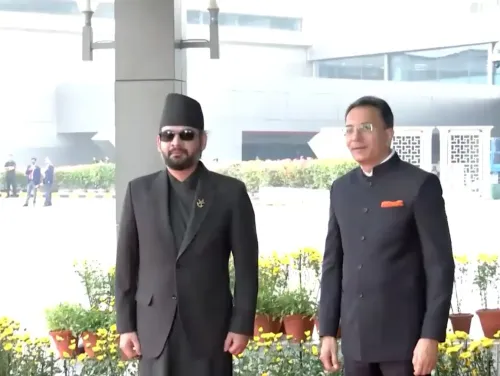
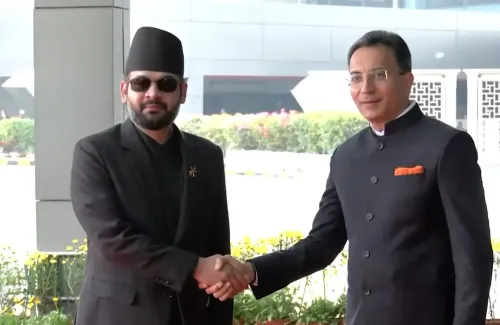
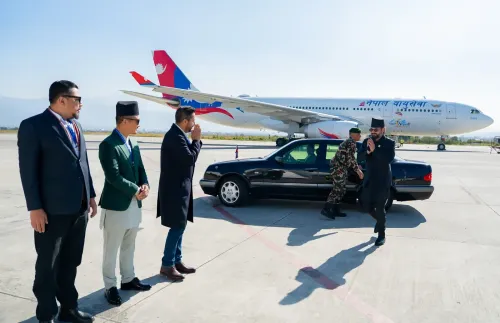
Shah arrived in New Delhi on Sunday for a two-day state visit at Modi’s invitation. Union Minister of State for Commerce and Industry Jitin Prasada received him at the airport.
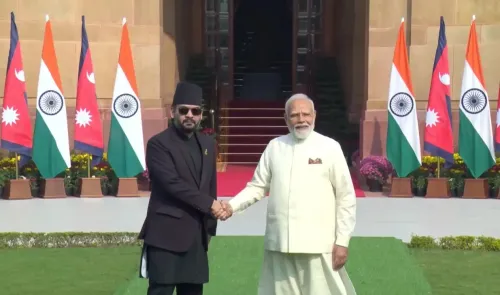
On Monday, Shah received a ceremonial welcome at the forecourt of Rashtrapati Bhavan, where Modi greeted him. Before the bilateral meeting, he laid a wreath at Mahatma Gandhi’s memorial at Rajghat and wrote a message in the visitors’ book, according to Nepal’s foreign ministry.
The next stage for both governments will be to carry the joint vision forward; the information released about the talks did not set out a timetable for implementation.
Point of View
But its value will depend on whether broad ambitions translate into measurable projects. Trade and connectivity sit alongside disaster resilience on the agenda, making delivery relevant to businesses and communities alike. Both governments should publish clear implementation plans and progress updates rather than allow the roadmap to remain a statement of intent.
NationPress
23 Nov 2026
Frequently Asked Questions
What did Modi and Balendra Shah announce in New Delhi?
Narendra Modi and Balendra Shah adopted a 'Joint Vision for a Viksit Bharat and Samunnat Nepal' during their meeting at Hyderabad House. Their talks covered trade, investment, connectivity and other areas of bilateral cooperation.
Why did Balendra Shah thank India?
Shah thanked India for humanitarian and technical support after flash floods in the Bhote Koshi and Trishuli river system in August 2026. India’s Ministry of External Affairs reported his remarks after the meeting.
Which areas did the India-Nepal talks cover?
The talks covered trade, investment, infrastructure, border management, education, culture and people-to-people exchanges. The two sides also discussed energy cooperation and explored areas including disaster management, digital services and space.
Who accompanied Balendra Shah on his India visit?
Shah was accompanied by a 35-member government delegation that included Finance Minister Swarnim Wagle and Foreign Minister Shishir Khanal. A separate 52-member business delegation participated at its own expense.
When will the India-Nepal joint vision be implemented?
The information released about the meeting did not specify an implementation timetable. The joint vision was adopted as a roadmap for the future partnership.