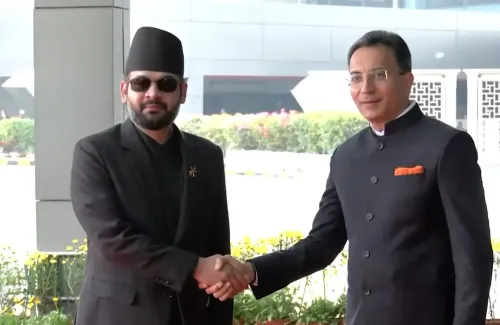
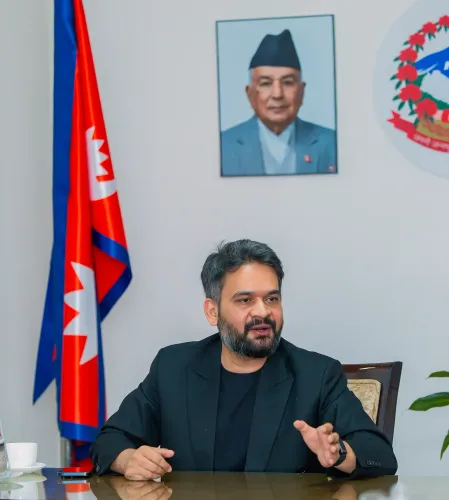
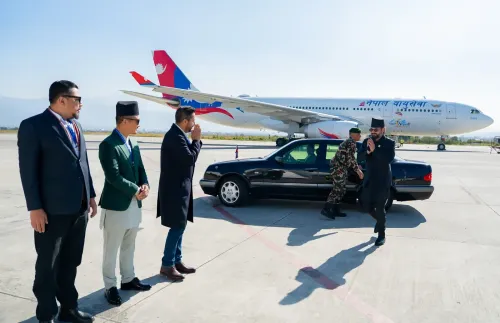
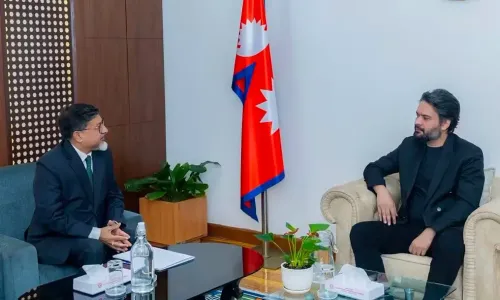
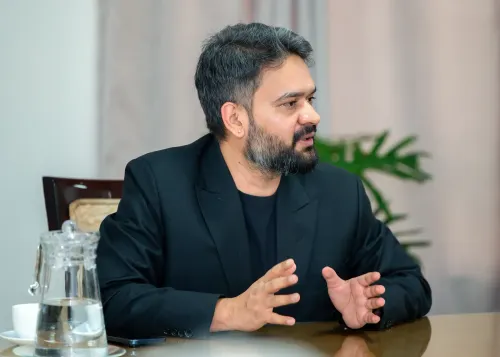
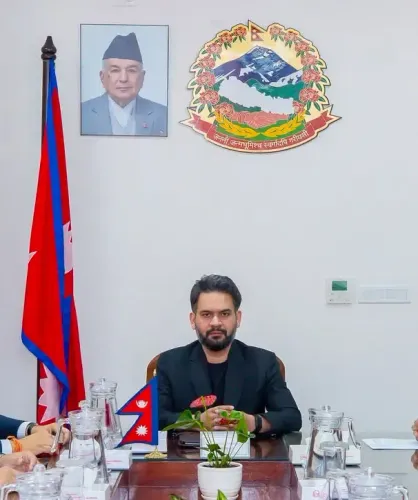
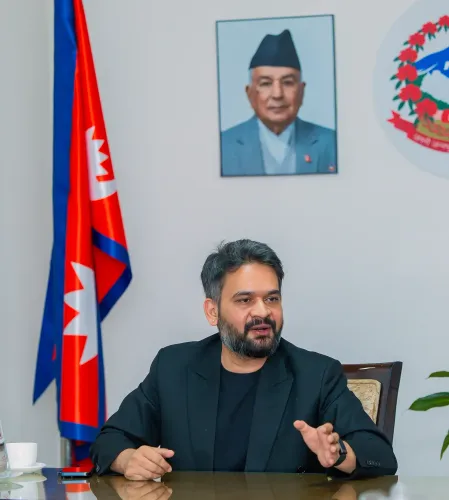
Nepal PM Balendra Shah arrives in New Delhi for first India State visit
Synopsis
Nepal's new Prime Minister Balendra Shah is in New Delhi for his first-ever State visit to India — and the agenda goes well beyond diplomacy. From securing flood-reconstruction funds and new air entry routes to signing a joint vision document titled 'Samriddha Nepal, Samunnat Bharat,' this two-day visit could reset the terms of one of South Asia's most consequential bilateral relationships.
Key Takeaways
Nepal PM Balendra Shah arrived in New Delhi on 22 November 2026 for a two-day State visit — his first trip to India since taking office in March 2026 .
Bilateral talks with PM Narendra Modi are scheduled for 23 November , covering energy, trade, connectivity, and post-flood reconstruction.
The two sides are expected to unveil a Joint Vision Document titled 'Samriddha Nepal, Samunnat Bharat' and exchange MoUs across multiple sectors.
Nepal's top asks include new air entry routes, trade concessions, and financial aid for reconstruction after the 26 August floods; India seeks Nepali airspace access and a better investment climate for its businesses.
India-Nepal development ties span more than 600 community projects across 74 districts, backed by Lines of Credit worth $1.65 billion .
A 52-member business delegation is accompanying the 35-member government delegation, signalling the economic weight of the visit.
Nepal Prime Minister Balendra Shah arrived in New Delhi on 22 November 2026 for a two-day State visit — his first bilateral trip to India since assuming office in March 2026 — with talks with Prime Minister Narendra Modi set to cover energy cooperation, trade, connectivity, infrastructure, and post-flood reconstruction assistance.
High-Level Welcome and Day One Formalities
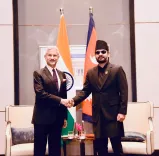
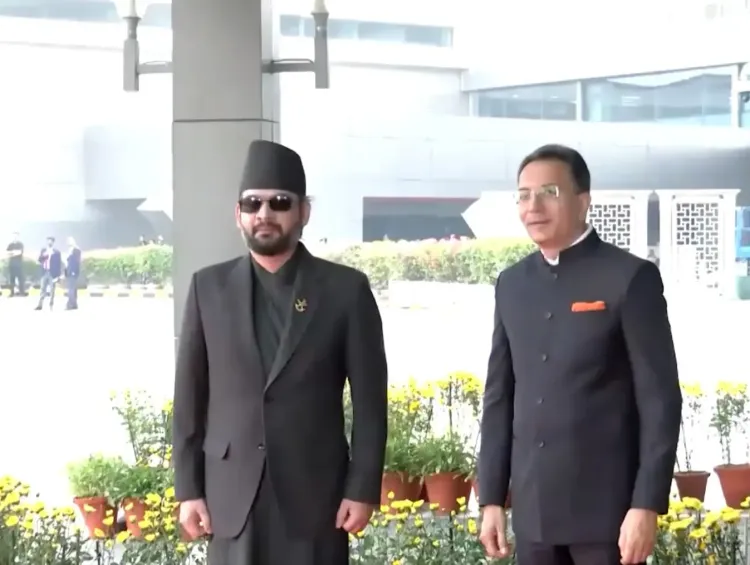
Minister of State for Commerce and Industry Jitin Prasada received Shah at the airport on Sunday. The Ministry of External Affairs (MEA) described the visit as 'an opportunity to strengthen the enduring and multifaceted partnership between India and Nepal.' External Affairs Minister S. Jaishankar is also scheduled to call on the Nepali Prime Minister, while Shah is set to meet President Droupadi Murmu during the two-day stay.
What Monday's Bilateral Talks Will Cover
Shah and Modi are scheduled to hold delegation-level talks on 23 November, review the full range of India-Nepal relations, and jointly address a press conference thereafter. Prime Minister Modi will also host an official luncheon in honour of the Nepali delegation. Nepal's Foreign Secretary Amrit Bahadur Rai told reporters on Friday that the discussions would span 'a range of issues of mutual interest.' The two leaders have previously exchanged phone calls and social media messages, but this will be their first in-person meeting.
Nepal's Priorities and India's Concerns
According to Nepali officials, Kathmandu's primary asks include additional air entry routes from India, substantial financial support for reconstruction following the 26 August flash floods, and trade and transit concessions. India, for its part, is seeking access to Nepali airspace and an improved investment climate for Indian businesses — particularly in the energy sector. India supplied approximately 140 tonnes of emergency relief and extended technical assistance for tunnel rescue and forensic operations after the August floods.
Joint Vision Document and New Projects
The two sides are expected to unveil a Joint Vision Document titled 'Samriddha Nepal, Samunnat Bharat' (Prosperous Nepal, Developed India), setting long-term bilateral goals and concrete targets. Several completed projects in connectivity and energy cooperation are to be inaugurated, and foundation stones for new projects are expected to be laid. Memorandums of understanding (MoUs) will also be exchanged covering education, health, agriculture, sports, disaster management, and human resource development.
The Scale of the India-Nepal Partnership
Shah is accompanied by a 35-member government delegation including Finance Minister Swarnim Wagle, Foreign Minister Shishir Khanal, and Chief Advisor Kumar Byanjankar. A separate 52-member business delegation is participating at its own expense. India and Nepal's development partnership includes more than 600 High Impact Community Development projects across 74 districts, valued at over Nepali Rupees 1,662 crore. The Indian government has also extended Lines of Credit totalling $1.65 billion for infrastructure, including roads, transmission lines, and post-earthquake reconstruction. Since May 2014, there have been 17 exchanges at the level of Head of State or Head of Government between the two countries, with Modi having visited Nepal five times, most recently in 2023. The visit is being framed as an expression of India's 'Neighbourhood First' policy, with both nations seeking to align national priorities on economic growth, infrastructure expansion, climate resilience, and technology adoption. All eyes now turn to the outcomes of Monday's bilateral talks and the precise terms of the joint vision document expected to be signed.
Point of View
If it carries concrete targets rather than aspirational language, would mark a step beyond the communiqués that have characterised previous India-Nepal summits. Yet the structural tensions remain: Nepal's asks on airspace and trade concessions sit uneasily alongside India's reciprocal demands on investment access and airspace, and both sides have a track record of announcing MoUs that stall in implementation. The real measure of this visit will not be the number of agreements signed on 23 November, but how many of them are verifiably operational by the time of the next bilateral review.
NationPress
22 Nov 2026
Frequently Asked Questions
Why is Nepal PM Balendra Shah visiting India?
Balendra Shah is in New Delhi for a two-day State visit from 22 to 23 November 2026 to hold bilateral talks with PM Narendra Modi on energy cooperation, trade, connectivity, infrastructure, and post-flood reconstruction. This is his first visit to India since assuming office as Nepal's Prime Minister in March 2026.
What is the 'Samriddha Nepal, Samunnat Bharat' document?
It is a Joint Vision Document expected to be unveiled during Shah's visit, translating to 'Prosperous Nepal, Developed India.' The document is intended to set long-term bilateral goals and concrete targets across sectors including energy, trade, and infrastructure.
What are Nepal's key priorities for this visit?
According to Nepali officials, the top priorities include securing additional air entry routes from India, obtaining financial support for reconstruction after the devastating August 2026 floods, and gaining trade and transit concessions. MoUs are also expected to be signed on education, health, agriculture, and disaster management.
What does India want from the talks?
India is seeking access to Nepali airspace and an improved investment climate for Indian businesses in Nepal, particularly in the energy sector, according to Nepali officials. India also aims to expand connectivity and energy cooperation projects already underway.
How significant is the India-Nepal bilateral relationship?
India and Nepal share more than 600 High Impact Community Development projects across 74 districts, valued at over Nepali Rupees 1,662 crore. India has extended Lines of Credit worth $1.65 billion for infrastructure development, and there have been 17 Head-of-State or Head-of-Government exchanges between the two countries since May 2014.