Nepal tea exports to India stall as 50+ factories shut over testing rules
Synopsis
Over 50 Nepali tea factories have gone dark in a single week — orthodox producers from Monday, CTC producers from Wednesday — after India's mandatory per-consignment testing SOP left more than a million kilogrammes of tea unsold and 300,000 kg stranded in Kolkata warehouses. The shutdown exposes how a regulatory shift can function as an effective trade barrier, with North Bengal growers' lobbying providing the political backdrop.
Key Takeaways
More than 53 orthodox tea factories in Nepal shut down from Monday, 15 June 2025 ; 30 CTC factories followed from Wednesday .
India's Tea Board SOP (effective 1 May 2025 ) mandates quality testing on every consignment, with reports taking over two weeks — often months.
Over 1 million kilogrammes of tea are unsold in Nepal factories; 300,000 kg are stranded in Kolkata warehouses.
Nepal exports 6–7 million kg of orthodox tea to India each season; India absorbs more than 90% of Nepal's orthodox tea output.
Nepal exported 11,393 tonnes of tea worth NPR 3.35 billion in fiscal year 2025–26 up to mid-May.
The stricter regime follows demands by North Bengal small tea growers in October 2024 for curbs on Nepali tea imports.
More than 50 orthodox tea factories in Nepal suspended operations from Monday, 15 June 2025, after India's mandatory per-consignment quality-testing regime disrupted the export of one of Nepal's most critical agricultural commodities. CTC tea producers have separately announced a factory shutdown beginning Wednesday, compounding what industry bodies describe as a near-total halt to tea exports.
What Triggered the Shutdown
The immediate cause is a Standard Operating Procedure (SOP) introduced by the Tea Board of India on 1 May 2025, which made quality testing compulsory for every single consignment of tea imported from Nepal. Previously, Indian authorities tested only selected samples, and a passing result cleared the entire shipment for sale.
Under the new system, test reports take more than two weeks to arrive — and in many cases, reportedly stretch to months. Tea cannot be sold until the report is issued, and consignments that fail must either be destroyed or returned to Nepal, imposing significant financial losses on exporters.
Scale of the Crisis
The numbers illustrate the severity of the disruption. According to industry representatives, roughly 300,000 kilogrammes of processed tea are currently stranded in warehouses in Kolkata, while more than one million kilogrammes remain unsold in factories across Nepal. Nepal typically exports around 6–7 million kilogrammes of orthodox tea to India each season, making the Indian market indispensable.
More than 90 per cent of Nepal's orthodox tea is exported to India, and around 60 per cent of its CTC tea production is sold in the Indian market, according to associations representing tea factory owners.
What Industry Leaders Said
Dilaram Shrestha, President of the Suryodaya Orthodox Tea Producers' Association, confirmed that all 53 factories affiliated with his organisation have closed. 'Starting Monday, we have shut down our factories,' he said. 'Large quantities of processed tea destined for the Indian market have remained unsold. Test samples are being collected, but reports are often delayed for months. As a result, tea entrepreneurs and factories have been severely affected.'
The association also issued an apology to tea farmers and stakeholders for disruptions to tea processing and green-leaf procurement activities.
Dipesh Dhakal, a member of the Nepal Tea Producers' Association — the representative body of 30 CTC tea factory owners — said Indian buyers have grown reluctant to purchase Nepali tea due to the risk of sample failures. 'Once the tea crosses the border, we cannot assume full responsibility for it. As a result, tea exports have almost completely stalled,' he said.
The Indian Side of the Dispute
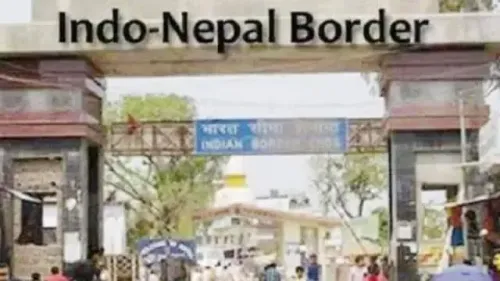
The stricter testing regime did not emerge in a vacuum. It follows persistent complaints from Indian tea growers about the volume of Nepali tea entering their market. In October 2024, small tea growers in North Bengal intensified demands for restrictions on Nepali tea imports and threatened an indefinite sit-in protest at key points along the Indo-Nepal border.
This context suggests the SOP, while framed as a quality measure, also reflects competitive pressure from domestic Indian growers — a dimension that Nepali producers argue has turned a regulatory tool into a trade barrier.
Export Figures and Economic Stakes
According to Nepal's Trade and Export Promotion Centre, the country exported 11,393 tonnes of tea worth NPR 3.35 billion during the current fiscal year 2025–26 up to mid-May. The fiscal year closes in mid-July, meaning the shutdown arrives at a critical harvest and export window. The disruption threatens not only factory owners but also the farmers and daily-wage workers whose livelihoods depend on an uninterrupted production cycle.
With both orthodox and CTC segments now halted, and no resolution in sight, pressure is mounting on the governments of Nepal and India to negotiate an interim arrangement before the season's losses become irreversible.
Point of View
But its timing and design align suspiciously well with the demands of North Bengal's domestic tea lobby — raising legitimate questions about whether a health-and-safety instrument is being used as a trade-restriction tool. Nepal's near-total dependence on the Indian market (90-plus per cent for orthodox tea) leaves it with almost no leverage and no alternative buyer at scale. The real casualty is not the factory owner but the smallholder farmer and daily-wage picker caught in a bilateral dispute they have no power to resolve. If New Delhi and Kathmandu do not negotiate an interim arrangement before the season closes in mid-July, this year's losses will be structural, not merely seasonal.
NationPress
15 Sept 2026
Frequently Asked Questions
Why have Nepal's tea factories shut down in June 2025?
More than 50 orthodox tea factories in Nepal suspended operations from 15 June 2025 because India's Tea Board SOP, effective 1 May 2025, requires quality testing of every consignment before it can be sold in India. The resulting delays — often exceeding two weeks, sometimes months — have left large volumes of tea unsold and created severe cash-flow pressure on producers.
What is India's Tea Board SOP and how does it affect Nepal?
The SOP mandates per-consignment quality testing for all tea imported from Nepal, replacing a system where only selected samples were checked. Since more than 90 per cent of Nepal's orthodox tea and around 60 per cent of its CTC tea is exported to India, the new requirement has effectively stalled Nepal's entire tea export pipeline.
How much Nepali tea is currently stranded?
According to industry representatives, over 1 million kilogrammes of processed tea remain unsold in factories across Nepal, while approximately 300,000 kilogrammes are stuck in warehouses in Kolkata. Nepal typically exports 6–7 million kilogrammes of orthodox tea to India each season.
Why did India introduce stricter tea testing for Nepal?
The tighter regime follows sustained complaints from Indian tea growers, particularly small growers in North Bengal, about the volume of Nepali tea entering the Indian market. In October 2024, these growers threatened indefinite protests at the Indo-Nepal border unless import restrictions were imposed.
What is at stake economically for Nepal?
Nepal exported 11,393 tonnes of tea worth NPR 3.35 billion in fiscal year 2025–26 up to mid-May, with the fiscal year closing in mid-July. The factory shutdowns arrive at a peak harvest and export window, threatening income for factory owners, farmers, and daily-wage workers across the tea belt.