Impact of US-Iran Conflict and Gen-Z Protests on Nepal's Economic Growth
Synopsis
Nepal's economy is set for a significant slowdown in FY2025-26, with projected growth dropping to 2.7% amid ongoing geopolitical tensions and the aftermath of last year's civil unrest. This situation raises concerns about remittances and overall economic stability.
Key Takeaways
Nepal's economic growth is projected to decline to 2.7% for FY2025-26.
Ongoing geopolitical tensions are impacting the economy.
Political instability from last year's protests is still affecting prospects.
Remittances from GCC countries are crucial for economic health.
All sectors are expected to perform worse than last year.
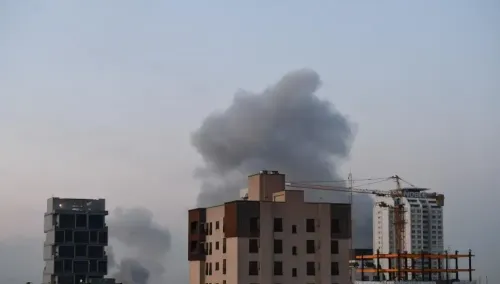
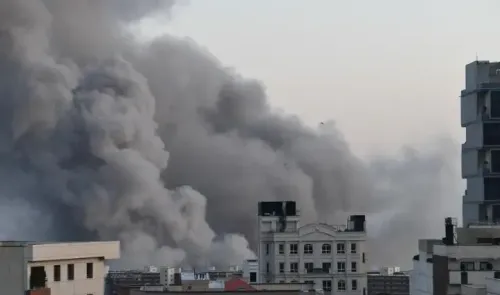
Kathmandu, April 10 (NationPress) The Asian Development Bank (ADB) has indicated a notable deceleration in Nepal's economic growth for the fiscal year 2025–26, attributing this trend to the repercussions of last year’s civil disturbances and the ongoing conflict in West Asia involving the United States, Iran, and Israel.
In its recent economic report published on Friday, the ADB forecasted that Nepal’s economy is projected to expand by 2.7% in FY2025–26, a decline from 4.6% in FY2024–25.
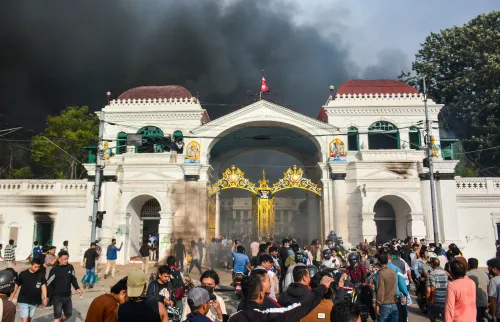
As per the latest evaluation, this economic slowdown follows the Gen-Z protests that occurred in early September last year, sparked by youth discontent over a social media ban, inadequate government accountability, and limited job opportunities. The protests ultimately led to the resignation of former Prime Minister K P Sharma Oli, exacerbating political instability. However, the results of the federal elections held on March 5 are anticipated to foster improved political stability in the forthcoming months, according to the ADB.
Post-elections, Nepal has established a new government boasting nearly a two-thirds majority under the leadership of the Rastriya Swatantra Party (RSP).
Despite the apparent stabilization of internal political conditions, the ongoing conflict in West Asia continues to present substantial risks to Nepal's economy, mainly through escalating global oil prices, a decline in tourist arrivals, and a potential decrease in remittances—especially from Gulf Cooperation Council (GCC) nations, which contribute roughly 40% of Nepal’s total remittance inflows, the ADB pointed out.
When compared to other nations in South Asia, Nepal’s economic performance is expected to lag behind that of most countries in the region, with the exceptions of Maldives and Afghanistan.
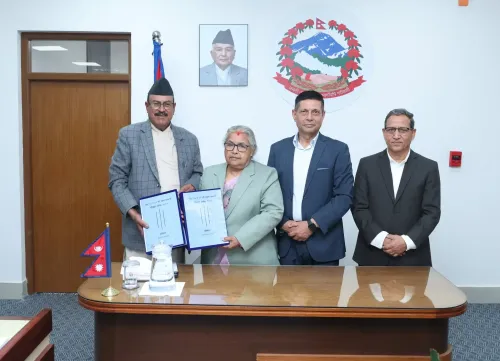
“While the renewed political stability is likely to facilitate reforms and enhance economic confidence, significant risks persist, particularly stemming from the Middle East conflict, which is influencing oil prices, tourism, and remittance flows,” stated Arnaud Cauchois, ADB Country Director for Nepal.
The report indicated that all sectors of the economy — agriculture, industry, and services — are projected to underperform relative to the previous fiscal year.
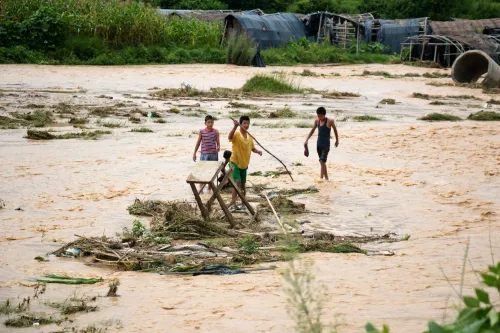
Agricultural growth is forecasted to decrease to 2.7% in FY2025–26, down from 3.3% in FY2024–25, largely due to a reduction in paddy production resulting from delayed monsoon rains and flooding in October 2025. The industrial sector is expected to see growth decline to 2.8%, down from 4.5% for the same period, as diminished investor sentiment and postponed capital expenditures adversely affect manufacturing and construction.
Similarly, the services sector is anticipated to slow, with growth projected to drop to 2.8% in FY2025–26 from 4.2% in the preceding fiscal year. This decline is primarily linked to weaker performance in wholesale and retail trade, as well as sluggish real estate activities. Furthermore, the impact of the West Asia conflict on tourism is likely to burden the sector, as disruptions at key Middle East transit hubs during Nepal’s peak spring climbing season (March to May) may diminish tourist inflows.
Point of View
The anticipated decline in Nepal's economic growth due to both internal unrest and external geopolitical tensions highlights the interconnectedness of global events and local economies. While new political leadership may provide stability, the ongoing risks from the Middle East conflict cannot be overlooked.
NationPress
21 Oct 2026
Frequently Asked Questions
What is the projected economic growth rate for Nepal in FY2025-26?
The Asian Development Bank projects that Nepal's economy will grow by 2.7% in FY2025-26.
What factors are contributing to the economic slowdown?
Key factors include the impact of last year's Gen-Z protests and the ongoing conflict in West Asia.
How will the conflict in West Asia affect Nepal's economy?
The conflict could lead to rising oil prices, a decline in tourist arrivals, and reduced remittances from GCC countries.
What is the expected performance of different sectors in Nepal's economy?
All sectors—agriculture, industry, and services—are expected to perform weaker compared to the previous fiscal year.
What political changes may influence Nepal's economic stability?
The formation of a new government with a nearly two-thirds majority may improve political stability and support economic reforms.