Nepal's first tiger sanctuary in Chitwan to house 20 big cats, boost eco-tourism
Synopsis
Nepal's tiger success story has a complication: with the population nearly tripling to 355 since 2009, human-tiger conflict has surged. The country's answer is a first-of-its-kind sanctuary in Chitwan — 52 hectares where 'problematic' big cats roam free and tourists ride through in cage-like vehicles. It's conservation, conflict management, and eco-tourism revenue all in one bet.
Key Takeaways
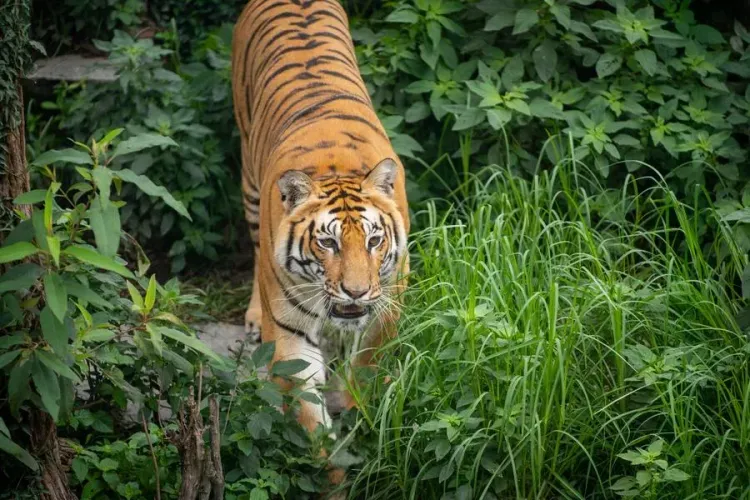
Nepal plans its first Tiger Sanctuary at Devnagar, Chitwan , covering approximately 52 hectares and designed to hold 18 to 20 tigers .
Nepal's tiger population nearly tripled from 121 in 2009 to 355 in 2022 , driving a sharp rise in human-tiger conflict.
The government has allocated NPR 30 million for the project in fiscal year 2026-27 .
The sanctuary will house only 'problematic tigers' — older, injured, or conflict-prone animals that cannot be released into the wild.
An inverted safari model will see tigers roam freely while visitors travel in enclosed cage-like vehicles along designated routes.
Infrastructure is expected to take at least two to three years to build once construction begins.
Nepal is set to establish its first-ever Tiger Sanctuary within Chitwan National Park in the southern district of Chitwan, designed to house up to 20 'problematic tigers' in a natural setting while doubling as a major eco-tourism destination. The government has already allocated NPR 30 million for the project in the upcoming fiscal year 2026-27, which begins in mid-July.
Why Nepal Needs the Sanctuary
Nepal's tiger population has surged dramatically — nearly tripling from 121 individuals in 2009 to 355 in 2022, driven by sustained conservation efforts. That success, however, has come with a sharp rise in human-tiger conflicts and mounting pressure on existing rescue centres, where animals are currently held in small cages at scattered locations.
'Problematic tigers' — typically older, injured, or territory-displaced animals unable to hunt natural prey — increasingly target livestock and human settlements near forest edges. The proposed sanctuary is designed specifically to house these animals, which cannot safely be released back into the wild.
What the Sanctuary Will Look Like
The facility will be developed on approximately 52 hectares of land at Devnagar in Chitwan, expanding the existing wildlife rescue centre that already has veterinary and holding infrastructure. It will be divided into three functional zones: a holding centre for two tigers, an elevated viewing area for four tigers, and a Jeep Safari zone accommodating 10 to 12 tigers.
Hari Bhadra Acharya, senior ecologist at the Department of National Parks and Wildlife Conservation, said the design deliberately inverts the conventional safari model. 'The tigers will roam freely within the enclosure, while visitors will travel through the area in specially designed enclosed safari vehicles resembling secure cages,' he said. 'Dedicated safari routes and fire lines will separate the vehicles from the animals.'
A three-layer fencing system — including reinforced double perimeter fencing and internal barriers — will protect both visitors and animals. The sanctuary has also been designed to avoid disrupting wildlife movement through the existing forest corridor.
The Three Triggers of Human-Tiger Conflict
According to Acharya, three circumstances typically push tigers into conflict with humans. First, young tigers dispersing in search of new territories are sometimes forced out of tiger-dense forests into villages, where they may attack livestock or people. Second, tigers injured in territorial fights lose the ability to hunt natural prey and shift to easier targets near settlements. Third, elderly tigers with worn teeth and claws move toward villages after losing their hunting ability.
'To ensure the safety of people and their livestock from attacks by such tigers, the tiger sanctuary has been envisioned,' Acharya said.
Timeline and Next Steps
Construction remains at an early stage. A technical committee led by Acharya has submitted a concept report, and a Detailed Project Report (DPR) outlining design, implementation plan, and estimated cost is expected soon. Once construction begins, the infrastructure is estimated to take at least two to three years to complete.
The project aims to combine wildlife conservation with eco-tourism revenue to fund the sanctuary's long-term operational costs, including animal feeding and maintenance. If executed as planned, Nepal's Tiger Sanctuary at Devnagar could become a regional model for managing human-wildlife conflict at scale.
Point of View
More conflict, and rescue infrastructure that was never built for this volume. The Devnagar sanctuary is a pragmatic answer, but NPR 30 million is a thin opening allocation for a multi-crore infrastructure project with a two-to-three-year build timeline. The inverted safari model — humans in cages, tigers roaming free — is conceptually bold and commercially distinctive, but its financial viability depends entirely on visitor throughput that has yet to be demonstrated. The deeper question is whether this becomes a replicable template for South Asia's other tiger-range states, or remains a one-off solution to a specifically Nepali problem.
NationPress
5 Oct 2026
Frequently Asked Questions
What is Nepal's proposed Tiger Sanctuary in Chitwan?
It is Nepal's first-ever tiger sanctuary, planned on approximately 52 hectares at Devnagar within Chitwan National Park. The facility will house up to 18 to 20 'problematic tigers' — animals that cannot be safely released into the wild — and will also serve as an eco-tourism destination.
What are 'problematic tigers' and why do they need a sanctuary?
'Problematic tigers' are typically older, injured, or territory-displaced animals that are unable to hunt natural prey and instead target livestock or people near human settlements. Because they pose a direct safety risk and cannot be rehabilitated for the wild, they require a managed long-term facility rather than standard rescue cages.
How much has the Nepali government allocated for the sanctuary?
The government has allocated NPR 30 million for the project in the fiscal year 2026-27, which begins in mid-July. A Detailed Project Report outlining full design and estimated cost is yet to be finalised.
How will visitors experience the Tiger Sanctuary?
Visitors will observe tigers from elevated canopy bridges and observation towers, or travel through the safari zone in specially designed enclosed vehicles that resemble secure cages — reversing the conventional safari model where animals are confined. Tigers will roam freely within secure compartments separated by dedicated routes and fire lines.
When will the Tiger Sanctuary be completed?
Construction has not yet begun. A concept report has been submitted and a Detailed Project Report is being prepared. Once construction starts, it is expected to take at least two to three years to complete the necessary infrastructure.