Nepal's Foreign Minister Shishir Khanal to Represent at Indian Ocean Conference in Mauritius
Synopsis
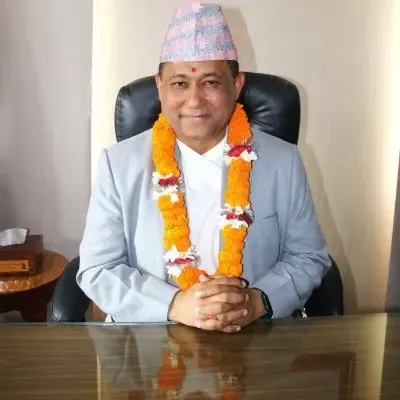
Nepal's Foreign Minister Shishir Khanal is poised to make history as the first Cabinet member to travel abroad after the formation of the new government. He will address critical issues at the upcoming Indian Ocean Conference in Mauritius, focusing on regional cooperation and governance.
Key Takeaways
Minister Shishir Khanal to attend the Indian Ocean Conference in Mauritius.
The conference focuses on regional cooperation and governance.
Key themes include maritime security and economic development .
First Cabinet minister to travel abroad under PM Balendra Shah 's government.
Engagement with Asian and African counterparts is expected.
Kathmandu, April 7 (NationPress) Nepal's Foreign Minister Shishir Khanal is preparing to attend the ninth Indian Ocean Conference, which is set to take place from April 10 to 12 in Mauritius.
The event is being jointly organized by India's Ministry of External Affairs, the India Foundation, a think tank based in New Delhi, along with the Government of Mauritius. This annual conference has been a prominent platform since 2016, gathering global leaders and experts to discuss pressing regional and global issues in the Indian Ocean Region (IOR).
Minister Khanal will be the first Cabinet member to travel internationally after the new government led by Prime Minister Balendra Shah took office on March 27.
“Minister Khanal is expected to fly to Mauritius later this week for the conference,” stated Lok Bahadur Poudel Chettri, spokesperson for the Foreign Ministry, in an interview with IANS. “Preparations are underway for the minister's participation in this important event.”
Chettri also mentioned that the foreign minister is likely to speak at the conference, with topics for his address currently being formulated. He is anticipated to engage with numerous counterparts from both Asia and Africa.
This annual gathering serves as a critical international forum focused on enhancing regional collaboration and tackling both emerging and traditional challenges within the strategically vital IOR.
This year's conference theme, 'Collective Stewardship for Indian Ocean Governance', is expected to steer discussions among heads of government, senior officials, private sector representatives, scholars, and policy analysts, as highlighted on the India Foundation's website.
Key discussion areas will include maritime security, economic development, environmental sustainability, and the evolving geopolitical landscape.
“The conference aims to facilitate dialogue and collaboration among nations bordering the Indian Ocean, as well as key global powers with vested interests in the region,” noted the foundation.
Since its inception in 2016, this forum has become an essential venue for advancing regional cooperation, with countries like India, Sri Lanka, Australia, Oman, and Singapore playing significant roles throughout its proceedings.
Over the years, the conference has delved into a broad range of issues, from traditional security matters such as naval power and territorial disputes to emerging challenges like climate change, natural disasters, and economic disruptions.
Point of View
Nepal's involvement in the Indian Ocean Conference signifies a commitment to regional diplomacy and international cooperation. Minister Khanal's participation underscores the importance of addressing both traditional and emerging challenges in the region, enhancing Nepal's standing on the global stage.
NationPress
19 Sept 2026
Frequently Asked Questions
What is the Indian Ocean Conference?
The Indian Ocean Conference is an annual forum that convenes leaders and experts to discuss key issues affecting the Indian Ocean Region, focusing on regional cooperation and governance.
When will the conference take place?
The ninth Indian Ocean Conference is scheduled for April 10 to 12 in Mauritius.
Who is attending the conference?
Nepal's Foreign Minister Shishir Khanal will represent Nepal, among other global leaders and experts.
What topics will be discussed at the conference?
Key topics include maritime security, economic development, environmental sustainability, and geopolitical dynamics.
Why is Minister Khanal's attendance significant?
He will be the first Cabinet minister to travel abroad after the formation of the new government, marking a pivotal moment for Nepal's foreign relations.