Nepal FM Shishir Khanal visits China June 14–17, days after India trip
Synopsis
Just seven days after leaving New Delhi, Nepal's Foreign Minister Shishir Khanal is heading to Beijing — a sequencing that is itself a diplomatic statement. With the new Rastriya Swatantra Party government's China policy still taking shape, and BRI projects stalled, this four-day visit could set the tone for Kathmandu's great-power balancing act for years to come.
Key Takeaways
Nepal's Foreign Minister Shishir Khanal will visit China from 14 to 17 June , just one week after returning from India .
Khanal will hold bilateral talks with Chinese FM Wang Yi in Beijing and meet other senior Chinese officials.
He will participate in an investment conference at the Nepali Embassy in Beijing to attract Chinese FDI.
China has committed the largest share of annual FDI in Nepal over the past decade, though India leads in accumulated FDI stock.
Analysts say Beijing wants to gauge the new Rastriya Swatantra Party government's stance on China's core interests, including the One-China policy.
Progress on Belt and Road Initiative (BRI) projects in Nepal is expected to be a key agenda item.
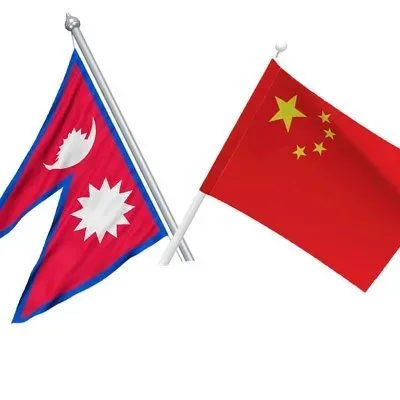
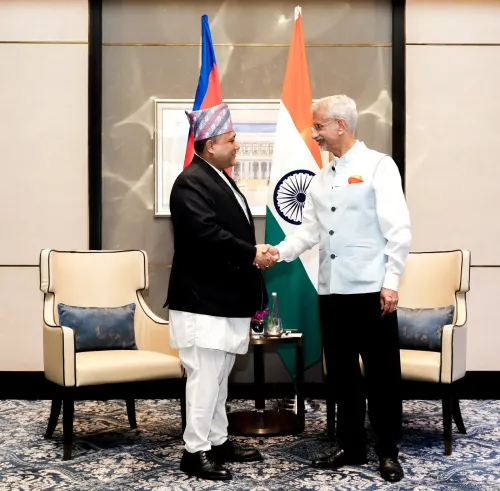
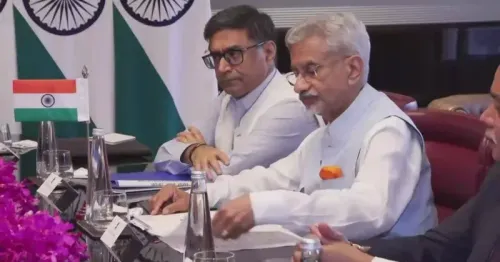
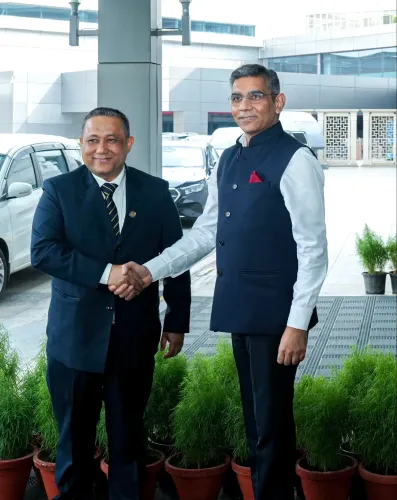
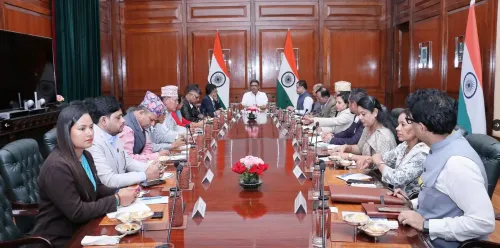
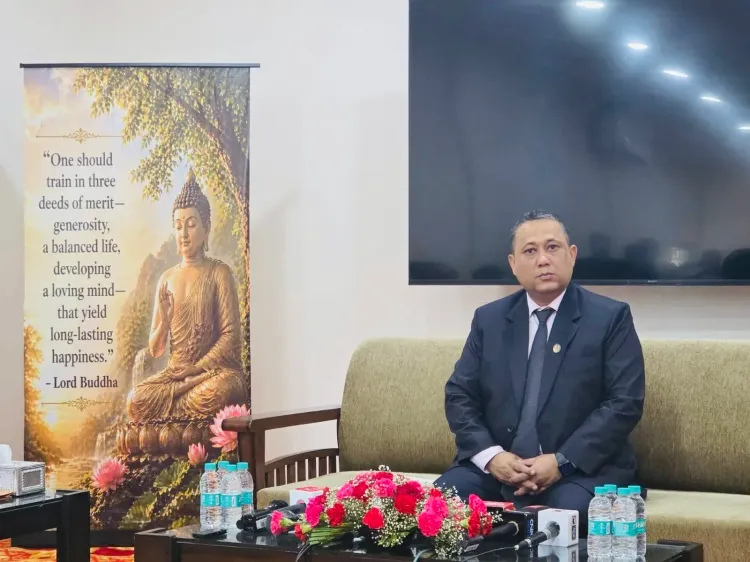
Nepal's Foreign Minister Shishir Khanal will undertake an official four-day visit to China from 14 to 17 June, the foreign ministries of both countries confirmed on Friday — just one week after Khanal returned from New Delhi. The back-to-back diplomatic engagements with its two giant neighbours signal Kathmandu's intent to maintain the delicate balancing act that has defined Nepal's foreign policy for decades.
What the Visit Covers
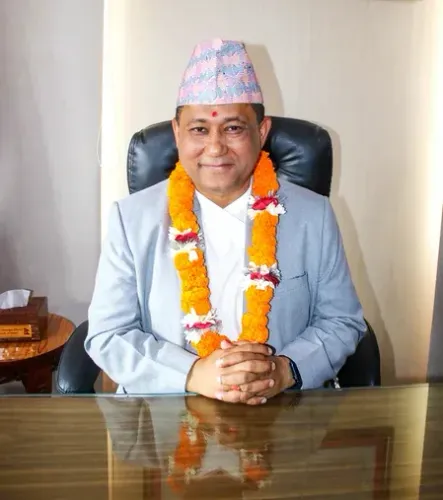
Khanal will travel to Beijing at the invitation of Chinese Foreign Minister Wang Yi, who also serves as a member of the Political Bureau of the Communist Party of China Central Committee. According to Nepal's Foreign Ministry, Khanal will hold bilateral talks with Wang Yi, focusing on matters of mutual interest and ways to deepen Nepal-China cooperation. He is also scheduled to meet other senior Chinese dignitaries.
A key component of the trip is an investment conference organised by the Nepali Embassy in Beijing, where Khanal will engage with members of the Chinese business community to promote foreign direct investment in Nepal.
China's Growing Economic Footprint in Nepal
The visit takes on added significance given China's expanding economic role in Nepal. According to Nepal's Department of Industry, Chinese investors have committed the largest share of foreign direct investment in Nepal in most years over the past decade. However, in terms of accumulated FDI stock, India continues to lead due to the actual volume of investments realised on the ground.
Former Nepali Ambassador to China Bishnu Pukar Shrestha noted that Beijing will also be keen to see faster implementation of projects under the Belt and Road Initiative (BRI), where progress has been limited. 'For Nepal, Chinese support in the areas of the three Cs — connectivity, communication and climate — is important,' Shrestha said.
The Geopolitical Balancing Act
The visit comes as Nepal's new government, led by Prime Minister Balendra Shah of the Rastriya Swatantra Party, seeks to navigate relations with both India and China. Shah has repeatedly affirmed his government's commitment to Nepal's longstanding foreign policy principles, and the annual budget for fiscal year 2026–27 explicitly states that the government will 'strengthen balanced foreign relations based on mutual benefit, national dignity and sovereign interests while mobilising soft power for economic prosperity.'
Nepal's draft National Commitment Paper has articulated a policy of 'equal distance and equal proximity' with all countries, rejecting military alliances and arms races as threats to global peace. In practice, however, Nepal's ties with India remain uniquely layered — shaped by shared geography, culture, religion, an open border, and deep economic interdependence.
What Beijing Wants to Understand
Analysts say the visit presents an early opportunity for both sides to take stock of each other's positions under Nepal's new political dispensation. According to Shrestha, China is particularly attentive to how the Rastriya Swatantra Party-led government will approach issues tied to Beijing's core interests. 'Tibet and Taiwan are two of China's core security interests, and China will work with any government in Nepal that upholds the One-China policy,' he said.
This is the first high-level diplomatic exchange between Kathmandu and Beijing under the current government, and its outcome is expected to shape the trajectory of Nepal-China engagement in the months ahead.
Point of View
Beijing the next — is less a coincidence than a calibrated signal from Kathmandu that no single neighbour gets priority. But symmetry in optics does not guarantee symmetry in outcomes: India's accumulated FDI lead and open-border ties give it structural depth that a four-day investment conference cannot replicate. The more consequential test is whether Khanal can extract concrete BRI movement from Beijing, where project implementation has lagged commitments for years. If he returns with only goodwill statements, the visit will have served China's messaging needs more than Nepal's development ones.
NationPress
22 Sept 2026
Frequently Asked Questions
Why is Nepal FM Shishir Khanal visiting China in June 2025?
Khanal is visiting China from 14 to 17 June at the invitation of Chinese FM Wang Yi to hold bilateral talks and strengthen Nepal-China relations. The visit also includes an investment conference at the Nepali Embassy in Beijing aimed at attracting Chinese FDI into Nepal.
What is the significance of the visit coming right after Khanal's India trip?
The back-to-back visits to India and China reflect Nepal's stated policy of 'equal distance and equal proximity' with all countries. It signals that Prime Minister Balendra Shah's new government is intent on maintaining balanced ties with both its giant neighbours from the outset.
What does China want from Nepal during this visit?
According to analysts, Beijing wants to understand the foreign policy orientation of Nepal's new Rastriya Swatantra Party-led government, particularly its position on China's core interests such as the One-China policy on Tibet and Taiwan. China is also seeking faster implementation of Belt and Road Initiative projects in Nepal.
How significant is China as an investor in Nepal?
China has committed the largest share of annual foreign direct investment in Nepal in most years over the past decade, according to Nepal's Department of Industry. However, India retains the lead in accumulated FDI stock because of the larger volume of investments actually realised on the ground.
What is Nepal's official foreign policy position towards India and China?
Nepal's government has articulated a policy of 'equal distance and equal proximity' with all countries, rejecting military alliances. In practice, ties with India remain uniquely deep due to shared geography, an open border, cultural links, and economic interdependence, while China is a growing strategic and investment partner.