China courts Nepal with FTA and BRI push in fresh South Asia influence bid
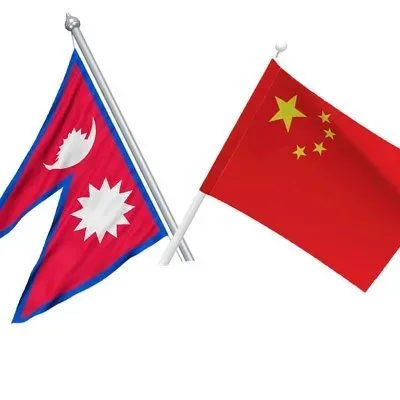
Synopsis
China is making a calculated push into Nepal — proposing an FTA, a Bilateral Investment Agreement, and faster BRI project delivery — just as Kathmandu's new government tries to balance ties with both Beijing and New Delhi. With critical minerals, WTO backing, and border infrastructure all on the table, this is less a goodwill visit and more a structured bid for strategic leverage in the Himalayas.
Key Takeaways
China's Vice Minister for Commerce Yan Dong visited Kathmandu this week, proposing a Free Trade Agreement and a Bilateral Investment Agreement with Nepal.
Beijing urged Nepal to create a one-stop service for Chinese businesses and offered to accelerate stalled infrastructure at Tatopani and Rasuwagadhi border crossings.
China also sought Nepal's support in WTO arbitration and on critical minerals policy — signalling broader strategic interests.
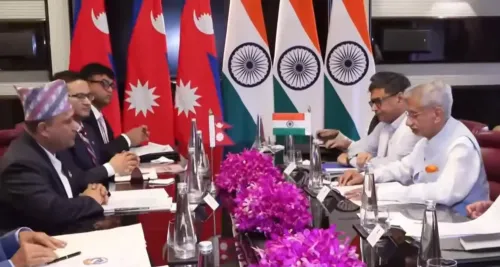
Nepal's new government is pursuing a deliberate balancing strategy, with Foreign Minister Shisir Khanal visiting India before travelling to China last month.
Domestic scepticism over BRI projects persists in Nepal, with the ruling RSP having dropped a BRI industrial park in Jhapa from its election manifesto.
China first proposed a BIA with Nepal in 2012 ; Nepal has since signed investment protection pacts with six countries including France , Germany , and Britain .
China has intensified its diplomatic and economic outreach to Nepal, with Vice Minister for Commerce Yan Dong visiting Kathmandu this week to propose a Free Trade Agreement (FTA), a Bilateral Investment Agreement (BIA), and faster delivery of stalled infrastructure projects. The move signals Beijing's renewed effort to deepen its foothold in South Asia, coming on the heels of its engagement with Bangladesh.
What China Is Offering Nepal
Yan Dong reportedly proposed that Nepal establish a one-stop service centre for Chinese businesses and offered to expedite long-delayed infrastructure work at key border crossings, including Tatopani and Rasuwagadhi. Beijing has also sought Nepal's support in WTO arbitration and on issues related to critical minerals — a diplomatic ask that points to China's interest in securing both political backing and commercial footholds in the Himalayan nation.
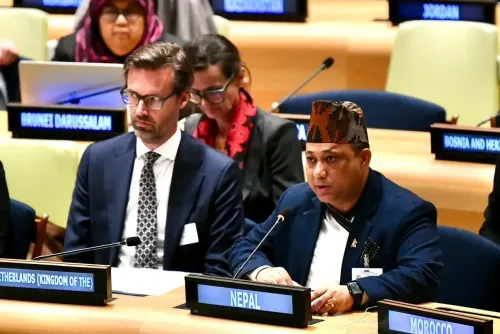
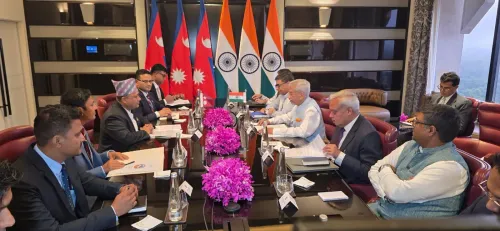
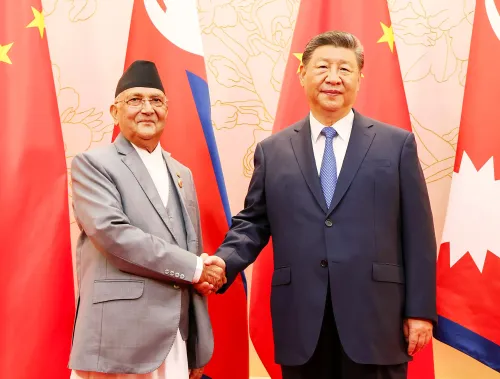
The visit follows Nepal Foreign Minister Shisir Khanal's meeting with Chinese Foreign Minister Wang Yi in Beijing last month — the first diplomatic trip to China by Nepal's new government since it assumed office earlier this year. Notably, Khanal's Beijing visit came after a prior trip to India, underscoring Kathmandu's deliberate dual-engagement strategy.
The BRI Question and Nepal's Caution
China's renewed push arrives against a backdrop of domestic scepticism in Nepal over Belt and Road Initiative (BRI) projects. In the run-up to the March 5 Nepal election, a multi-billion-rupee industrial park near the India border in Jhapa district — part of the BRI — drew attention when the Rastriya Swatantra Party (RSP), now in government, dropped it from its election manifesto.
Sections within Nepal have raised concerns about the financial implications of BRI projects, pointing to the debt difficulties faced by Sri Lanka and Pakistan following similar Chinese investments. Critics argue that large, opaque foreign investments, if not transparently financed and locally beneficial, can create economic dependency and public resentment that Beijing may exploit to extract political concessions.
Nepal's Balancing Act Between Two Giants
Unlike the previous communist-led government, the current administration in Kathmandu is widely seen as pursuing a nationalist, balanced approach between India and China. The incumbent Prime Minister is largely regarded as attempting to leverage ties with both neighbours to extract economic benefits while preserving strategic autonomy.
According to analysts, Kathmandu may be seeking to convert the India-China competition for influence into bargaining power — improving relations with New Delhi while keeping Chinese investment and infrastructure cooperation on track. Despite Beijing's outreach, Nepal remains deeply connected to India through geography, trade, employment, and cultural ties.
Strategic Implications for India
Chinese-funded roads and cross-border trade zones at Tatopani and Rasuwagadhi are commercially significant but carry geopolitical weight. Analysts note that improved connectivity along Nepal's northern frontier could serve dual-use purposes in a crisis, shortening logistics timelines and complicating India's strategic calculus in the Himalayas.
An FTA or BIA granting privileges to Chinese investors could also widen Nepal's trade asymmetry and gradually divert its supply-chain linkages away from India, affecting border trade, informal commerce, and the livelihoods of communities dependent on cross-border markets.
The BIA: A Long History
China first proposed a Bilateral Investment Agreement with Nepal in 2012, a year after Kathmandu and New Delhi signed a similar pact in 2011 — the latter currently under challenge in Nepal's Supreme Court. After agreeing in principle to a BIA in 2014 and exchanging draft texts, Nepal reviewed the proposal and submitted suggested revisions seeking Beijing's endorsement. Nepal has already signed bilateral investment protection agreements with six other countries, including France, Germany, Britain, Mauritius, Qatar, and Finland.
As Beijing pursues what analysts describe as its long-standing view of Nepal as a South Asian foothold, the pace and terms of any eventual FTA or BIA will be closely watched by New Delhi and regional observers alike.
Point of View
Then extract political concessions once dependency deepens. Nepal's new government appears more alert to this dynamic than its predecessor, but the structural pull of Chinese capital is hard to resist when India's own connectivity investments in Nepal have moved slowly. The critical minerals ask is the most telling detail: it reveals that China is not merely seeking trade flows but positioning itself in resource-linked negotiations that will matter for decades. New Delhi should read Yan Dong's visit not as a bilateral Nepal-China affair but as a signal that the Himalayan buffer is being contested in new economic registers — and respond with more than diplomatic reassurance.
NationPress
8 Oct 2026
Frequently Asked Questions
What did China's Vice Minister Yan Dong propose during his Nepal visit?
Yan Dong reportedly proposed a Free Trade Agreement and a Bilateral Investment Agreement with Nepal, urged Kathmandu to set up a one-stop service centre for Chinese businesses, and offered to expedite stalled infrastructure at the Tatopani and Rasuwagadhi border crossings. He also sought Nepal's support on WTO arbitration and critical minerals issues.
Why is China intensifying its outreach to Nepal now?
China is seeking to deepen its economic and strategic presence in South Asia following its engagement with Bangladesh. Nepal's new government, seen as more balanced than its predecessor, presents an opening for Beijing to revive stalled BRI projects and secure new trade and investment agreements.
How is Nepal balancing its ties with India and China?
Nepal's Foreign Minister Shisir Khanal visited India before travelling to Beijing last month, reflecting a deliberate dual-engagement strategy. The current government is widely seen as nationalist and intent on extracting economic benefits from both neighbours while preserving strategic autonomy.
What concerns exist in Nepal about Chinese investment?
Sections within Nepal have raised concerns about the financial implications of BRI projects, citing the debt difficulties experienced by Sri Lanka and Pakistan with similar Chinese investments. The ruling RSP had dropped a BRI industrial park in Jhapa district from its election manifesto ahead of the March 5 polls.
What is the history of the China-Nepal Bilateral Investment Agreement?
China first proposed a BIA with Nepal in 2012, a year after Nepal and India signed a similar agreement in 2011. Nepal agreed in principle in 2014 and exchanged draft texts, but the agreement remains unsigned. Nepal has already signed investment protection pacts with six countries, including France, Germany, and Britain.