Nepal's BRI dreams stall nine years after China MoU: No project delivered
Synopsis
Nine years after signing a BRI cooperation MoU with China, Nepal has not a single delivered project to show — not even the Pokhara airport Kathmandu refuses to recognise as BRI. Financing rows, geopolitical tightropes between India and the US, and a shortage of project-ready proposals have kept the initiative frozen, even as a new government reaffirms its cross-border railway ambitions for 2026-27.
Key Takeaways
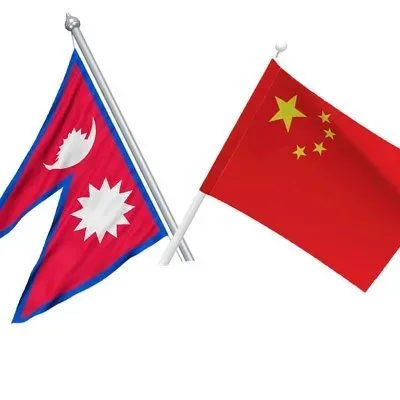
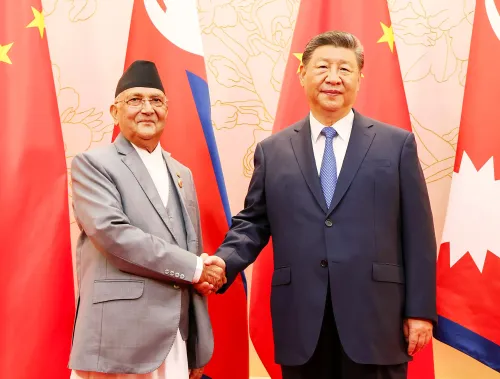
Nepal and China signed a BRI MoU on 12 May 2017 ; nine years on, zero projects have been implemented.
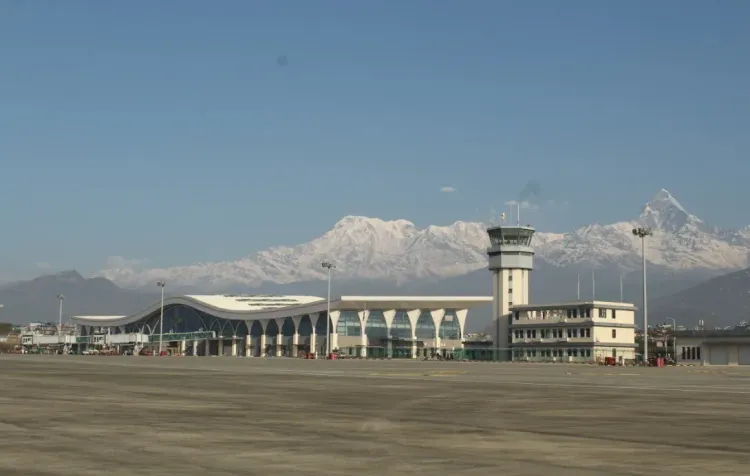
Nepal rejects China's claim that Pokhara International Airport is a BRI project, since negotiations predate the initiative's 2013 launch.
Nepal's original list of 35 proposed BRI projects was trimmed to nine , then revised to 10 under the December 2024 implementation plan.
A financing dispute over 'grant' versus 'loan' modalities was partially resolved with the term 'aid assistance financing' during PM Oli's December 2024 China visit.
Geopolitical pressure from India and the United States — both opposed to BRI expansion — significantly shapes Nepal's approach.
Active preparatory work is underway only on the Kerung-Kathmandu Railway feasibility study and the China-Nepal Friendship Industrial Park in Jhapa .
Nepal has not seen a single project implemented under China's Belt and Road Initiative (BRI) in the nine years since signing a cooperation Memorandum of Understanding (MoU) with Beijing on 12 May 2017 — a standstill rooted in financing disputes, geopolitical pressure, and a persistent absence of project-ready proposals. The deadlock continues in 2026 despite a fresh BRI implementation plan signed during then Prime Minister K P Sharma Oli's visit to China in December 2024.
A Decade of Proposals, Zero Deliveries
After the 2017 MoU, Nepal put forward 35 projects for BRI consideration. That list was trimmed to nine at China's request, and later revised again to 10 projects — including a cross-border railway — under the December 2024 implementation plan. Yet not one has crossed from paper to ground.
In June 2023, then Foreign Minister N P Saud told Nepal's Parliament that not a single BRI project had been executed in the Himalayan nation. That assessment remains unchanged. The new government under Prime Minister Balendra Shah has, however, reaffirmed through its Policies and Programmes for 2026-27 that it will pursue a cross-border railway with China.
The Pokhara Airport Dispute
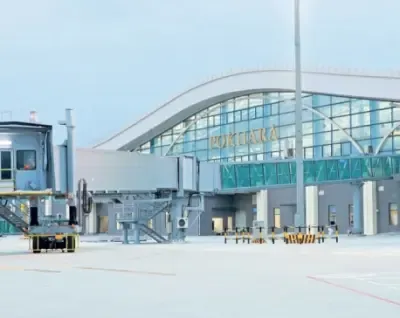
Beijing has unilaterally categorised the Pokhara International Airport in western Nepal as a landmark BRI achievement. Kathmandu disputes this: negotiations for the airport began before Chinese President Xi Jinping announced the BRI in 2013, and it was never formally brought under the BRI framework. Critics have since pointed to the airport — from which no regular international flights have operated even three years after its inauguration — as an example of what they describe as China's alleged debt-trap diplomacy.
Financing Deadlock and the 'Grant' Dispute
A core obstacle has been the absence of agreed financing terms. Former Foreign Minister Prakash Sharan Mahat, in whose tenure the 2017 MoU was signed, said the confusion over implementation conditions — grants versus loans, interest rates, and the level of Chinese manpower and materials — has been a primary reason for the stall.
'One of the main reasons why the BRI failed to kick off in Nepal is confusion over the conditions under which BRI projects would be implemented,' Mahat said. His party, the Nepali Congress, has insisted on grant funding only, arguing that Nepal's debt level is already elevated. 'We can borrow loans at a later stage as well, as a large amount of promised Chinese grants have remained unused so far,' he added.
During the December 2024 negotiations, Nepal proposed a 'grant assistance financing' modality. China reportedly removed the word 'grant,' substituting 'assistance financing' — a term Nepal found ambiguous because it could encompass commercial loans. Nepal then proposed 'aid assistance financing,' to which China agreed. The formulation is designed to cover grants, soft loans, and technical assistance, but implementation details remain unsettled.
Geopolitical Pressures: India, the US, and the Debt-Trap Debate
Nepal's BRI calculus is inseparable from its geopolitical position. According to a briefing by the Centre for Social Innovation and Foreign Policy, Nepal's navigation of the BRI is heavily shaped by the perceptions of its two most consequential partners — India and the United States.
India has opposed the BRI from the outset, primarily because the China-Pakistan Economic Corridor (CPEC) passes through Pakistan-occupied Kashmir (PoK), over which India asserts sovereignty. New Delhi also reportedly views BRI infrastructure in its neighbourhood as a potential vehicle for Chinese surveillance and strategic positioning. US officials have repeatedly warned Nepal about the risks of unsustainable debt associated with Chinese-funded infrastructure, citing a lack of transparency in BRI project structures.
The case of Hambantota Port in Sri Lanka — leased to a Chinese company for 99 years after Colombo struggled to repay Chinese loans — is frequently cited in these conversations as a cautionary precedent.
What Is Actually Moving
A detailed feasibility study is currently underway for the proposed Kerung-Kathmandu Railway, while preparatory work has advanced on the proposed China-Nepal Friendship Industrial Park in the eastern district of Jhapa. One project originally proposed under BRI — the Phukot Karnali Hydroelectric Project (480 MW) — is now being developed through a joint venture between India's NHPC Limited and Vidhyut Utpadan Company Limited (VUCL), effectively moving outside the BRI fold.
An MoU was signed in 2020 between Nepal's Hydroelectricity Investment and Development Company Limited and PowerChina for a feasibility study of the Tamor Storage Hydroelectric Project (756 MW), but officials say disagreements over the development model persist.
Former Nepali Ambassador to China Bishnu Pukar Shrestha said the problem largely lies with Nepal itself. 'The government should submit a list of projects whose feasibility studies have been completed, along with details of the funding Nepal expects from China and the contribution Nepal itself is willing to make,' he said, adding that bilateral agreements on individual projects remain possible even without an umbrella BRI plan. Whether Kathmandu can move from frameworks to foundations in the years ahead will determine whether the BRI ever delivers anything tangible for Nepal.
Point of View
Landlocked state navigates competing great-power pressures while lacking the institutional capacity to move from signing ceremonies to shovels in the ground. The financing row over 'grant' versus 'loan' terminology consumed years that could have been spent on feasibility work. More telling is the admission by former Ambassador Shrestha that Nepal itself has not produced a credible pipeline of ready projects — suggesting the bottleneck is as much domestic as it is geopolitical. With Pokhara airport sitting largely idle and the Hambantota comparison now a fixture of regional discourse, Beijing's BRI brand in South Asia is under strain. Whether Nepal's new government can convert the 2024 framework into actual infrastructure, or whether this becomes another cycle of announcements, will be a significant test of Kathmandu's capacity to translate diplomatic agreements into development outcomes.
NationPress
30 Sept 2026
Frequently Asked Questions
Has any BRI project been implemented in Nepal?
No. As of 2026, not a single project has been implemented in Nepal under the Belt and Road Initiative, nine years after the two countries signed a BRI cooperation MoU in May 2017. Former Foreign Minister N P Saud confirmed this to Nepal's Parliament in June 2023, and the situation has not changed since.
Why is the Pokhara International Airport not counted as a BRI project by Nepal?
Nepal does not recognise the Pokhara International Airport as a BRI project because negotiations for its construction began before Chinese President Xi Jinping announced the BRI in 2013, and it was never formally brought under the BRI framework. China has unilaterally categorised it as a BRI achievement, a claim Kathmandu disputes.
What is the main reason BRI projects have stalled in Nepal?
The primary obstacle has been disagreement over financing terms — specifically whether China would provide grants or loans, and at what interest rates. Former Foreign Minister Prakash Sharan Mahat has cited this confusion as the leading cause of the stall, alongside Nepal's failure to submit a pipeline of project-ready proposals.
How do India and the US influence Nepal's BRI decisions?
Both India and the United States have actively discouraged Nepal from advancing BRI projects. India opposes the BRI because the China-Pakistan Economic Corridor passes through Pakistan-occupied Kashmir. The US has repeatedly warned Nepal about debt-trap risks and a lack of transparency in Chinese-funded infrastructure. According to the Centre for Social Innovation and Foreign Policy, these partner perceptions heavily shape Nepal's approach.
Which BRI-linked projects are currently in preparatory stages in Nepal?
A detailed feasibility study is underway for the proposed Kerung-Kathmandu Railway, and some preparatory work has advanced on the China-Nepal Friendship Industrial Park in the eastern district of Jhapa. Both remain in pre-implementation phases with no confirmed construction timelines.