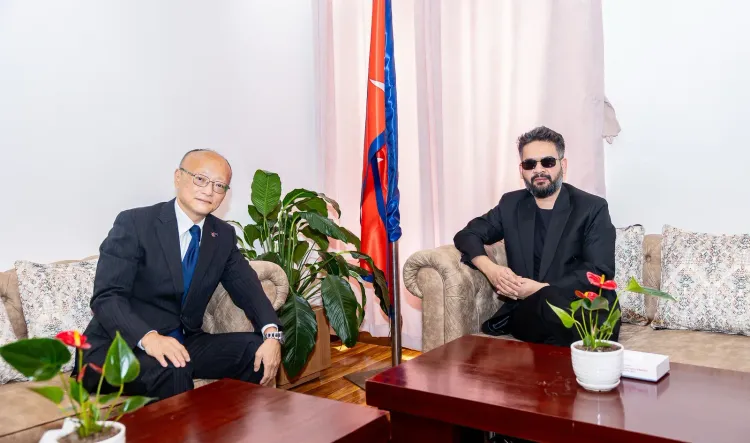
Nepal PM Balendra Shah holds first one-on-one meet with ADB President Kanda
Synopsis
Nepal's PM Balendra Shah, who had refused one-on-one meetings with foreign officials since taking office — including senior US and Indian envoys — made a pointed exception for ADB President Masato Kanda. The meeting coincided with a US$165 million loan signing and the inauguration of two power substations, signalling that development finance, not diplomatic rank, is the threshold for individual access under Shah's administration.
Key Takeaways
Nepal PM Balendra Shah held his first one-on-one meeting with a foreign dignitary on 7 July 2025 , receiving ADB President Masato Kanda in Kathmandu.
Shah had previously declined individual meetings with US and Indian envoys, preferring collective diplomatic interactions since taking office on 27 March .
Nepal and the ADB signed financing agreements for two projects worth a combined US$165 million — US$115 million for water and sanitation and US$50 million for border trade infrastructure.
The ADB's active portfolio in Nepal stands at US$3.94 billion .
Two electricity transmission substations were virtually inaugurated during Kanda's visit to strengthen power supply in Kathmandu .
Foreign policy experts say the meeting was appropriate but that protocol should not block engagement with strategically important partners.
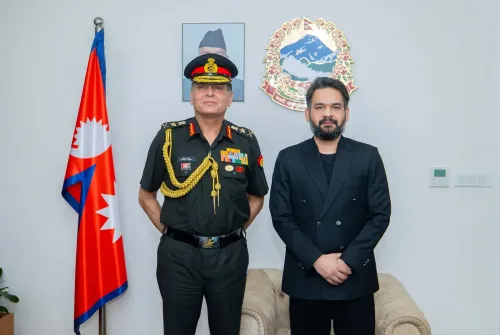
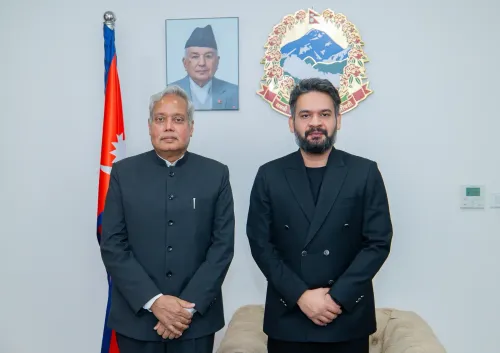
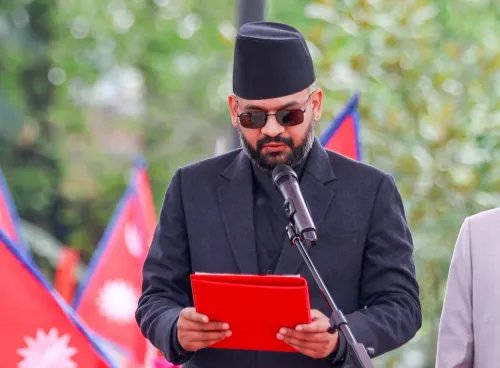
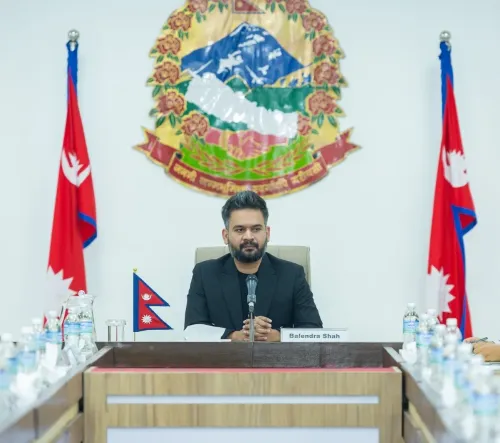
Nepal's Prime Minister Balendra Shah on Tuesday, 7 July 2025, broke from his established practice of avoiding individual meetings with foreign officials, holding his first one-on-one engagement with Asian Development Bank (ADB) President Masato Kanda in Kathmandu. The meeting, confirmed by the Prime Minister's Secretariat, came three and a half months after Shah assumed office on 27 March and marks a notable diplomatic moment for a leader who has so far insisted on collective interactions with foreign envoys.
Background: Shah's Strict Protocol
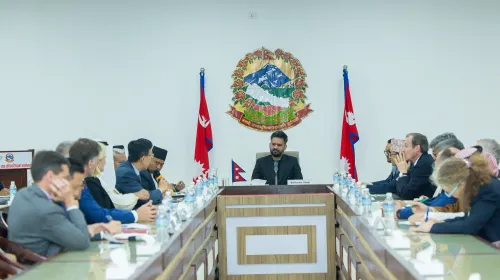
Since taking office, Shah had consistently declined individual meetings with foreign diplomats, preferring group interactions as a way to enforce uniform protocol. On 8 April, he held a collective session with Kathmandu-based diplomats. On 26 May, he met jointly with 23 European Union Ambassadors and deputy heads of mission, alongside envoys from Thailand, Russia, Australia, Myanmar, the UAE, Norway, Finland, Malaysia, and Brazil.
Notably, Shah had earlier declined requests to meet Paul Kapur, Assistant Secretary for South and Central Asian Affairs at the US State Department, and Sergio Gor, US President Donald Trump's Special Envoy for South and Central Asian Affairs and US Ambassador to India. A planned visit to Nepal by Indian Foreign Secretary Vikram Misri was also reportedly postponed a few weeks ago.
Why the ADB Meeting Was Different
The half-hour meeting with Kanda was framed around deepening the six-decade-long development partnership between Nepal and the ADB. According to Deepa Dahal, Press and Research Advisor to Prime Minister Shah, the Prime Minister expressed confidence that Nepal would enter a new phase of development through good governance and transparency.
Both sides held discussions on promoting hydropower and tourism as pillars of Nepal's economy, and on expanding cooperation in digitalisation and tourism road infrastructure, according to the Prime Minister's Secretariat.
What the ADB President Said
Kanda reaffirmed the ADB's commitment to expanding development assistance to Nepal, describing the bank as a long-term partner in the country's economic growth. He praised Nepal's 'significant economic potential, strong public mandate, and young leadership,' and said the country's 'commitment to reform are inspiring.'
Kanda had arrived in Nepal on Monday and earlier met Finance Minister Swarnim Wagle. During that meeting, Nepal and the ADB signed financing agreements for two projects backed by concessional loans totalling US$165 million. A US$115 million project will improve water supply and sanitation for more than 850,000 people across municipalities, while a US$50 million loan will modernise Nepal's border trade infrastructure.
Infrastructure Milestones and ADB Portfolio
On the same day, Kanda, alongside Minister for Energy Biraj Bhakta Shrestha and Norway's Ambassador to Nepal Dagny Mjøs, virtually inaugurated two electricity transmission substations expected to strengthen power supply in Kathmandu and other major demand centres. He also visited the Distribution Command and Control Center and an ADB-financed Data Center.
'These investments are helping lay the foundations for cross-border power trade. ADB will continue supporting Nepal in harnessing clean energy as a driver of growth and deeper regional integration across South Asia,' Kanda said. The ADB currently maintains an active portfolio of US$3.94 billion in Nepal.
Expert View: Protocol vs National Interest
Foreign policy experts have argued that the Prime Minister's meeting decisions should be driven by Nepal's national interests rather than rigid protocol. Former foreign policy adviser Arun Subedi, who served under then Prime Minister Sher Bahadur Deuba, said Shah's decision to meet the ADB President was appropriate given the institution's role as one of Nepal's most significant development lenders.
'Our relations with institutions such as the ADB and the World Bank are also lender-borrower relationships, and meeting their top officials serves Nepal's national interest,' Subedi said. He added that protocol 'should not become a barrier to meeting representatives of countries or institutions that are strategically important to Nepal.' Whether Tuesday's meeting signals a broader recalibration of Shah's diplomatic approach remains to be seen.
Point of View
But it carries real costs. Declining individual meetings with US envoys and reportedly postponing India's Foreign Secretary visit risks being read as aloofness toward Nepal's two most consequential neighbours at a moment when Kathmandu needs both. The exception carved out for the ADB President reveals the logic — development finance has a direct, measurable impact on Nepal's fiscal position, making it harder to deprioritise. But foreign policy rarely runs on a single variable, and a rigid protocol that privileges multilateral lenders over bilateral partners could quietly narrow Nepal's room for manoeuvre in a region where India and the US are actively competing for influence.
NationPress
6 Oct 2026
Frequently Asked Questions
Why did Nepal PM Balendra Shah agree to meet ADB President Masato Kanda one-on-one?
Shah made an exception for Kanda because the ADB is one of Nepal's largest multilateral development partners and lenders, with an active portfolio of US$3.94 billion. Former advisers noted that meeting top officials of lending institutions directly serves Nepal's national interest, unlike routine diplomatic calls.
What agreements were signed during ADB President Kanda's Nepal visit?
Nepal and the ADB signed financing agreements for two projects backed by concessional loans totalling US$165 million. A US$115 million loan will improve water supply and sanitation for over 850,000 people, while a US$50 million loan will modernise border trade infrastructure.
Which foreign officials had PM Shah declined to meet before this?
Shah had declined individual meetings with Paul Kapur, the US Assistant Secretary for South and Central Asian Affairs, and Sergio Gor, the US Special Envoy for South and Central Asian Affairs. A planned visit by Indian Foreign Secretary Vikram Misri was also reportedly postponed.
What is Nepal PM Shah's diplomatic protocol regarding foreign envoys?
Since taking office on 27 March, Shah has preferred collective interactions over individual meetings with foreign diplomats. He held a group session with Kathmandu-based diplomats on 8 April and a joint meeting with 23 EU Ambassadors and several other envoys on 26 May.
Does Shah's meeting with the ADB President signal a change in his diplomatic approach?
It remains unclear. The Prime Minister's Secretariat has not indicated any formal shift in protocol. Foreign policy experts say meeting decisions should be guided by Nepal's national interests rather than rigid rules, but whether this is a one-off or a broader recalibration is yet to be confirmed.