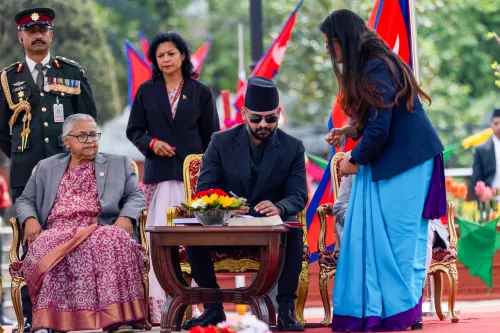
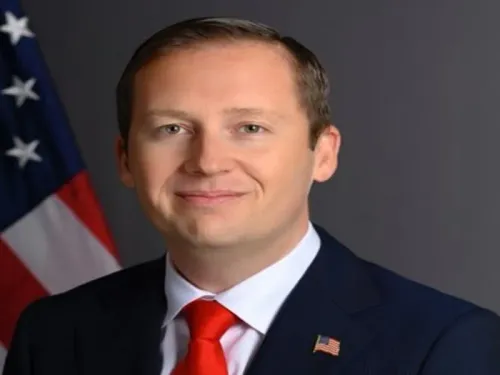
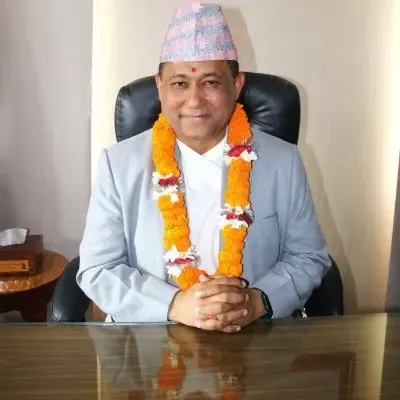
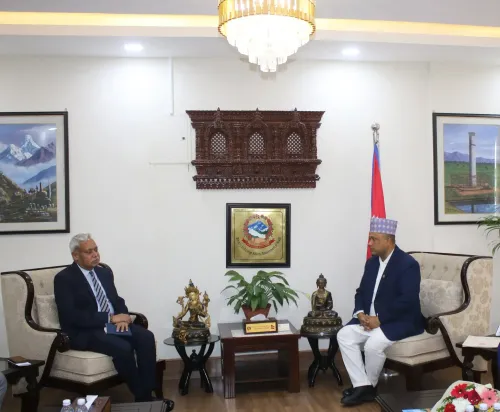
Nepal PM Shah's advisor reportedly met NSA Doval in Delhi amid India ties uncertainty
Synopsis
Nepal PM Balendra Shah's most trusted advisor reportedly held a back-channel meeting with NSA Ajit Doval in New Delhi — a move that bypassed Nepal's Foreign Ministry and contradicts Shah's own strict no-bilateral-diplomat policy. The advisor denies it. The episode lays bare the tensions and contradictions in Nepal's carefully cultivated posture of equidistance between India and China.
Key Takeaways
Kumar Byanjankar , Chief Advisor to Nepal PM Balendra Shah , reportedly met India's NSA Ajit Doval in New Delhi during the first week of July 2025 , according to Setopati.com .
Nepal's Ministry of Foreign Affairs was reportedly not formally informed of the visit.
RSP President Rabi Lamichhane was reportedly aware of the confidential trip.
Byanjankar has 'consistently denied' the reports, per the Kathmandu Post , saying he neither travelled to India nor met senior Indian officials.
Indian Foreign Secretary Vikram Misri's planned visit to Nepal in May was called off, reportedly due to PM Shah's reluctance to engage.
PM Shah is now reportedly preparing to separately meet Indian Ambassador Naveen Srivastava and Chinese Ambassador Zhang Maoming .
Nepal Prime Minister Balendra Shah's Chief Advisor, Kumar Byanjankar (known as Ben), reportedly travelled to New Delhi in the first week of July 2025 and held a meeting with India's National Security Advisor (NSA) Ajit Doval, according to Kathmandu-based news portal Setopati.com, which cited a senior Foreign Ministry source. The visit, if confirmed, would mark a significant back-channel diplomatic contact between Nepal and India at a time when bilateral ties remain in a delicate phase.
What the Reports Claim
According to Setopati.com, Byanjankar's visit to the Indian capital was not formally communicated to Nepal's Ministry of Foreign Affairs, raising questions about the transparency of the engagement. The report further noted that Rabi Lamichhane, President of the ruling Rastriya Swatantra Party (RSP), was reportedly aware of the confidential visit. When senior party leaders asked about the meeting, Lamichhane reportedly told them that Byanjankar had informed him before departing for Delhi.
Byanjankar has been among Prime Minister Shah's most trusted confidants since Shah served as Mayor of Kathmandu Metropolitan City, making his reported role as an informal diplomatic emissary notable.
Byanjankar Denies the Visit
However, the Kathmandu Post reported on the same day — Thursday, 23 July — that Byanjankar has 'consistently denied' the reports, insisting that 'he had neither travelled to India nor held meetings with senior Indian government officials.' The denial leaves the episode unresolved, with no official confirmation from either Kathmandu or New Delhi.
Context: Shah's Cautious Diplomatic Posture
The reported back-channel contact comes against the backdrop of Prime Minister Shah's deliberate shift away from direct engagement with foreign diplomats. Citing concerns that previous administrations had allowed foreign envoys — including lower-ranking diplomatic staff — to access the Prime Minister without Ministry of Foreign Affairs officials present, Shah has avoided one-on-one meetings with ambassadors since taking office.
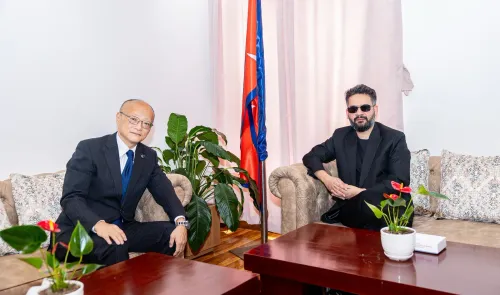
Instead, he held joint meetings with Kathmandu-based ambassadors on 9 April and 26 May — a policy that drew praise from some Nepali diplomats but also prompted questions about whether strict equidistance would serve Nepal's long-term national interests. The only individual exception was his meeting with Asian Development Bank (ADB) President Masato Kanda, who visited Nepal for three days in early July.
India-Nepal Ties Under Strain
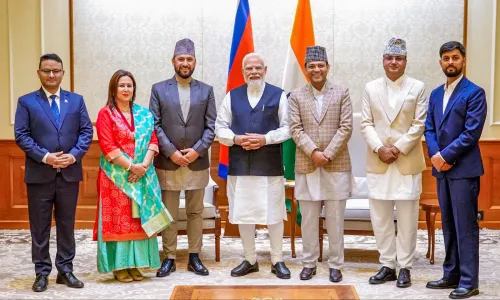
The backdrop to this episode is a notably subdued period in India-Nepal relations. Indian Foreign Secretary Vikram Misri's planned visit to Nepal in May was called off, reportedly due to Shah's reluctance to engage. Although Prime Minister Shah has received an invitation from Prime Minister Narendra Modi to visit India, the proposed trip remains uncertain despite earlier optimism that it would materialise soon.
Local media now reports that Shah is preparing to separately meet Indian Ambassador to Nepal Naveen Srivastava and Chinese Ambassador to Nepal Zhang Maoming — a sign that his strict no-bilateral-meeting posture may be softening.
Nepal's Geopolitical Balancing Act
Nepal occupies a strategically sensitive position between two geopolitical rivals — India and China — while also managing a complex relationship with the United States. Any back-channel outreach to New Delhi, if confirmed, would signal that Kathmandu is seeking to quietly stabilise ties with its southern neighbour even as it maintains a public posture of equidistance. This is the latest in a series of diplomatic signals that suggest Nepal's foreign policy calculus under Shah is still being calibrated.
Point of View
If real, exposes a striking contradiction: a Prime Minister who has publicly refused bilateral meetings with foreign envoys on protocol grounds may have simultaneously dispatched his closest aide for an off-the-books conversation with India's top security official. That the Foreign Ministry was kept out of the loop is the more consequential detail — it suggests either a deliberate institutional bypass or a trust deficit within Shah's own government. Nepal's equidistance doctrine looks coherent on paper, but back-channels to New Delhi — denied or otherwise — reveal that Kathmandu cannot afford to let the relationship with its largest neighbour drift indefinitely. The question is whether Shah can sustain a public posture of strict protocol while quietly managing the relationship through informal channels.
NationPress
22 Oct 2026
Frequently Asked Questions
Did Nepal PM Shah's advisor meet NSA Ajit Doval in Delhi?
According to Kathmandu-based news portal Setopati.com, citing a senior Foreign Ministry source, Chief Advisor Kumar Byanjankar met NSA Ajit Doval in New Delhi during the first week of July 2025. However, Byanjankar has consistently denied the reports, and there has been no official confirmation from either Nepal or India.
Why was Nepal's Foreign Ministry not informed about the reported visit?
According to reports, the visit was confidential and Nepal's Ministry of Foreign Affairs was not formally notified. This is significant because PM Shah has publicly insisted on Foreign Ministry presence during diplomatic engagements, making the reported bypass a notable contradiction.
What is the current state of India-Nepal relations under PM Shah?
Relations are in a cautious phase. Indian Foreign Secretary Vikram Misri's planned visit to Nepal in May was called off, reportedly due to Shah's reluctance. PM Shah has also not yet acted on an invitation from PM Narendra Modi to visit India, though local media reports suggest he may soon meet the Indian and Chinese ambassadors separately.
Why has PM Shah avoided one-on-one meetings with foreign diplomats?
Shah has cited concerns that previous governments allowed foreign envoys — including lower-ranking officials — direct access to the Prime Minister without Foreign Ministry officials present. He instead held joint meetings with ambassadors on 9 April and 26 May, though critics have questioned whether this equidistance policy serves Nepal's national interests.
Who is Kumar Byanjankar and why does his reported role matter?
Kumar Byanjankar, known as Ben, is PM Shah's Chief Advisor and one of his most trusted confidants, a relationship that dates to Shah's tenure as Mayor of Kathmandu Metropolitan City. His reported role as an informal diplomatic emissary to New Delhi — if confirmed — would indicate that the Shah government is managing sensitive India ties outside official Foreign Ministry channels.