Balen Shah govt must inject fresh momentum into Nepal-India ties: Report
Synopsis
A report published on 6 July argues that Nepal's Balen Shah administration must urgently inject new warmth into Nepal-India ties — citing Rabi Lamichhane's five-day India visit and Foreign Minister Khanal's New Delhi talks as early signals of a strategic reset. The real question is whether diplomatic momentum translates into concrete bilateral outcomes.
Key Takeaways
A report published on 6 July calls on Nepal's Balendra Shah administration to impart fresh momentum to Nepal-India relations .
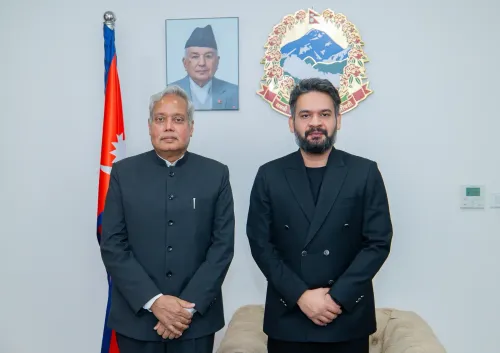
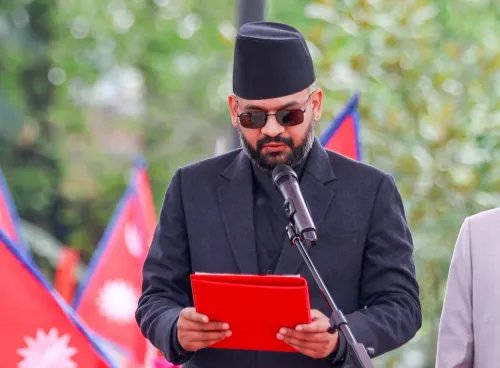
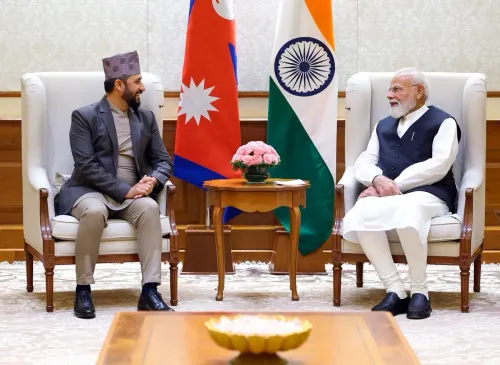
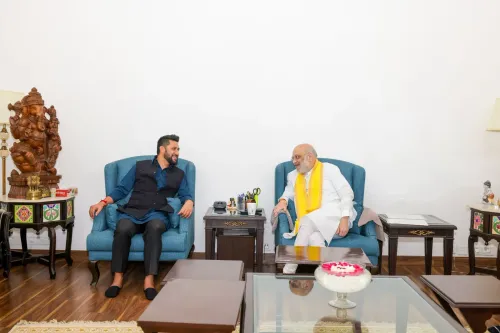
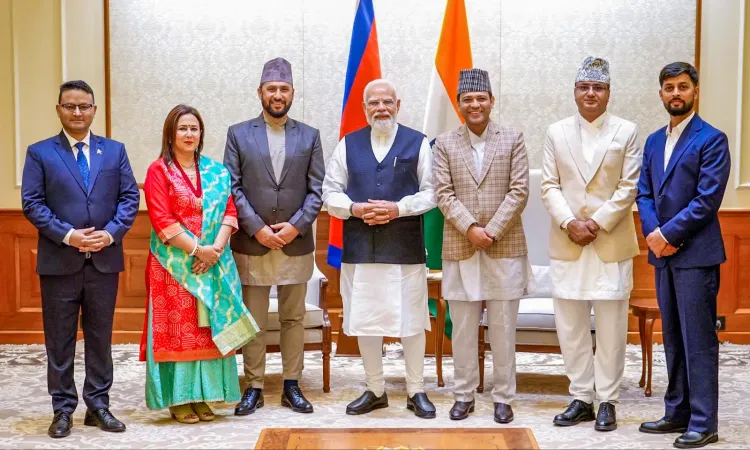
Rabi Lamichhane , Chairman of Nepal's ruling RSP , completed a five-day visit to India at the invitation of the BJP , meeting PM Modi , Home Minister Shah , EAM Jaishankar , NSA Doval , and Foreign Secretary Misri .
Nepal's Foreign Minister Shishir Khanal subsequently visited New Delhi , reaching several preliminary understandings with EAM Jaishankar .
NCP Central Committee member Bishwadeep Pandey argued that concerns rooted in power asymmetry perceptions are 'short-lived and unproductive.' The report notes New Delhi's continued respect for Nepal's sovereignty and strategic autonomy as a foundation for deeper ties.
Nepal's Balendra Shah administration must leave no stone unturned in imparting new momentum and warmth to Nepal-India relations, according to a report published on 6 July, which argues that there are no objective reasons why bilateral ties between the two neighbours should not continue to progress smoothly.
The Case for a Stronger Partnership
Bishwadeep Pandey, a Central Committee member of the Nepali Communist Party (NCP), wrote in an opinion piece that geography, civilisational bonds, deep people-to-people ties, and a shared commitment to democratic ideals provide a stable foundation for the relationship. He cautioned, however, that concerns driven by subjective anxieties and political posturing are 'often short-lived and unproductive.'
'Moving beyond perceptions of power asymmetry and small-state vulnerability is essential to building a pragmatic partnership that advances the well-being of the people of both countries,' Pandey wrote. He noted that while Kathmandu acknowledges India's emergence as a rising global power, New Delhi has continued to respect Nepal's sovereignty and strategic autonomy.
Lamichhane's India Visit and Its Significance
Pandey highlighted the recent five-day visit to India by Rabi Lamichhane, Chairman of Nepal's ruling Rastriya Swatantra Party (RSP), undertaken at the invitation of the Bharatiya Janata Party (BJP). The visit is widely seen as a strategic effort to elevate bilateral ties amid Nepal's evolving political landscape.
Lamichhane held extensive bilateral engagements with top-tier Indian leadership, including Prime Minister Narendra Modi, Home Minister Amit Shah, External Affairs Minister S. Jaishankar, National Security Advisor Ajit Doval, and Foreign Secretary Vikram Misri. According to the report, the breadth of these interactions suggests that India is closely watching and welcoming Nepal's shifting political dynamics.
Foreign Minister Khanal's New Delhi Visit
Following Lamichhane's visit, Nepal's Foreign Minister Shishir Khanal paid an official visit to New Delhi. His meetings with EAM Jaishankar resulted in several preliminary understandings, signalling a positive beginning to bilateral engagement under Nepal's new political dispensation, the report stated. The interactions reaffirmed that New Delhi continues to accord high priority to its relationship with Kathmandu.
Geopolitical Context and the Road Ahead
Pandey framed the bilateral relationship within broader global uncertainty, describing contemporary international dynamics as a 'field of exploding realities' within an 'era of uncertain fluidity.' He argued that nations must remain hyper-vigilant to safeguard national aspirations and core interests — and that Nepal-India ties are no exception.
The report underscored that a corresponding reciprocity is naturally expected from the Indian establishment. This comes amid a period of active diplomatic recalibration in South Asia, with Nepal's domestic political shifts drawing fresh attention from regional powers. How the Shah administration translates high-level diplomatic warmth into tangible outcomes for citizens of both countries will be the defining test ahead.
Point of View
Shah, Jaishankar, Doval, and Misri in a single visit — is unusually dense for a bilateral relationship often managed at arm's length. It signals that New Delhi sees Nepal's current political transition as a strategic opening, not just a diplomatic courtesy. Yet the report's real burden falls on Kathmandu: 'preliminary understandings' from Khanal's visit must be converted into deliverables before the political window closes. Nepal's domestic coalitions are notoriously fragile, and India's interest in the RSP-led dispensation is partly contingent on its staying power. The risk is that both sides invest in optics while structural issues — power trade, border infrastructure, transit rights — remain unresolved.
NationPress
5 Oct 2026
Frequently Asked Questions
What does the report say about Nepal-India relations under Balen Shah?
The report argues that Nepal's Balendra Shah administration must leave no stone unturned in injecting fresh momentum and warmth into Nepal-India relations, with a corresponding reciprocity expected from New Delhi. It concludes there are no objective reasons why bilateral ties should not progress smoothly.
Why was Rabi Lamichhane's India visit significant?
Rabi Lamichhane's five-day visit to India, undertaken at the BJP's invitation, is widely seen as a strategic effort to elevate bilateral ties amid Nepal's evolving political landscape. His meetings with PM Modi, Home Minister Amit Shah, EAM Jaishankar, NSA Doval, and Foreign Secretary Misri signalled that India is closely watching and welcoming Nepal's political shifts.
What came out of Foreign Minister Khanal's New Delhi visit?
Nepal's Foreign Minister Shishir Khanal met EAM S. Jaishankar during an official visit to New Delhi, resulting in several preliminary understandings. The report described this as a positive beginning to bilateral engagement under Nepal's new political dispensation.
Who is Bishwadeep Pandey and what is his argument?
Bishwadeep Pandey is a Central Committee member of the Nepali Communist Party (NCP). He argued that geography, civilisational ties, and shared democratic ideals form a stable foundation for Nepal-India relations, and that concerns rooted in power asymmetry perceptions are short-lived and counterproductive.
What is the broader geopolitical context for Nepal-India ties?
Pandey framed the relationship within what he described as a 'field of exploding realities' in global affairs, where shifting power balances and alliances demand that nations remain vigilant. He noted that Nepal and India are not immune to these dynamics, making proactive high-level diplomacy all the more essential.